Wednesday, August 20, 2014

Runnin' Away, to Get Away


The public school system where I grew up has changed considerably. Now it is home to a substantial minority population of African-Americans and Latinos. When I was there, the demographics were somewhere around 90% white, maybe even a little more. Two years after my high school graduation, one young black man stabbed another to death in the hallway by the lockers. Both of the participants had been moved from the inner city to suburbia, seeking superior academics and fleeing the depressing lack of opportunity. The grudge they held against each other was somewhat well-known, but no one would have expected jock power plays to turn deadly.

It is possible to educate those who have grown up in the projects, but it is difficult to make up for lost time. It takes a particular kind of committed student willing to do it, especially when they are three and even four years behind grade level. Parental compliance and assistance with their child’s homework is essential to keep kids in school and out of trouble. The concept of year round school has often been suggested to prevent children from failing to retain what they’ve learned during the school year. Summer break on year-round school lasts no more than 4-6 weeks and has proven to be extremely effective for its intended purpose.

If only this situation could be easily solved by the easiest possible course of action. Public schools are finding it increasingly difficult to know how to enforce rules and discipline among problem students, many of whom are young black men from the inner city. Nobody said this was going to be easy. Work that spans and confronts racial identity, not to mention cultural expectations always is. Schools have become de facto parents for eight hours a day, five days a week. In the inner city, the priority is discipline, not education.

Responding to this, some whites have decided to leave and to go their own way. The motives of some are transparently tribal, a discomfort around people who are not like them. Others worry, rightly or wrongly, about a decrease in property values that would be created if the area grew rougher. Regardless of motive, this is difficult work, and many white people simply don't want to do it.

These are the reasons why white families have resegregated their children into private schools that are mostly white. My father’s high school alma mater is now nearly 100 % black. In the South and in nearly every single one of the United States, we are still responding to the unrest of 1968. We have never put behind us the urge to build a fortress and lock out the people who can’t afford the prohibitive cost.

Runnin' away
To get away
Ha! Ha! Ha! Ha!
You're wearing out your shoes
Look at you foolin' you
Making blues of night and day
Hee! Hee! Hee! Hee!
You're stretching out your dues
Look at you fooling you
The shorter cut is quicker but
Ha! Ha! Ha! Ha!
Time is here to stay
Look at you fooling you
         The deeper in debt
The harder you bet
Hee! Hee! Hee! Hee!
Need more room to play
Look at you fooling you
Another day
You're farther away
Ha! Ha! Ha! Ha!
A longer trip back home

Sly and the Family Stone, 1971

And we wonder why Ferguson, Missouri, turned out the way it did. Part of the issue is money and funding. "Money is always there," said Gertrude Stein, "but the pockets change." What kept my school system affluent and myself well-educated was the tax revenue from a very large nearby shopping center. Inner city schools don’t have these resources available to them. But money alone is not enough. We have to be personally invested in the lives of children, especially those who are not just our own.

Failing schools are only partially a result of a lack of capital. In the Great Society, we learned that throwing money at a problem is no guarantee of its success. If we truly lived in a socialistic government, we’d fund education for everyone, along with universal health care. Though public school is supposed to be free, nearly every parent who takes their child to registration learns that there are always hidden costs. This might be an opportunity to know those unlike us, but we don’t want to know our neighbors, especially if their skin color differs from ours, and particularly if they were raised in a different social class.

I went to a college football game when I was five. It was the first time I had been around African-Americans in large numbers. The stadium was adjacent to a neighborhood that had been vacated by white flight. We parked in the front and back yards of local residents who appreciated the extra cash, and no doubt wished the opportunity came more regularly. I must admit I was terrified, having been told to be afraid of black people. I don’t know who told me to be fearful, but even at that young age, I was tempted to flee.

My father noticed my discomfort. He lowered himself down to my level and said a phrase I’ve never forgotten. Don’t worry. They’re just as scared of you as you are of them.

I’ll let someone else judge the veracity of the statement. Years later, in the wrong context, those very same fears might lead to a confrontation between myself and someone who is just as scared of me as I am him. We do not know each other, but that is no excuse. We can’t keep running away, to get away. It starts now, before another televised trial that does nothing more than ratchet up the debate and volume to epic proportions again, as if we’re somehow privy to watching a slow-motion reenactment of a lynching.

Tuesday, August 19, 2014

A Plea for Mental Illness Research


Quakers were one of the first groups to clamor for decent treatment for the insane. We demanded that insane asylums were clean and the care of doctors dignified, not condescending or punitive. We crusaded against punishments like leg irons and restraints for mental patients. I hope we might consider redoubling our efforts starting now and going forward into time. Research dollars to come up with new treatments is not cheap.

Because of my struggles with depression, my mother has become very active in NAMI (National Alliance on Mental Illness). She's directly counseled newcomers and regulars attenders to NAMI meetings. This is part of her specialized training, where primarily she tends to those who have children or close family members with mental illness. I've donated to the organization myself every now and again. If this is something you would find helpful to yourself or others, I highly recommend volunteering your time or contributing money.

What follows was originally written for my Meeting and for the several attenders and regulars who deal with chronic illness. Several of them thanked me personally for raising the topic. One woman in her late Fifties is undergoing chemo and radiation. Another is slowly ruling out potential problems before she undergoes a biopsy to determine the state and severity of her own illness. The two of them were thankful for the additional exposure and information that might improve their own medical condition someday.

"I want to thank you for your courage," said the woman undergoing treatment for oncology. I appreciated her compliment, and told her that everyone's struggle was related. I have something of an ulterior motive. Psychiatric studies are, as I noted above, expensive, and many drug companies have sharply curtailed the money for research and development. The 1990's were boom times for new treatments, but since then, not much has been developed.

I have a rapport with those who are struggling mightily with their own medical problems. Many of them feel that they have been passed over or discounted by the rest of the outside world. In the middle of terrifying uncertainty and few concrete answers, I see the weariness in their faces. Unlike some, I have what is referred to as an invisible ailment. I don't need to use a wheelchair. I don't have open wounds. My hair has not fallen out completely due to cancer treatments. If people can't see visible proof of my illness, they think it doesn't exist.

Many people my own age have approached me to speak about their own bouts with depression. One of them gave me a huge, powerful hug, to specify that she understood. It is pleasant to live in a time that, though there may not be a cure yet, people feel comfortable confessing their own struggles, or even the struggles of a spouse of family member. My mother's depression has been present since before I was born, which is partially why she's chosen to spoke to others with mental illness. For many years, she hid her own problems, but found that it was much healthier to work on behalf of others who might otherwise might not have no advocates and allies.

_________________________


Though it has decreased considerably in the last several years, the stigma of mental illness is still prevalent. Severity of the case is the new baseline. I see it on street corners and at the bus stop. Nearby to where I live, a flower shop stayed vacant for years. A paranoid schizophrenic homeless person moved in and screamed non-stop incoherent gibberish at the top of his lungs. By the time the bank was built, a replacement for the flower shop, he was no longer there. I wonder how they forced him to leave. 

My grandfather, my mother's father, struggled his whole life with undiagnosed bipolar disorder. He was too ashamed to seek treatment. What he had was never to be mentioned by anyone, for any reason. There were periodic times where his depression grew severe enough that he had no choice but to take to bed for days. Two weeks later, he would emerge as though nothing had happened and resume his work. Family members knew to pretend as though nothing had happened.

Years later, I was admitted to a psych ward. One of the people on the same ward as me was a famous stock car driver. He was a local legend in his prime and had been a bold and fearless driver during his career. Now nearly sixty, the working class members of the ward lionized him for past triumphs. The fame didn't do him much good. No way to race if you're too depressed to turn the key in the ignition.

When asked what he was there for, his face took on a pinched, painful quality. I knew that he was probably there either for depression or had been placed on suicide watch. At any case, he could never admit to the nature of his being there, and no one pressed him for it. Many of us were already formulating excuses as to where we'd been and rehearsing them in front of the bathroom mirror during the time we were given to take a shower and for personal grooming.

My great-grandmother was probably schizophrenic, a condition that only worsened when her husband died suddenly and unexpectedly. She never recovered from the shock of his death. Only a few years later, she tried to drown herself in the water tank adjacent to the property, only to be fished out by a servant. Before long, she was sent to an asylum where she never regained her sanity. This, too, was a shameful family secret never to be mentioned.

A couple of years ago, my own life story was published in a book by the author Mark Pinsky and was entitled Amazing Gifts. It was published by the Alban Institute. Mark's book detailed the life of many people with disabilities, not just mental illness, and I was proud to work with a professional like him. Through talking to him, I realized that what I'd experienced was hardly unusual. We all felt that we were the only ones out there with similar problems, but in many ways, we were anything but abnormal.

I am fortunate to live in a time where treatments are more effective and more profuse, but the practice of psychiatry is still very inexact. I take one medication that was developed in 1961. I once took another developed in the late 1950's. Pharmaceutical companies advertise in magazines, television, and on the internet about the latest breakthrough, but we're still not there yet. Research trials that provide nearly instant relief for depression get hung up in medical testing for decades, because of a thousand tiny complications. I gave up on expecting a cure many years ago. The nature of psychiatry is more to reach a sense of proper proportion than anything else.

I know I will always need to take medication the whole of my life, but at least I can manage my care enough that episodes like these are rarities. It's not a foolproof system, but the brain is an organ that reminds me of a map of Africa in 1850, largely uncharted by the Western mind and poorly understood. I could remain in a state of deep frustration and anger, but I've learned over time that this is wasted effort. If a cure isn't in the card, perhaps more effective treatments are. 

Should this be a cause that speaks to you, there will always been a need for your services, and I sincerely thank you. I will be glad to guide you along if you wish to assist. I don't usually ask anyone for money or their time beyond reading my diary, but I hope you will indulge me this time.

Summertime


It's summertime and the living is easy
The fish are jumping and the cotton is high
Your daddy's rich and your mama's good looking
Won't you hush, pretty baby, don't you cry

One of these mornings you're going to wake up singing
Then you're going to spread wings and take to the sky
But 'till that morning ain't nothing, nothing going to harm you
With your mommy and daddy there standing by

It's summertime and the living is easy
The fish are jumping and the cotton is high
Your daddy's rich and your mama's good looking
Would you hush, pretty baby, don't you cry

Monday, August 18, 2014

Ferguson's Festering Is Nothing New


Ferguson, Missouri, reminds me more of the past than the present. Those of us erstwhile liberals want activists and ordinary people alike to turn out in great numbers for parades and demonstrations. We want pitchforks and lit torches. These events are extremely rare. We live in the United States, not Revolutionary France. We saw our American limitations in Occupy and the shanty town Hoovervilles decades before that were, in hindsight, more symbolic than any genuine threat to the political establishment.

Franklin Roosevelt was elected for his first term of office in 1932. Even his nominal Republican opponents thought that if FDR ruled as a dictator for a while, that would be perfectly acceptable. That's how dire the situation was. I can't imagine anything that radical like that being proposed today. Today's Republican Party would probably be clamoring for people to starve to death rather than receiving a government handout. At the same time, we have mostly avoided the economic crisis present many places elsewhere on the globe, those that have provided turmoil and poverty on an unprecedented scale.

1932 was eighty-two years ago. Between a third and a fourth of all Americans were out of work. And even then, with such uncertainty, riots and physical acts of violence were minimal and isolated to a few places here and there. I'll leave the reasons of why and for what reason to the political scientists, but my over-simplified answer is that fully direct democracy is somewhat foreign to the American character. We're not the kind to pick up a banner and put on our walking shoes.

We may have pushed a few tea chests into Boston Harbor and fought a largely defensive war where we were badly outnumbered, especially at first. The later Civil War was about slavery, yes, but it was also about the 10th Amendment and the perceived encroachment of state's rights by the Federal Government. We're still fighting the Federalist system, which was a compromise measure from the very beginning. It was a reaction to the absolute power of monarchs and despots.

If anything tears this country apart again, it will be an conflict between those who favor strong centralized power in Washington, DC, or individual state governments who want to do things their own way. Everything that happens inevitably gets reduced and boiled down to a few talking points. The Tea Party are one side, and those with Socialist sympathies like me take the other high ground. Everyone else can be convinced to vote for whomever seems like the right candidate.

We've boxed ourselves into a dichotomy. Law continually defines the limits of state power and federal power, not Congress or the President. It didn't take very long to establish the principle of judicial review, where courts could overrule the laws and acts of Congress and the whims of Presidents. Judicial review was established precedent only a mere fifteen years after the ratification of the Constitution.

Aside from amending the Constitution further, which takes a very long time and is no sure thing, I'm not entirely sure what can be done. Even with the inefficiency of Congress, I see that it accomplishes more than many state governments do.

Growing up in Alabama, as I did, much made me want to hang my head in shame. Goat Hill, the physical location of the seat of government was based in Montgomery. In 2007, a fist fight on the floor of the Alabama Senate broke out between a Democratic state senator and a Republican state senator. It was captured live by a camera crew. Though it was swiftly contained, it continued to blacken the reputation of the state in the eyes of the rest of the nation.

I have minimal confidence in most politicians. Should Hillary Clinton run in 2016, she may understand the system enough to effectively grease the wheels of power. Though I like our current President, it will be a while before I vote for a political neophyte. Should Hillary Clinton win two terms, that will collectively be sixteen years of Democratic rule. I hope she will have the ability to swing the balance of power in the Supreme Court by replacing Republican appointees. The wars we fight now are neither in the Executive Branch, nor in the Legislative branch.  


Sunday, August 17, 2014

Quote of the Week


JANN WENNER: You say on your record (John Lennon/Plastic Ono Band) that “The freaks on the phone won’t leave me alone, so don’t give me that brother, brother.”

JOHN LENNON: Because I’m sick of all these aggressive hippies or whatever they are, the “Now Generation,” being very up-tight with me. Either on the street or anywhere, or on the phone, demanding my attention, as if I owed them something.

I’m not their fucking parents, that’s what it is. They come to the door with a fucking peace symbol and expect to just sort of march around the house or something, like an old Beatles fan. They’re under a delusion of awareness by having long hair, and that’s what I’m sick of. They frighten me, a lot of uptight maniacs going around, wearing fuckin’ peace symbols.

Saturday, August 16, 2014

Doctor's Mess


I tend to trust doctors who absentmindedly spill part of their lunches on their clothing, day after day. It makes them seem real and approachable, not snobby residents of the ivory tower. When a neurologist showed up with ketchup stains on her loose fitting pants, I knew I had found a friend. The Jewish last name accentuated her facial features and grey hair was scattered periodically throughout her head. At the age of 41 she made no attempt to dye them.

With men, this approach is less enduring. One psychiatrist dressed like a slob. Every day before Noon he always managed to turn his shirt onto a combination of spilled onions and yellow mustard. I wanted to please him so much that I sometimes lied about the severity of my pain. The average stay in a psych ward is usually matter of days, not weeks. One day's difference will make little to no difference, but I took the pills as prescribed and wished to go home.

I was seated in an examination room, waiting, as we all do. The patient next to me was being seen, and the thin walls meant I heard almost every word in the exchange. The patient was complaining energetically about a recent surgical procedure. The doctor indignantly raised her voice in protest.

“What did you expect?! A magic pill?”

I’m not sure I could have kept my composure after being yelled at like that. It probably would have taken me whole minutes to not inadvertently take out my aggression on the next patient. The doctor was not at fault. Some patients become indignant at the drop of a hat. To be fair, some doctors are thin-skinned and not especially sympathetic.

My urologist is dainty and feminine enough that it’s hard to believe she has bodily functions of her own. Her attitude is that of crisp proficiency, a kind of unfailingly polite demeanor that sometimes is more show than substance. She has a temper she seems to control most of the time, but when challenged it shows itself. The first thing I had to learn as a patient is that she doesn't like compliments, regardless of how enthusiastic and genuine they are presented.

I made sure to side-step these problems. She responded to me cheerfully as though I’d been the first patient she’d seen all day. The urologist was nurturing and helpful, even with her own omnipresent condiment stain that she’d apparently spent several minutes vigorously trying to get rid of it. This one had fallen on her white doctor's jacket slightly less than halfway down the right side. There wasn't much new information to convey, and she was quick to grant sympathy for the slight complications from surgery.

But that was only one interaction. She could be very kind and very testy. Her bedside demeanor, prior to surgery, was impeccable. She showed up at the tail end of winter in an ivory-colored pea coat that suited her features well. Though some might differ, to me she was beautiful. After I was done with the procedure and situated in the recovery room, I had no filter, no way to limit my topics of conversation with the rest of the staff. Highly opinionated by nature, I try to be very careful in how I express my desire for licensed professionals.

There is one problem. No one has the ability to mind what they say in the recovery room. Not at first, at least. The first thirty minutes you are beyond loopy, barely conscious, droning on about no particular subject, waiting for the drugs given you to lose their effect. I believe I called the doctor very good looking in the company of a nurse who was monitoring me. The nurse was was not convinced. She said, Eh, well, she’s cute.

Prior to the procedure, I’d been slowly bleeding through the thin hospital gown they make everyone wear. Many people undergo a surgical procedure ignorant of what is about to happen. They don’t have visible proof of something being wrong. They might know of the internal pain, but they have no means of observing more than that. Strangely, the pain was minimal, but the blood was beginning to soak through my gown into the sheets of the hospital bed. Recognizing this, I’d spoken deliberately to the anesthesiologist, which meant that the procedure would not be delayed a single second longer.

I woke feeling numb and confused, expecting to still be in the operating room. I’d been asked to inhale a plethora of noxious chemicals to put me under, rather than have them administered through an IV. Every time I go under the knife, my head always throbs the moment I fully rouse and it keeps up for another hour. A parade of visitors check on me, the patient, now resting semi-comfortably in new surroundings. The first two who speak to me are only wasting time because I can never remember what they said. Hot doctor, which is what I have taken to calling her, and never to her face, always comes last so she can check in with me before her other rounds.

Sometimes I ask her unnecessary questions to prolong her stay in my company. She obligingly answers them, but then implies through body language that she has other obligations. I am not jealous. I never exceed my limits, but I think each of us, male or female, has a particular look or a personal person towards which we naturally gravitate. Most of my doctor’s appointments are boring, dismal affairs with boring, dismal people.

To have something to look forward to makes all the difference in the world. This is a secretive affair. I would be shocked if any doctor, male or female, were to make a pass at me. They have entirely too much to lose. They would be liable for malpractice and lose their certification. The only situation where that would be even plausible would be if a doctor became a drug addict and began to lose good judgment and to take foolish risks. The only other problem I can think of is if a doctor had bipolar disorder and, in a manic phase, was acting entirely impulsively, even unethically.

These things almost never happen. Male fantasy alone, the most likely outcome in a doctor’s office is a consistent problem with insurance companies and prescription drug coverage. Speaking of impulsive sexual behavior, I never knew anyone who was part of the Mile High Club, either, aside from the bad jokes featured in Playboy. Every man with such a rich fantasy life is better off partnering with another man. The shared genitalia and mutual brain structure means that any dream along those lines is far more likely to actually happen in reality. They will not transpire in an immaculately cleaned and sterile room with a consistently full jar of tongue depressors, gauze, and a sink.

Saturday Video


It could all be so simple
But you'd rather make it hard
Loving you is like a battle
And we both end up with scars

Tell me, who I have to be
To get some reciprocity
No one loves you more than me
And no one ever will

Is this just a silly game
That forces you to act this way?
Forces you to scream my name
Then pretend that you can't stay

Tell me, who I have to be
To get some reciprocity
No one loves you more than me
And no one ever will

No matter how I think we grow
You always seem to let me know
It ain't workin', It ain't workin' (No, it ain't workin')

And when I try to walk away
You'd hurt yourself to make me stay
This is crazy, this is crazy (This is crazy, uh-huh!)

I keep letting you back in
How can I explain myself?
As painful as this thing has been
I just can't be with no one else

See I know what we've got to do
You let go, and I'll let go too
'Cause no one's hurt me more than you
And no one ever will

No matter how I think we grow
You always seem to let me know
It ain't workin', It ain't workin' (It ain't workin')

And when I try to walk away
You'd hurt yourself to make me stay
This is crazy, this is crazy

Care for me, care for me!
I know you care for me!

There for me, there for me!
Said you'd be there for me!

Cry for me, cry for me!
You said you'd die for me!

Give to me, give to me!
Why won't you live for me?!

Friday, August 15, 2014

Looking for a Sign


One of the largest reasons I was first attracted to the Religious Society of Friends was the life and ministry of George Fox. I’ve told people before that if I ever strike it rich, I want to have a quality film made about Fox, Fell, Nayler, and Penn. It is a shame how poorly documented the English Civil War really is, even with the looming legend of Oliver Cromwell and a lengthy, complicated Civil War. I wouldn’t want the big-budget Hollywood treatment, only a truthful account full of legitimate actors and actresses.

Like George Fox, I wandered when I was depressed. Sometimes I locked myself up in my room for days at a time. Modern-day historians have speculated that Fox had what is now called bipolar disorder. Seeking a cure, he kept moving from place to place, trying to keep his head above water. Nothing much of any substance happened during most of his wanderings, but as we know he did find he was looking for in the end.

I was born a Methodist and remember as a child kneeling on the carpeted, clean altar rail next to my parents and sisters, accepting the blood and body of Jesus. I felt a bit cheated because I had to make do with wafers and grape juice in place of the real bread and wine some of my friends were given for Communion. There was a kind of reverence in taking part, the kind that kept even hyperactive children silent and still for the duration. I make note of this ceremony because this was one of the few times I felt calm and fully in touch with the Spirit. I never doubted that God was present in church, because I felt it keenly.

Many years later, when I was feeling very depressed, and living alone in an unfamiliar city, I attended a liberal Episcopal church. A man who sat next to me knew that I was unfamiliar with the liturgy and showed me the ropes. I will never forget his kindness, though I doubt our paths will ever cross again. Printed on the order of service was an offer to grant special blessings from a priest. I hadn't done anything wrong, but I felt extremely guilty anyway, which is typical of depression. I believed that God was punishing me somehow and I intended to find out what I’d done wrong.

This is how I know a little of what George Fox went through when he was a young man. Like Fox, I wandered from church to church and place to place, shutting myself off in my room for days on an end. I tried every curative imaginable and found myself only disappointed at the end. Returning to how I began this post, Fox’s manic-depression would make my imaginary screenplay that much more poignant, as would a realistic depiction of mental illness.

But in any case, back to my story. The man who had been looking out for me directed to me a priest. I remember that she was blonde-haired, middle-aged, and Australian. Her conduct towards me was gentle and calm. She asked me what had brought me to her. I was too afraid to say, afraid it would make me seem strange. Anointing the sick is a regular practice in the Episcopal Church. I had nothing substantial to ask for, unless that meant that specifically asking meant being free from pain and evil counted. Perhaps I needed a priest’s help to best convey the message.

She gently asked me a couple more times for why I felt so guilty and ashamed. Then she smiled, and retrieved a small container of Holy Oil from the altar behind her. She anointed my forehead with the sign of the cross with all the appropriate words, then bid me on my way.

I didn't wash off the oil for three days afterwards.

Thursday, August 14, 2014

At the End of Life


I'm greatly indebted to the Friends Meeting where I became a Quaker. One of the long term members, who has never been anything but polite and cordial to me, is in the last stages of her life. She's been dealing with breast cancer well over a decade. It never kills her, but she knows another bout of treatment is yet to come. The impact of chemo and radiation have transformed her arms and legs, shrinking them to the circumference of birds. To protect her privacy, I'm not going to reveal her name or many other identifying details.

Knowing what I know, I could have easily looked down on this woman. Like Jesus speaking to a Samaritan woman with a bad reputation at the well, it would have been perfectly within my means to ignore her and not incorporate her into my spiritual community. She holds several shocking distinctions: former alcoholic, first woman in the state to have to pay child support, and a bad judge of character, which meant that her only daughter was physically abused by her second husband. She seemingly was incapable of knowing how to be an adequate parent.

Years later, her daughter was fired from her job as a teacher for stealing classroom equipment and having her actions recorded by surveillance cameras, so that there was undeniable proof of her guilt. Her teaching certificate was revoked due to her conviction on a felony offense. Prior to that incident, she stole multiple times from acquaintances and friends who were too embarrassed to press charges. Scars that deep never go away. She never stood a chance, due to her upbringing.

One day, several years ago, her mother received word of the cancer. I'm sure that some who knew her felt that this was karma in action. To them, she deserved nothing less than to be punished. Her very presence reflected badly on the Meeting as a whole. Why would we would welcome someone with such a troubled past? That would have been hypocrisy on our part, because Jesus welcomed everyone to his side. He sat with prostitutes and tax collectors.

While Jesus was having dinner at Matthew's house, many tax collectors and sinners came and ate with him and his disciples. But when the Pharisees saw this, they asked his disciples, "Why does your teacher eat with such scum? When Jesus heard this, he said, "Healthy people don't need a doctor--sick people do. Then he added, "Now go and learn the meaning of this Scripture: 'I want you to show mercy, not offer sacrifices.' For I have come to call not those who think they are righteous, but those who know they are sinners."
It's easy to get up on our high horse, believing ourselves to surely be better than some other person with poor odds and little chance for success. When I was in my late teens, I discovered the music of Lou Reed the first time. After plowing through the Velvet Underground albums and Transformer, I cautiously dipped a toe into the super-bleak Berlin. It was morose even for me, but a few songs held up under scrutiny. 

They're taking her children away
Because they said she was not a good mother
They're taking her children away
Because she was making it with sisters and brothers
And everyone else, all of the others
Like cheap officers who would stand there and flirt in front of me
They're taking her children away
Because they said she was not a good mother
They're taking her children away
Because of the things that they heard she had done
The black Air Force sergeant was not the first one
And all of the drugs she took, every one, every one 
And I am the Water Boy, the real game's not over here
But my heart is overflowin' anyway
I'm just a tired man, no words to say
But since she lost her daughter
It's her eyes that fill with water
And I am much happier this way- Lou Reed (1972)

There's another important distinction to be noted. When I was attending Friends Meeting, I had a severe manic episode that made my behavior erratic and deranged for a couple of months. I'm told that I was belligerent and accusatory, even calling up members on the phone at their work to rant about nonsensical concerns. I raved enthusiastically and angrily for reasons I can barely fathom today. I'm told I made the secretary of one Friend cry. I was ready to beg for forgiveness in their eyes, but no apology was needed. That to me is the very definition of love and forgiveness.

Once I was discharged from the hospital, they handled the process with incredible care. When I was still too ill to drive, someone was always there to take me to Meeting. I confessed to another member of the Meeting that I felt extremely embarrassed for my earlier behavior. She said that they knew that my behavior was out of character. I spent nearly four weeks in the hospital, and emerged reborn. That's how everyone feels with a clean bill of health, trying to make sense about what happened.

As is true with many Quaker Meetings, most of the attendance is female. The women who cared for me were extremely maternal. In fact, they all mothered me. That behavior would normally have made me uncomfortable, but under the circumstances it was exactly what I needed. I'm thankful for the Friend who, as I said earlier, drove me from my home to Meeting every First Day like clockwork. She was a social worker by trade and a Hurricane Katrina evacuee. Suffice it to say, she had seen and done everything. Her work on my behalf was impeccably done.

Where I Worship today, I know that I might not be approached in such a magnanimous fashion. I would probably be farmed off to a particular committee of people, which in theory is efficient, but what is more efficient is not needing to ask permission to help someone, or to seek unity in order to help someone. In my previous location, people spontaneously sprang into action to help. It is the reason why I am thankful for that Meeting and also why I pray for the member who is now clinging to life. She is fortunate to be among fellow Quakers, who have unselfishly taken turns to make sure her last days run smoothly.

In time, people will be asking themselves the same questions. Is nature responsible, or is nurture the real culprit? I would lean more towards the latter. Alcoholism is a disease as is any addiction. But what I think is that the turmoil and trauma of a couple bad marriages made more of an impact on her daughter than anything else. I don't think the total blame of anyone's child who steals flagrantly for the pure sport of it can be lain at the feet of her mother. One may never know the answers to questions like that.

What makes a tax collector or a prostitute, for that matter? Tax collectors colluded with the Roman Empire, who was occupying them. They were seen as traitors as a result. Some tax collectors were unscrupulous and charged more than they were supposed to, pocketing the rest for themselves. This made them extremely unpopular. Prostitutes were judged as harshly as they are today, but they provided a service that men wanted. And yet most Jews of the time felt themselves far above sex workers.

To return to our original topic, many people will need to make their peace when death finally arrives. What I have learned about this Friend comes from outside sources. It was never brought up at coffee hour following Worship. The details shocked me when I learned them because they seemed entirely out of character. She was always honest about dealing with cancer. Some of those who hear news of her death will think that it served her right. Not knowing all the circumstance, I can't say anything for sure.

For a while, she was quite a pariah. Getting herself clean was completed successfully and she never returned to active addiction. She never hung her head in shame or acted as though there was anything about which to apologize. If it'd been me, I'd be much too ashamed to show my face anywhere. Her case can be seen as tragic or as a redemption story, and the decision, dear reader, remains yours.

Tuesday, August 12, 2014

A Few Words Before College Football Begins


I really enjoy this time of year and wanted to share a story about my own football career. It's rather modest, but I think there's a few worthwhile bits you might like.
_______

When I was in fourth grade, I decided, for the first time, to emulate the football heroes who played for my beloved Alabama Crimson Tide. Alabama is home four and a half million people, and I’d say at least a million of them are young, starstruck kids, who are awaiting their turn. We listened while playing outside to the radio or sat glued to the television screen. The importance placed on this game for so many cannot be overstated. It is what led me to the ballpark to play the game I watched every Saturday in the fall.

I arrived home directly from school, a mile’s walk, then entered my parents’ house. Inside were a variety of pads, guards, and other accouterments. My pants were the most cumbersome. I had to thread in two hip pads, remember to stuff two thigh pants the right side up, and tuck the knee pads last. The pad that protected my tailbone usually came last. I usually walked to practice with my helmet poking through my shoulder pads, holding onto the face mask. Shoulder pads were only put on at the direction of the head coach.

Finally, donning helmets meant the the real challenge was on its way. You could be sure that full-contact drills were scheduled that day, or that we were going to scrimmage. A scrimmage is a more controlled simulation of a full game. I preferred scrimmages, because in all the interminable drills, I could never see the complete picture. It gave me the opportunity to see what moves I could try against a defensive lineman or linebacker by the time the season started. Some of them worked and some didn't.

I walked through the woods to get to practice. No parents were around to take me. They hadn't seen my development over time. Within a few months, my coach took a great fondness to me. He told me that I was the best blocker he'd ever seen, high praise for a shy, introverted kid.

Due to his tutelage, I blocked the old fashioned way, with my knuckles pressed tightly together, my elbows jutting outward. Sometimes I wore thick pads on my forearms, which were cumbersome. I cast them aside, even though at the end of each day my arms were severely bruised due to frequent contact with face masks.

I had perfect form in a three point stance, and if anyone ever asked me later how I came about it, I had no answer to provide. My social anxiety was intense enough that, the only thing I could focus on was my job on the field. As far as I was concerned, I was the only person there. I did my assignment in isolation, even if I was asked to double team an opposing player. I had natural athletic ability, and because I didn't focus on the drama and momentum swings going on before me, I excelled. I rarely talked to fellow players but took the same sort of tongue-lashing everyone else did.

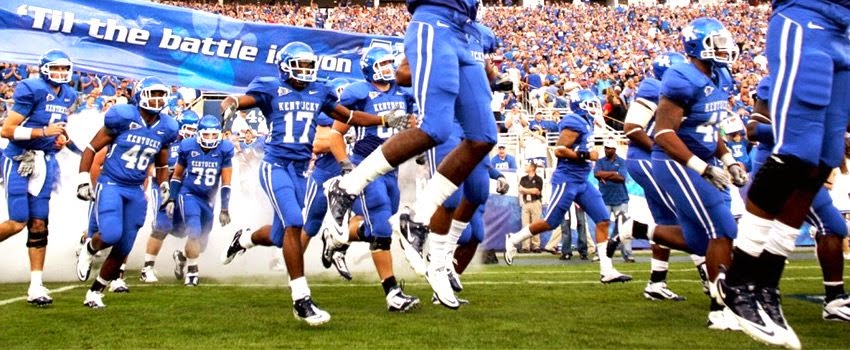
My Pop Warner coach was a Yellow Dog Democrat and well-connected with the Democratic Party. He was currently employed as a lobbyist. When I made a decision to quit playing, for medical reasons, he promptly took my father to a recruiting trip to the University of Kentucky Wildcats in Lexington. A former female governor of the Commonwealth was present, Martha Lane Collins. The intent was extremely transparent. The consensus gathered around the table wanted me to return to football and to play for Kentucky.

I had athletic ability, but I didn't have the size or the raw talent to play for Alabama or any a Grade A school. It was difficult news to choke down, but on one hand, I wasn't entirely surprised. Anyone on my high school team who wanted desperately to go to Alabama walked-on. I had too much pride to be a blocking dummy, and maybe end up with a scholarship my senior year, but still ride the bench. When Auburn came calling, I flatly turned them down. I simply couldn't sign up to play for the cross-state rival, the team I had grown up hating with a fiery passion for my entire boyhood. To this day, I still smile in contentment when Auburn loses. I can’t ever cheer for Auburn, even if by rare occasion it somehow benefits Alabama.

The more affluent, white, middle-class parts of Birmingham are known as Over the Mountain, because one has to drive over Red Mountain to arrive there. Over the Mountain kids rarely produce elite players. They produce solid, intelligent players who are dependable, but their play is unlikely to turn heads or show up during film study. They're also a little on the small size. I was fast for a lineman, and a bit on the small size. Some schools wanted lineman built that way, but playing at an elite school meant going against players substantially larger than me, who made it difficult to move them out of the way.

Many players I've known are aware that their first choice and only chance to start is to head to perennial losers like Vanderbilt or Kentucky or perhaps a Division II school. Another reason I didn't want to play for Kentucky because their combined record was abysmal and it would embarrass me getting destroyed by LSU, Tennessee, or Georgia every year. The only option for me was to focus on myself as an integral part of a team and see if I made enough of a splash that I might qualify for the NFL.

At that time, I was 190 pounds dripping wet, which might have worked in a Division II school and maybe a lesser Division I school. To be considered satisfactory, I needed to put on lots of weight immediately. I because I wasn't placed on steroids or performing enhancing drugs, instead I had to find a natural way. And honestly, I didn't quite get there. I got to 235, but no matter how many weights I lifted I wasn't gaining.

In situations like these, coaches routinely propose a swap between positions. Instead of working out with the offensive lineman, a coach told me that I would be working with the linebackers from now on. I had a raw, aggressive attitude, and another textbook perfect stance but I couldn't completely grasp the required drills or what player had to cover the responsibility of another. It was for this reason that I quit football. It’s very difficult to unlearn what you've learned for years and then have to scramble to pick up six years in a matter of weeks.

My life would have been very different had I gone to Lexington. I would have struggled to stay above water, while watching the elite SEC schools make mincemeat out of us. When I played in middle school and high school, we never lost. Now I'd be a tackling dummy for men in other teams who had 50-75 pounds on me, I'd watch the other side's unreal running back sprint down the field, twice as good as us and three times larger than we were.

I won’t lie that it wasn't demoralizing. I justified it by saying that I’d at least get a college education, and I this was certainly true. I was a conscientious student who fully took advantage of tutoring, but I really was trying to get out with a diploma in hand. The losses would have piled up, one on top of the other, as I began to wonder once again why I was busting my butt for a loser. Some people play for the love of the game, but I play to win. Superstars have it easy, but the rank and file do not.

Monday, August 11, 2014

Religious Skepticism


A few hundred years ago, many legitimate critiques could be made of religion. It was often punitive, restrictive, bloodthirsty, hypocritical, and two-faced. Heretics were tortured or burned at the stake, convicted in show trials that would be the envy of Stalin. Some of the more metaphorical and symbolic beliefs of Christianity were criticized roundly for not making logical sense, or discounted for seeming irrational.

Even in a more religious age, burning bushes could not be found, nor could one find undeniable evidence of the miracles Jesus performed during his ministry. Those who believed were said to be adherents to a kind of superstition, nothing more, nothing less. I hear the same things myself today from time to time. The fallacy in these arguments is that no one has bothered to look into my heart before forming their conclusions. God is exceptionally real to me. The means by which I view the Divine might be difficult and complicated. It is impossible to view God through strictly rational eyes. To me, he is not rational and he cannot be proven or disproved by either human perception or scientific proof.

In my estimation, here is where the change begun. With the arrival of the 20th Century, then with four years of bloody, pointless war, the Lost Generation blossomed. Following World War I, the first substantial seeds of Atheism and doubt were sown and spread. A war that killed millions of people and turned the world entirely upside down challenged the traditional beliefs of many. The generation of the 1920's adopted wholesale hedonism, in part due the horrors that had transpired beforehand.

I see nothing wrong with anyone's belief or lack or belief, but Atheism does create many problems. It is a relatively cut-and-dried intellectual construct on its face. But paired with non-belief in God is often a militant brand of complete distaste and anger. This radical skepticism arrives without any comprehension of why and how religion might take hold. It only examines what it is versus what it is not. Atheism may think that it is the only religious option out there, but it sometimes fails to look beyond its lofty ideals to extend tolerance and acceptance to those who do not think as it does. It does not try to see everyone as a child of God and shows little incentive to care for the poor. If Atheists participate in charity work, I apologize for my oversight, but I don't see it through my own life experience.

Many who identify as atheists have often never been exposed to Christian teaching, but some have. If they have, they’ve frequently taken company among faiths that did not always encourage them to think for themselves. They've been indoctrinated instead with a few strategic untruths that have no basis in Scripture. If they took the opportunity to learn a few legitimate religious teachings here and there, and what they really mean, I think their anger would soften. Getting to that stage is the most difficult part altogether, and can only progress when a person is ready. Those who have to build up their spiritual and altruistic muscles find it a difficult, but worthwhile exercise.

I blame the people who teach the evils of faith without giving a fair shake to the other side. Every Christian denomination cherry picks different parts of the book to emphasize its perspective. It should be said that no faith group believes the whole book, regardless of what some conservatives may think. This will be the case forever. I’ve been criticized when those hostile of my religion use truncated and misinterpreted Scriptural passage that seem foolish in when taken in out of context. I am not looking to be right; I am merely seeking reconciliation with the ultimate goal, one where we all might find understanding.

I am asking to be given the benefit of the doubt. Late last week, I got into the middle of a pointless fight over religion with several non-believers. If I had it to go over again, I would not have done it. All it did was make me upset. The reason I even put the time in to an expansive argument is that I really worry that religion and faith are drifting away. I fear that all the worthwhile lessons to be learned will be discarded. Every generation needs to know the Golden Rule. We ought to do unto others as we would have them do unto us. That is not often what I experienced from those who are not religious.

My hope is that those who are entirely opposed to organized religion will see things differently in time. I myself went through a period where I rejected Christianity in my adolescence. I returned to the faith years later, having taken the time to appreciate where I started out. I would not have become a believer if I hadn't wandered in the wilderness. It might take a while longer for others, which is why I pray to God for patience. Paul persecuted Christians for a good long while, but then had a direct experience with God, where he was struck blind for days. He received a direct communication with Jesus, who asked why Paul was persecuting his people.

Paul’s example shows that everyone’s religious beliefs can change with my time. It’s not my place to say how and why that change will occur, or even if it will. I don’t think that everyone should believe exactly as I do, either. But I do ask that we have enough things in common that we can come together in a spirit of sisterhood and brotherhood. Everyone progresses at his or her own rate. I only want activists to recognize that, as I mentioned earlier, patience is a virtue and a frustrating, frantic pace only keeps us upset.

Some think that being unflinchingly tough is the best way to resolve a crisis. There have been times in my life where I’ve felt that I needed to lash out to make my point. But in the end, I’ve recognized that this approach has severe weaknesses. Taking the high ground really is the best way, even if it requires a person to swallow his or her pride.

Sunday, August 10, 2014

Quote of the Week


I've had a lot of different experiences in music over the years. And not everything you do can satisfy everybody's idealized version of you.-Elvis Costello

Saturday, August 09, 2014

Ask Andrew W.K.: My Dad Is a Right-Wing Asshole


I rarely repost articles that are someone else's work here, but I think in this context I need to.

Hi Andrew,

I'm writing because I just can't deal with my father anymore. He's a 65-year-old super right-wing conservative who has basically turned into a total asshole intent on ruining our relationship and our planet with his politics. I'm more or less a liberal democrat with very progressive values and I know that people like my dad are going to destroy us all. I don't have any good times with him anymore. All we do is argue. When I try to spend time with him without talking politics or discussing any current events, there's still an underlying tension that makes it really uncomfortable. Don't get me wrong, I love him no matter what, but how do I explain to him that his politics are turning him into a monster, destroying the environment, and pushing away the people who care about him?

Thanks for your help,
Son of A Right-Winger

________________________________

Dear Son of A Right-Winger,

Go back and read the opening sentences of your letter. Read them again. Then read the rest of your letter. Then read it again. Try to find a single instance where you referred to your dad as a human being, a person, or a man. There isn't one. You've reduced your father -- the person who created you -- to a set of beliefs and political views and how it relates to you. And you don't consider your dad a person of his own standing -- he's just "your dad." You've also reduced yourself to a set of opposing views, and reduced your relationship with him to a fight between the two. The humanity has been reduced to nothingness and all that's left in its place is an argument that can never really be won. And even if one side did win, it probably wouldn't satisfy the deeper desire to be in a state of inflamed passionate conflict.

The world isn't being destroyed by democrats or republicans, red or blue, liberal or conservative, religious or atheist -- the world is being destroyed by one side believing the other side is destroying the world. The world is being hurt and damaged by one group of people believing they're truly better people than the others who think differently. The world officially ends when we let our beliefs conquer love. We must not let this happen.

When we lump people into groups, quickly label them, and assume we know everything about them and their life based on a perceived world view, how they look, where they come from, etc., we are not behaving as full human beings. When we truly believe that some people are monsters, that they fundamentally are less human than we are, and that they deserve to have less than we do, we ourselves become the monsters.

When we allow our emotions to be hypnotized by the excitement of petty bickering about seemingly important topics, we drift further and further away from the fragile and crucial human bond holding everything together. When we anticipate with ferocious glee the next chance we have to prove someone "wrong" and ourselves "right," all the while disregarding the vast complexity of almost every subject -- not to mention the universe as a whole -- we are reducing the beauty and magic of life to a "side" or a "type," or worst of all, an "answer." This is the power of politics at it's most sinister.

At its best, politics is able to organize extremely complex world views into manageable and communicable systems so they can be grappled with and studied abstractly. But even the most noble efforts to organize the world are essentially futile. The best we can usually achieve is a crude and messy map of life from one particular vantage point, featuring a few grids, bullet points, and sketches of its various aspects and landmarks.

Anything as infinitely complex as life, reality, and the human experience can never be summed up or organized in a definitive system, especially one based on "left or right," "A or B," "us or them." This is the fatal flaw of binary thinking in general. However, this flaw isn't just ignored, it's also embraced, amplified, and deliberately used as a weapon on the very people who think it's benefiting their way of thinking.

Human beings crave order and simplicity. We cling to the hope that some day, if we really refine our world view and beliefs, we can actually find the fully correct way to think -- the absolute truth and final side to stand on. People and systems craving power take advantage of this desire and pit us against each other using a "this or that" mentality.

The point is to create unrest, disagreement, resentment, and anger -- a population constantly at war with itself, each side deeply believing that the other is not just wrong, but also a sincere threat to their very way of life and survival. This creates constant anxiety and distraction -- the perfect conditions for oppression. The goal of this sort of politics is to keep people held down and mesmerized by a persistent parade of seemingly life-or-death debates, each one worth all of our emotional energy and primal passion.

But the truth is, the world has always been and always will be on the brink of destruction. And what keeps it from actually imploding is our love for life and our deep-seeded desire not to die. Our love for our own life is inextricably connected to our love of all life and the miracle of this phenomenon we call "the world." We must give all of ourselves credit every day for keeping things going. It's an incredible achievement to exist at all.

So we must protect and respect each other, no matter how hard it feels. No matter how wrong someone else may seem to us, they are still human. No matter how bad someone may appear, they are truly no worse than us. Our beliefs and behavior don't make us fundamentally better than others, no matter how satisfying it is to believe otherwise. We must be tireless in our efforts to see things from the point of view we most disagree with.

We must make endless efforts to try and understand the people we least relate to. And we must at all times force ourselves to love the people we dislike the most. Not because it's nice or because they deserve it, but because our own sanity and survival depends on it. And if we do find ourselves pushed into a corner where we must kill others in order to survive, we must fully accept that we are killing people just as fully human as ourselves, and not some evil abstract creatures.

Love your dad because he's your father, because he made you, because he thinks for himself, and most of all because he is a person. Have the strength to doubt and question what you believe as easily as you're so quick to doubt his beliefs. Live with a truly open mind -- the kind of open mind that even questions the idea of an open mind. Don't feel the need to always pick a side. And if you do pick a side, pick the side of love. It remains our only real hope for survival and has more power to save us than any other belief we could ever cling to.

Your friend,
Andrew W.K.

Saturday Video

I thought to myself, "Why Not?"


I've paid my dues
Time after time
I've done my sentence
But committed no crime

And bad mistakes
I've made a few
I've had my share of sand
Kicked in my face
But I've come through

And we mean to go on
and on and on and on

We are the champions - my friends
And we'll keep on fighting
Till the end

We are the champions
No time for losers
'Cause we are the champions of the World

I've taken my bows
And my curtain calls
You brought me fame and fortune
And everything that goes with it
I thank you all

But it's been no bed of roses
No pleasure cruise
I consider it a challenge before
The whole human race
And I ain't gonna lose

And we mean to go on
and on and on and on

We are the champions - my friends
And we'll keep on fighting
Till the end

We are the champions
No time for losers
'Cause we are the champions of the World

We are the champions - my friends
And we'll keep on fighting
Till the end

We are the champions
No time for losers
'Cause we are the champions

Friday, August 08, 2014

A Word of Thanks


My Daily Kos post of yesterday received nearly 300 comments. Before I get started, I want to thank a couple of people on the boards who came to my aid in the midst of many sarcastic, short-sighted, and skeptical comments. I also want to thank Birmingham Friends Meeting, who provided me moral support when I was trying to put out about eight fires simultaneously. I love you deeply and miss you tremendously.

If I were a first generation Quaker, I'd know immediately that I'd be living a hard life, one where I'd be on trial often and in jail frequently. Systems were in place to supervise children whose parents were in jail. Having stated the history, I pray for the courage and the peace of mind to respond to those who have their own issues with organized religion. If I am to be faithful to the courageous Friends who came before me, I know that I must speak my mind in the face of criticism.

This is my responsibility. The founder of Quakerism, George Fox, deliberately interrupted Anglican church services, convinced that his way was the best and most accurate. Unlike Fox, I happen to believe that no faith or lack of faith is any better or any more superior. But, I take great pride in what I believe. It forms the basis of my identity. Should I share it with others, the intent is never to win converts. Suspicion and fear take us in directions that are not healthy. If all a person knows to do is start punching or criticizing, this leaves no room for mutual understanding.

To some, it seems tough and empowering to flex muscles and fight fire with fire. I'm not out to judge, but what I will say is that no one really ever took the opportunity to make the connection that I was seeking. If it had been up to me, we'd have discussed the link between our very religious First Wave feminists, and the skepticism of organized religion that exists among many today. But being that no one even gave me the opportunity, everyone started projecting their own fears instead. I don't think many of them really understand religion at all, aside from it being some Bogeyman.

The criticism I have received since then is pretty tone-deaf. Some want to pin a transgression or two upon me that isn't accurate. I have no inclination to have a war of words with people who aren't listening anyway. If they ever could look outside of their insular worldview, a dialogue could be opened. But instead, they want to be right. Diplomacy isn't about right or wrong.

Feministe is barely functioning as it is. Sometimes it goes a whole week before being updated. Their approach to me is hardly an insult, but it is a wasted opportunity. Let's really talk. Let's not return fire. I don't think certain people are really capable of being anything more than attack dogs.

Friday Thought

Blindness often creates hyper vigilance, waiting for an attack. Speaking the truth in love is sound and liberating.

Thursday, August 07, 2014

When Someone Attacks Your Religious Beliefs


I want to thank readers of my blog for being tolerant and accepting of my posts about organized religion. It is a pleasure to write among fellow Quakers and fellow believers. You have shown a kind of intellectual maturity and tolerance I rarely experience. I have occasional rubbed a few people the wrong way, but it has never been difficult to smooth over rough edges with the right words. Those who paint my readers and friends with the same sarcastic, skeptical brush haven't made acquaintance with the people I have. I'm glad that most readers will give me the benefit of the doubt and know that the very last thing on my mind is to win converts to Christ.

Starting on Tuesday, I began to post about the particulars of my faith, particularly my belief in God and in Christianity. I received some extremely strong criticism and was accused of proselytizing. I faced a tremendous amount of hostility. In reality, I was only sharing the particulars of my faith, in an informative way, but not in a way that implied I wanted people to believe the same way I do. I have made the acquaintance of other people of faith and have even had several diaries rescued and put up on the front page of Daily Kos. I'm thankful for the Street Prophets Kos group, where I have found many like-minded people.

Feministe is a website for young Feminists. My references to organized religion there have been met with extreme suspicion and at times anger. I must admit I do not understand people who assume that religion in any form must be destructive. All I was trying to show was the link between feminism and Christianity, but that opportunity never materialized. I was eventually shut down by everyone, then the moderator. Should you wish to read through this extensive hyperlinked thread, start about a quarter of the way down when I, cabaretic, begin to share my thoughts.

This post is not a way to vent about the way I was treated, but rather it is a plea that we not let our real or imagined issues with organized religion get in the way of teachable moments. To Feministe readers, I was not trying to force feed my Quakerism to a group of people who resisted it and had no interest in the first place. They were not ready to hear it on its own terms. Someday they may, and someday they might not. That's up to them.

I hold no grudges, but I am frustrated by people who believe that religion is automatically evil. As I kept posting, I found that, unlike other venues, the more I tried to define myself and my own beliefs, the angrier and less tolerant comments became.

Should anyone want to better understand the conundrum I found myself in, they can use the link here. In short, I ran into a group of people who would not tolerate my right to religious expression. I found myself besieged on five sides by people who simply would not listen and did not care. I have occasionally discovered comments along those lines in other articles, but I've also read overtly religious diaries that are treated with reverence and respect.

These are some of the comments I received.

1. Many people find your opinions to be proselytizing and obnoxious, and so we have grown to dislike you. That’s not persecution, not matter how much you may wish to model yourself on the central figure of a death cult that has been used as the justification for mass slaughter an extraordinary number of times.

2. Officials what you say about Quakerism is true, I am actually pretty sure that your fellow Quakers would be utterly horrified to hear about your exploits trolling feminist forums, “promoting” their cause even when asked not to, and being completely dismissive of the reasons offered by women here as to why they are not interested in your religion and not interested in hearing more.

     3. Joking, I noted something that I thought was very harmless. 
                    Honestly, you would make an excellent Quaker.
          The response was not what I was expecting at all.

           To me this comes off as super creepy

I spent three hours talking past people who did not want to give me the benefit of the doubt. My entire point was not to convert or win souls to Christ. Rather, I wanted them to see that Quakerism is indeed a feminist religion, and that their automatic fears about any organized religion might be a little paranoid. I see now that this is a conclusion they will have to reach on their own.

But in the meantime, I hope these people make peace with organized religion. We're all aware of the evil that religion has produced, but I tend to fault individual people more than I do a belief system. As George Carlin put it, "There are no bad words. Bad thoughts. Bad intentions. And words." To me it takes a kind of courage to reexamine Christianity and religion with different eyes, eyes that aren't automatically looking to find fault.

I grew up in the Bible Belt, and once I rejected the predominant cultural mindset. And then I looked at what I had been taught earlier in life, and saw that there was much worth there. Any system devised by human hands will be imperfect, which is why there must be constant reform. The challenge for me is recognizing the groups who will hear me, just as they chose to hear or not to hear Jesus, and then share my strategy to bring us together. My motives are a little Utopian, but then again, I care for people enough that I want to bring everyone to the table.

Wednesday, August 06, 2014

Healing


The next couple of days will be full of doctor's visits, so I won't have the time or energy to post much. As I often do, I want to show an accurate picture of the life of a person with mental illness. This is why I have no problem sharing the particulars of what I go through with you.

Each of us, well or sick, has a tendency to look only through our own eyes and our own perception. As I wake up for another day, my dreaming concluded, I see my blurry bedroom through my eyes and my own thoughts. In an effort to show the best, most accurate picture of my life to the outside world, I periodically turn the focus towards myself.

Last week, a new medication caused severe side effects. Often my energy level is lethargic, but in a matter of a few days, I had more energy than I've had in years. That was my first red flag. Most men I know have more than a passing interest in sex, but mine became an outright obsession. In other times in my life, I would have used this new capacity for the benefit of a partner, since all of that energy has to go somewhere. It was out of proportion to the way it should have been, another red flag.

I have to be careful in introducing stimulants to the already hefty number of medications (13) I take daily. Two of them can cause mania unless I am careful to closely monitor my health. For every medication one adds to the cocktail, the possibility of interaction increases. In this case, my psychiatrist cautiously treated fatigue by adding a chemical stimulant, only as an experiment. In this case, I'll chalk it up to a failed medication trial and be thankful I knew enough to keep it from getting completely out of hand.

The first two or three days were fine, but then I began to experience disturbing side effects. These may seem fanciful. I imagined that a psychic force was seeking to separate me from my friends. This is totally irrational, of course, but at the time it was very real indeed. I believed that I had secret insights and could rely on them for my own benefit. Fortunately, I knew I was experiencing delusional thoughts and quickly eliminated the stimulant from my daily regimen of medication. I have to credit time and experience for keeping me safe.

Years ago, I thought manic episodes were fun. One of my girlfriends, who was significantly older than me, appreciated my prowess in bed. She was a gossip and eager to brag. Shortly after we became a couple, she began to tell to her friends about me and our sex life. Following that, being in their company was embarrassing, because her friends were giggly and silly. Like many men, I'd always wanted to be a good lover, but I never knew how to manage the attention I now received.

Mania can make one feel superhuman. One cannot observe oneself objectively, meaning personal perception is not enough. I need an outside view. I know now that Mania is better off where it is. I do not relish those periods anymore. They are destructive to the brain, far more destructive than depression. I worry sometimes if a very intense manic episode, one that transpired six years ago, has created lasting brain damage. I have no way of knowing for sure, but I have pushed for a brain scan to rule out my deepest fears.

The most prominent reason I'm taking time out for the next couple of days is that two weeks ago something severely triggered me. I've never been granted an accurate picture of what happened to me in childhood, but I get bits and pieces every now and again. Until recently, I wanted to remember all of it.

Now I've changed my tune. Whatever happened must have been traumatic and painful. I was sure that knowing every detail would give me the ability to completely heal, but the triggering was otherworldly and uncomfortable. Now I am trying to avoid feeling that way ever again, which is an about-face from my previous position.

I've wrestled with thoughts that I cannot prove or deny. At times, I wonder if God is mania. For a moment, I escaped my mortal self and convened with a higher power. I could be totally wrong, and I acknowledge it. I'm sure a few prophets here and there have ascribed mania to a burning bush or some otherworldly sign. Needless to say, I do not doubt God now. I appreciate the gift, since I grew up in isolation, feeling separated from my peers. God is a friend who will never desert me, even as he confounds me.

Tuesday, August 05, 2014

All I Have to Do is Dream


Drea-ea-ea-ea-eam, dream, dream, dream
When I want you in my arms
When I want you and all your charms
Whenever I want you, all I have to do is
Drea-ea-ea-ea-eam, dream, dream, dream

When I feel blue in the night
And I need you to hold me tight
Whenever I want you, all I have to do is
Drea-ea-ea-ea-eam

I can make you mine, taste your lips of wine
Anytime night or day
Only trouble is, gee whiz
I'm dreamin' my life away

I need you so that I could die
I love you so and that is why
Whenever I want you, all I have to do is
Drea-ea-ea-ea-eam, dream, dream, dream
Drea-ea-ea-ea-eam

I can make you mine, taste your lips of wine
Anytime night or day
Only trouble is, gee whiz
I'm dreamin' my life away

I need you so that I could die
I love you so and that is why
Whenever I want you, all I have to do is
Drea-ea-ea-ea-eam, dream, dream, dream

Drea-ea-ea-ea-eam, dream, dream, dream

Monday, August 04, 2014

What Makes a Gay Icon


The original gay icon, at least the one recorded for posterity, was Judy Garland. Girlish and sweet, but vulnerable, she captured the affections of many gay men. Accordingly, the Stonewall Riots broke out shortly after Garland's death. Though more recent historical research questions how much of a factor her untimely demise really was, it has nevertheless become part of the mythology. Garland's life was tragic, and the lives of many queer men were similarly star-crossed.

In my generation, the eccentric redheaded pianist and alternative rocker Tori Amos was the preferred gay icon. But she was a very different strain, a strong woman with equally strong opinions. Where Garland succumbed to her own tragic back-story, Amos put behind her a brutal rape that occurred early in her career. In part, I have always seen this distinction as an accurate marker by which one can investigate progress. Once suppressed and harassed into submission, LGBTs today experience a fraction of the shame and guilt.  

With this new found freedom, it is now time for a change in mindset. Reforms are always needed. As it stands, gay men sometimes idealize their effeminacy. Some project their attraction to all things feminine upon women, making the assumption that the women in their midst must surely conform to this same standard. A female friend of mine expresses consternation at times with one of her own friends, a gay man. He loves all things silky and embroidered, and those patterns only remind her of a femininity that was never a good fit.

I've always seen drag as an overcompensation, though I think it can be a very effective outlet. Though I've never had any desire to put on makeup and play pretend, I can appreciate the talents of others. When I first came out, I found that I didn't fit neatly into the roles others automatically assigned to me. I was too straight to be gay and too gay to be straight. This is how I personally understand what it is like to have one's perspective negated and ignored, even though most of the time being overlooked is entirely unintentional.

Defining what a gay icon is can be difficult. I'm not sure I understand it myself. It seems to be a moving target, keeping pace with the progress of our society. Women are encouraged to be themselves, rather than emulating breathy, girlish voices and learned helplessness. I've always been attracted to the off-kilter beauties who never fit well into anyone's boxes. I'm a strong-willed individual who finds equally strong-willed people appealing.

I'm also speaking of male privilege. Oversights similar to what I have mentioned are not always intentional. Even queer men have been socialized as male. Any group specifically designated for LGBTs is routinely dominated by gay men. While on a cruise ship two years ago, the group Friends of Dorothy was advertised in each day's events. Friends of Dorothy is slang for a gay man, alluding to Judy Garland's performance as Dorothy in The Wizard of Oz. It's becoming an antiquated term, but once again no invitation is extended to lesbians.

The writer William Goldman may have defined best the link between gay men and Judy Garland.

Homosexuals tend to identify with suffering. They are a persecuted group and they understand suffering. And so does Garland. She's been through the fire and lived – all the drinking and divorcing, all the pills and all the men, all the poundage come and gone – brothers and sisters, she knows.

A new generation of LGBTs can more easily avoid living a life of tragedy as a persecuted group. I appreciate the hard work of those who came before me, but I admit I have little patience for angst and doom-laden persecution fantasies. I'm ready to step into the sunlight, in spite of past experiences. If it had been my decision to make, I would not have selected the attitudes of my parents and family. Otherwise, this is simply how I am and I make no apologies for it.

I can count many women in my life who have become my own icons, those I respect and love deeply. I am thankful that they are present. I recognize that my icons are not perfect, but I don't expect them to be. I hasten to use the term, because to me that connotes complete adoration and worship. Few people wish to be placed on a pedestal and held to an impossible standard. I only asked for equal footing with everyone, where I might never have to live somewhere over the rainbow, in the world of unfulfilled dreams.

Sunday, August 03, 2014

Quote of the Week


"The rainiest nights, like the rainiest lives, are by no means the saddest."-Elizabeth Stuart Phelps Ward

Saturday, August 02, 2014

Saturday Video


So he's lying on top again
Just like Gepetto and his doll.
And he's running around again,
And I can't get him out of this house.

And if you bore him,
You lose your soul to me.

So that kid from the bad home
Came over to my house again,
Decapitated all my dolls.

And if you bore me,
You lose your soul to me.

Hey Gepetto,
Where'd you put it?
Oh Gepetto, poor boy.
Hey Gepetto, where'd you put it?
Oh Gepetto, poor boy.

And if you bore him,
You're gonna lose your soul.

Hey Gepetto, where'd you get to?
Oh Gepetto, poor boy.
Hey Gepetto, where'd you get to?
Oh Gepetto, poor boy.

Hey Gepetto, what'd you get me?
Oh Gepetto, poor boy.
So he's lying on top again,
Just like Gepetto.

Friday, August 01, 2014

Greed, Avarice, and the Inevitable Doctor's Bill


I spent yesterday in futile pursuit of a psychiatrist. After filling out an hour's worth of paperwork, I met with a rushed, rude doctor who acted like the only reason he was even talking to me is that his arm had been twisted into it. He was willing, reluctantly, to be a referral service, but not to treat me himself. If this was his normal behavior, I wouldn't have wanted to be under his care. There were no open slots available and so I left, frustrated and confused.

One might think that in a large city where I live, substantial coverage gaps like these would not exist. Finding any provider other than in the field of mental health is usually not difficult. Most psychiatrists in private practice, which is to say most of them, don't accept anyone's insurance plan. Because of this, they can charge upwards of $700 for an initial examination and then $200 for every follow-up visit.

The Affordable Care Act was designed to increase the number of Primary Care doctors. The issue it sought to correct was a shortage of PCPs, especially in rural areas. The problem, as often is the case, is mostly economic. Specialists make more money. My Primary Care doctor, by contrast, charges $75 for each visit. A Specialist, like my Urologist, charges twice as much. This doesn't include inevitable testing and other fees, which are always tacked on later.

In a spirit of fairness, I seek to better understand the system and to take into account the positions of doctors and patients alike. It's difficult, especially at first, not to see the matter as simple greed and selfishness. That being said, in a city where owning a home in an affluent area requires a minimum income of a quarter of a million dollars, I can understand why some want to conform to a particular cultural standard.

DC is an expensive city and the cost of living must first be taken into account before anything else. Keeping up with the Jones is no easy feat. Renting space for an office and paying secretaries and other workers is an additional expense, which is why my psychologist, for example, uses her house as an office. Buying insurance to address malpractice suits is another factor.

But in the end, I think the issue really comes down to a question of ethics and morals. One of my doctors has chosen to work at a clinic for low-income residents and in the process makes much less in yearly income. He has no plan to move on up someday, and feels that his calling is in service to the poor and needy. His is a minority view, but it does exist.

Obamacare has largely been a success, in my eyes, but I don't think there's any way that government intervention can fully short-circuit the twin forces of capitalism and acquisition. As a person of faith, I happen to believe strongly in the lessons that religions teach us about looking out for the less fortunate and leading a life of humility. A focus exclusively on the self at the expense of others isn't illegal, but I do think that it is wrong. Legislating morality, as we learned from Prohibition, is not enough. It requires we change a toxic mindset, which is no easy feat.

As the saying goes, the rich get richer and the poor get children. Even faith-based programs ought to be predicated upon the free choice of the believer. Evangelicals believe that their duty is to win souls, and though some consider proselytizing unwelcome attention, the goal is to make sure people make it to heaven. Good intentions motivate many decisions, which is why we get so indignant when our views are rejected by some higher authority.

We should respect the rights of the individual, but we shouldn't flatly deny access to coverage by any means and for whatever reason. Here's the crucial distinction. Hobby Lobby turned away business that would have made it more profitable. The specialists I've mentioned never turn anyone away who can pay for their time. The two are absolute standards and neither will be easily or swiftly corrected. We are only left with right and wrong, with either winners or losers.

Argument aside, like many, I am left searching for a solution. A report will be drafted and sent to me, specifying other doctors and clinics to try next. I may need to go through this exasperating process two or three more times before any satisfying resolution is reached. My condition is genetic, purely a matter of inherited genes. I did nothing to create it and I do everything now to treat it. When the argument subsides and the words we speak conclude, solutions are what should come next.