Sunday, June 19, 2016
Saturday, June 18, 2016
Wednesday, June 15, 2016
The "Epidemic" of Single Parenthood
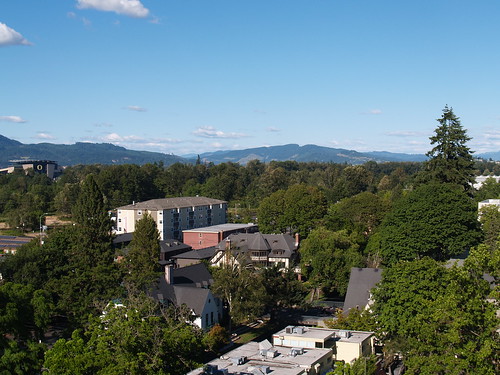
I've recently returned from a week-long trip to the Pacific Northwest. I was pleased to have the opportunity to see a different part of the country I had never before visited. In the time I was there, I observed the many distinctions between the West Coast and the East Coast, asking natives and current residents alike their impressions of the area. Most were glad to answer my questions, but many displayed a lack of introspection regarding their home that I found curious.
I’ve lived in DC for eight years and have become something of a mini-Chamber of Commerce for the benefit of tourists and newcomers. It struck me as strange that many did not seem to care one way or another about the particulars and the superficial statistics. Native Southerners like myself have a way of playing to the crowd, like a skilled impressionist. The level of disengagement was notable, and I found it challenged my understanding. Was this due to modesty or were such issues thought to be unimportant?
Aside from the obvious differences in general attitude always cited, I viewed an area of the country largely dominated by whites, with a smattering of Asians drawn in by their proximity to the Pacific Rim. Underneath the Portland transplants and the hipper-than-thou milieu of the city is a somewhat washed out, working-class attitude even naked bike riders can't quite conceal. Strip away trendy donut shops and highly competitive brunch restaurants, and one sees something of the essential character of the region.
I could never be confused as a conservative in any form, and never a social conservative. I have no unwavering allegiance to the cult of the sanctity of marriage, nor how God ordains that such an arrangement ought to be composed of exclusively one man and one woman. Moreover, this post is not an attempt to raise a purely racial argument aimed squarely at the black community. What I saw in eight days of constant motion made little to no exception for race or class.
Instead, I saw instance after instance of mothers raising children alone. Most of them I noted only in brief. While stationed there for the duration of my trip, I did have the great fortune to keep company with two single mothers. One was in her mid-thirties, separated from the biological father, and raising three children on her own. The second was in her mid-forties and divorced, having waited as long as possible to have even one child. The subject did not change very often to the absent father in both instances, and if it did, it didn't linger very long beyond the perfunctory. I gathered the topic was still a very sensitive one and I did not press it.
Back home in DC, I live in an affluent blue enclave, full of yuppie parents and double strollers. Privilege and wealth are in prominent display. Here it is manifest in two-parent households, usually opposite-sex in makeup, though not always. Children are expected to be high-achievers in every station in life, eventual candidates for expensive, exclusive private schools. They are fed on food and drinks from the local Whole Foods. I'm sure for some that the same is true in Portland, for example, but priorities and goals are often very different from coast to coast.
Never was this more in evidence than a trip that took me 2,500 miles northwest and six hours by airplane. It may have taken a change of surroundings to amplify and illuminate the unreality of my home, the bubble I can sometimes convince myself exists everywhere. Single motherhood was in plain view everywhere my travels took me, reminding me that it is an inordinately difficult job and all too commonplace. Being privy to instance after instance of it made me pause to count my blessings
I am quite fortunate to have been raised by two parents who, forty-one years later, are still together. My mother and father have only been married exactly once, betrothed to themselves and no one else. Many of my classmates and friends growing up in the Eighties were children of divorce, part of that moral panic that may have been overstated but was nevertheless more prominent than it needed to be. Midway through their childhood or adolescence, they were often forced into compromise measures. Yours, mine, and ours families are not always a comfortable fit. Anyone with a half-sibling and a step-parent can tell you that.
I do think that two-parent families are the most stable, most solid pairings. Should one parent grow exhausted with routine duties, another can step in to take over. That, for no other reason, is cause enough to opt for raising a child with a partner. Having said that, I do recognize that the situation is not that simplistic, nor as easily fixed. Absentee fathers are prominent, and, in my opinion, we've been far too culturally lenient, demanding financial payments and custody arrangements from one half of the equation, not time spent in the company of offspring. Children don't need fathers like piggy banks or sporadic trips to Disneyland, they need the moderating influence of active parenting.
I'll tell a brief anecdote. About ten years ago, I was in a relationship with a woman who was much older than me. She had two kids from a previous marriage, both boys. The youngest kid was a bit rebellious, something of a behavior problem. Though I pushed away from him, uncomfortable with the attention he lavished upon me, the idol-worship he made plain, and the void I filled, I could tell he craved my company.
One night I arrived home late from work and went to the bathroom to brush my teeth. Having read somewhere that letting manual toothbrushes drain upside down was more sanitary, I'd turned my brush bristles in that direction, facing towards the basin. Returning late from work, I discovered that someone else had turned his bristles downwards towards the basin as well, right next to mine. I have to admit I shed a few overwhelmed tears once I observed his behavior, as I was nowhere near ready to be anyone’s surrogate father.
This might come across only as a sweet story. For me, it was evidence that my very presence was more prominent and influential than I had even dreamed. But it also reveals more about the compelling need for fathers, or at least the need for more than one single parent. Married or partnered same-sex parents can replicate the same loving household dynamics. Provided the relationship between partners is stable, regardless of sexual orientation, I have no reservations. Children demand better.
I recognize that some may choose to criticize me for these remarks, to seek to spot a few holes in my argument. Single parents might believe that they have an adequate grasp of their duties without needing to rely on anyone else. I know of single parents who do an excellent job rearing children on their own. I don’t seek to criticize their hard work. It is also true that I have no children of my own, nor intend to have any myself.
But even casual observation, on one level, is sufficient enough. Spend enough time around airports, on board public transportation rails, or shifting uncomfortably on a bus and one can view ample evidence of good parenting and bad parenting. To be fair, one can also observe single parents, often single mothers, at the end of their rope, struggling massively with misbehaving and unruly children. Single parents of any gender may assert that conditions on the ground are fine the way they are. This may well be true. I seek not to challenge their intentions.
My experiences may not fit the norm. Sometimes bad behavior is not relegated only to children. I have known single mothers who have spit in their faces of their children when they wouldn't mind and cursed at them violently when they wouldn't get up in the morning. And I have called them friends and acquaintances. I don’t condone their behavior, but neither did I cast them aside. One of them had a child at seventeen who she came to resent, but tearfully confessed to me the nature of this offense. At what point does parenting become abusive or, at best, incorrect? It’s easy to make sweeping generalizations, and it’s equally easy to take a zero tolerance attitude when a child is not our very own.
I have also known single parents who agonize about striking a balance the best way, between raising children and dating, darting back and forth from A to B in the deepest of ambivalence. In my case, I observed her berating her children verbally when they wouldn't spring to action immediately. I was indebted to her as her partner, and I resisted reporting her behavior. Unlike some, she was well-connected legally and I knew nothing would be done. In addition, I wasn't sure it was my place to say right or wrong. It's easy to call out behaviors that some may say border upon child abuse, but often difficult to make them stick. One parent’s perceived discipline is another parent’s abuse. That was a difficult lesson to learn.
Divorce rates have actually decreased with time, but so have the rates of marriage. More people are living together for years at a time, many with no intention to say their vows. The question at hand should then be phrased a little differently. No one seems to understand if or why people marry for all the wrong reasons. And even then, marriage success is no guarantee. Problems with rearing children, particularly children with special needs, have proved the undoing of even the most stable marriages. What we are observing is, in part, fate, luck, devotion, and unrequited toil. But again, we can’t overlook the need for a two-person household. For some, it’s a paradoxical situation.
We're told to believe that things were more solid and stable in the past. This is not always the case. My father's parents stayed together, but theirs was an immensely difficult union, an arrangement put together by family members for the sake of the children. Few people were divorced in the Fifties, and each had a child from an earlier marriage. Mutual guilt has rarely motivated people to make sound decisions. My father has a step-sister from his father's first marriage who he has never even met. She has never made any overtures to connect with him, and, sixty years later, he doesn't expect it. My grandparents conformed to an ideal that was socially acceptable, but a bad fit for both.
A relationship that was the product of his mother's first marriage produced a half-sister, who hated her step-father. She and my father were estranged for years, and never reconnected before her untimely death by way of a premature heart attack. My aunt married five times before her death. The first was an effort to get out of her step-father's house at all cost. One disastrous marriage involved an ex-convict who proved to be an abusive sociopath. These are difficult issues to consider, as they strike at the heart of our personal development and understandings of self.
I may not have said my vows, but I have made substantial mistakes in relationships. When children become part of the equation, the stakes are propitiously raised. Parenting can be like a highly dramatic, incredibly competitive hand of poker, with all of the chips on the table, with a risk for great gain and great loss. Often, sufficient parenting is revealed years after the fact, not in the present tense. Children are not raised in isolation. They are raised by all of us, and it may indeed take a whole village.
Laid-back or Type A, granola or traditional, parenting is a reflection of who we are and how we ourselves were raised. My parents grew up in families where problems were swept under the rug and never confronted. They vowed that they would not take the same approach when it came their time to be parents. I appreciate the courageous stance they took, but have come to realize how many families simply do not follow this same basic model.
And that unfortuate lacking is clear in our governance, the patchwork of laws which are intended to maintain decency and morality. It is easier in the short term to not call things out, but it also encourages a kind of evasiveness that is not predicated upon honesty or trust. Having tried the old standards of mutual love and best intentions, I wonder what fruit truthfulness and integrity would bear. We may need to rethink our approach while recognizing the complications. We can't hide from ourselves any longer.
Tuesday, June 14, 2016
Saturday, June 04, 2016
Saturday Video
Ready or not, here I come, you can't hide
Gonna find you and take it slowly
Ready or not, here I come, you can't hide
Gonna find you and make you want me
Now that I escape, sleepwalker awake
Those who could relate know the world ain't cake
Jail bars ain't golden gates
Those who fake, they break
When they meet their 400-pound mate
If I could rule the world
Everyone would have a gun in the ghetto of course
When giddyuping on their horse
I kick a rhyme drinking moonshine
I pour a sip on the concrete, for the deceased
But no don't weep, Wyclef's in a state of sleep
Thinking bout the robbery that I did last week
Money in the bag, banker looked like a drag
I want to play with pelicans from here to Baghdad
Gun blast, think fast, I think I'm hit
My girl pinched my hips to see if I still exist
I think not, I'll send a letter to my friends
A Born Again hooligan only to be king again
Ready or not, here I come, you can't hide
Gonna find you and take it slowly
Ready or not, here I come, you can't hide
Gonna find you and make you want me
I play my enemies like a game of chess, where I rest
No stress, if you don't smoke sess, lest
I must confess, my destiny's manifest
In some Goretex and sweats I make treks like I'm homeless
Rap orgies with Porgy and Bess
Capture your bounty like Elliot Ness, yes
Bless you if you represent the Fu
But I'll hex you with some witch's brew
If you're doo-doo, voodoo
I can do what you do, easy, believe me
Fronting niggas give me hee-bee-gee-bees
So while you're imitating Al Capone, I'll be Nina Simone
And defecating on your microphone
Ready or not, here I come, you can't hide
Gonna find you and take it slowly
You can't run away
From these styles I got, oh baby, hey baby
Cause I got a lot, oh yeah
And anywhere you go
My whole crew's gonna know baby, hey baby
You can't hide from the block, oh no
Ready or not, refugees taking over
The Buffalo Soldier, dreadlock Rasta
On the twelfth hour, fly by in my bomber
Crews run for cover, now they're under pushing up flowers
Superfly true lies, do or die
Toss me high only puff la
With my crew from lock high
I refugee from Guantanamo Bay
Dance around the border like I'm Cassius Clay
Thursday, June 02, 2016
Notice
I will be out of town from Saturday until Sunday of the next week. Postings will be light in my absence.
Wednesday, June 01, 2016
Tuesday, May 31, 2016
True Weakness and Strength in the Age of Trump
In the early to mid-Seventies, my mother, like many women of the period, found much appealing about the Women's Liberation movement. The inequalities between men and women were prominent and reform was needed. Having said that, she never truly immersed herself fully in the radical and activist side of things, never learning applicable academic terms like second-wave feminism or consciousness-raising. She never subscribed to Ms. Magazine.
She never took to the streets to march or distributed self-penned polemics on street corners. Even with an informal understanding of a complex issue, something about the spirit of the times strongly grabbed her attention. A well-stated and personal manner of framing an argument spoke neatly to her condition and her frustrations. And she was not alone. Lots of women felt the same way, and I'm sure many of them will pull a lever for Hillary Clinton a few months from now.
I came along a few years later. Though she willingly took on the role of mother and caregiver, a hard-edged side always shone through. That part never completely faded from view. Though I tried to understand and usually kept my hurt feelings to myself, my mother used a particularly infuriating mantra on occasion.
Men are weak. This was always said with an off-handed smirk, offered with a kind of snarky condescension that cared little for who it offended. It consistently managed to enrage my father, which might have been the reason why she used it as frequently as she did. Though I love my mother with ever fiber of my being, the comment always burrowed under my skin the way only the best insults can. It still does, even now.
In adulthood, with a far greater sense of context, I better comprehend what she meant and her reasons for saying it. Roughly translated, in her way of thinking, men believe that they are in total control, but they are easily tripped up and felled by their baser instincts. Men are convinced that they are as omnipotent as gods, but they are destroyed time and time again by hubris and arrogance.
The point is taken fairly. Yet, taken a different way, it can also be a gross oversimplification motivated by feelings of substantial resentment, along with a corresponding lack of agency. I get it, though I'm not convinced it is correctly applied in each and every circumstance.
If men are indeed weak, this stance implies that they simply can't help themselves. Talk about an enabling statement! Put that way, men are totally off the hook. In our own time, Donald Trump seems to be unable to help himself in a different way, convinced it is wise to consistently bring up the indiscretions of Bill Clinton. As we know, Trump’s own history with women is not much better. Nevertheless, his supporters see their beloved as strength personified, a man unafraid to speak hard truths with no need for tact or decorum. Only weaklings and losers need take that course.
It is perhaps inevitable that any political campaign pitting a woman against a man should become, in part, a battle of the sexes. If a more conventional Republican candidate was pitted against Hillary Clinton, more or less politically safe charges and counter-charges of sexism would predictably fly back and forth.
Instead, Americans are dealing with an unprecedented election in American politics, a grudge match between a “strong” man and a “strong” woman (depending on how one defines strength) each with tremendously high negatives that might even increase before voters cast their ballots in November.
Women can be weak, too. They may not be flawed and foolish in the way that skirt-chasing and risk-taking men can be, but they are capable of making mistakes based on very poor judgment. Love her or hate her, Hillary Clinton has been gaffe-prone since the days of two-for-the-price-of-one. But, as we’ve observed in fascinated horror, her GOP opponent seems to have forged his political identity by making outrageous statements that any other candidate would have swiftly walked back.
In this alternate reality, Trump may well have accomplished the impossible. He has somehow managed to secure the party's nomination, while at the same time potentially neutralizing every pertinent talking point Clinton might try to make. Or, he might well have counter-productively managed to somehow neutralize the damage any potential Clinton misstep might make upon the electorate. Or both. These are the risks we take when a loose cannon could well be President.
One wonders if the Trump phenomenon will be a flash in the pan or a dramatic realignment of political rhetoric and the consequences of doubling down on even the most patently offensive remark. On one level, a double standard continues to exist between men and women. That I am not debating. Today, however, it seems that two parallel standards in public perception exist. One applies to Trump and a second, more conventional one applies to Clinton.
On the question of strength versus weakness, who is most deserving of the label? One is reminded of the exhaustively quoted passage from Julius Caesar, itself a story about domineering politicians who reign for a time with unchecked authority. As the Bard put it, "the fault, dear Brutus, is not in our stars, but in ourselves, that we are underlings." Americans can opt for true strength or weakness masquerading as power. It will take a movement, not a few committed citizens, but the work can be done. No one will do it for us.
Sunday, May 29, 2016
Quote of the Week
When I was about twelve, I used to think I must be a genius, but nobody's noticed. Either I'm a genius or I'm mad, which is it? "No," I said, "I can't be mad because nobody's put me away; therefore I'm a genius." Genius is a form of madness and we're all that way. But I used to be coy about it, like me guitar playing. But if there's such a thing as genius — I am one. And if there isn't, I don't care.- John Lennon, 1970.
Saturday, May 28, 2016
The Predominant Mood
C. Murphy/Sloan
So many stories I could tell
I had the world under my spell
Does this even ring a bell?
I wonder because
Don’t you know who I was?
Interest in me dissipated
All my methods antiquated
I’ve been cast away
Lost and friendless today
I made a name for myself
When one could do such a thing
A reputation that’s held
Together by string
And so I chose to cherish those
Who think there’s some purity
To fading into obscurity
What works on paper
Has the tendency to ride on vapor
Sometimes what’s not to love
But then other times what’s to like?
I’m unable to tell if I know who I am
A modest success, a shill, or a sham
I’m not afraid of what I’ve made of
But my trajectory
Has me fading into obscurity
You kids’ll have to fend for yourselves
Because your mother’s gone and asked for the elves
Who used to do all the work around here
Well they’re not gonna do it anymore
You kids can kiss your mother goodbye
And I’ll give you twenty minutes to cry
She used to do all the work around here
But she’s not gonna do it anymore
And you’re getting to old to be cared for by me
And for that matter
This cake is baked but I much prefer the batter
Perhaps in part because it had so much potential
To be delicious and still be influential
I’m undecided
If the evidence that I have provided
Explains what I mean
It’s too late now ’cause I can’t see or be seen
And I know you don’t shrug through my tears
So I’m not gonna shed ’em anymore
Out of favor with the flavor of the week’s where I’ll be
And fading into obscurity
An outsider but in good company
Oh yeah
I’m fading into obscurity
I’m undecided
Saturday Video
There's a destination a little up the road
From the habitations and the towns we know
A place we saw the lights turn low
Jig-saw jazz and the get-fresh flow
Pulling out jives and jamboree handouts
Two turntables and a microphone
Bottles and cans and just clap your hands and just clap your hands
Where it's at
I got two turntables and a microphone
Where it's at
I got two turntables and a microphone
Take me home in my elevator bones!
That was a good drum break
Pick yourself up off the side of the road
With your elevator bones and your whip-flash tones
Members only, hyponotizers
Move through the room like ambulance drivers
Shine your shoes with your microphone blues
Hirsutes with your parachute flutes
Passing the dutchie from coast to coast
Let the man Gary Wilson rock the most
Where it's at
I got two turntables and a microphone
Where it's at
I got two turntables and a microphone
What about those who swing both ways: AC-DC's
Two turntables and a microphone
Where it's at
I got two turntables and a microphone
Where it's at
I got two turntables and a microphone
Oh, dear me. Make Out City is a two-horse town
That's beautiful, Dad
Get my microphone
Where it's at
I got two turntables and a microphone
Where it's at
I got two turntables and a microphone
I got plastic on my mind
Telephone plastic baby
Wednesday, May 25, 2016
There She Goes
There she goes
There she goes again
Racing through my brain
And I just can't contain
This feeling that remains
There she blows (there she blows again)
There she blows again (there she blows again)
Pulsing through my vein (there she blows again)
And I just can't contain
This feeling that remains
There she goes
There she goes again
She calls my name
Pulls my train
No one else could heal my pain
But I just can't contain
This feeling that remains
There she goes
There she goes again
Chasing down my lane
And I just can't contain
This feeling that remains
There she goes (there she goes again)
Sunday, May 22, 2016
2016: Making Sense of Where We Are as a Nation
Anyone who knows me well recognizes that I don't like being caught flat-footed. After a trip, I frantically unpack and put everything back exactly where it was before I left. I recently read somewhere that my behavior is symptomatic of someone who wants to assert control over unfamiliar surroundings. No one panics more than me when I momentarily lose my cell phone, or my wallet, or my keys. Most of the time, such items are easily found, and yet in the process of locating them I'm convinced they are gone forever, never to return.
This is why I am often reminded of the biblical Parable of the Lost Coin.
Suppose a woman has ten silver coins and loses one. Doesn't she light a lamp, sweep the house and search carefully until she finds it? And when she has found it, she calls together her friends and neighbors, saying, "Rejoice with me, for I have found the coin that I had lost.”
Jesus speaks here beyond the literal, specially about the concept of redemption. And by this he means the radical notion that it is never too late to turn away from sin. There is no hierarchy in Heaven over who arrived first or last. This speaks contrary to the way we are conditioned to think and the games we play in the course of our lifetime. We learn to flaunt our credentials, our history of good works, and the sacrifices it took to reach them. We rationalize what we do by saying that such things are simply the way of the world, that they are necessary evils, and they cannot be evaded.
In life, we expect to be treated differently if we've reached some high achievement, made lots of money, or accumulated some combination of the two. In political parties, workplaces, and especially in churches, seniority means that those who have been in good stead longer have more say and more control. These people who occupy the favored seats have the right to guide and lead in the way they choose. To many, Jesus' ministry is an egalitarian one, where the first person to speak is held in the same high esteem as the one who has spoken ten thousand times before.
Backing up one verse from where we started out, the meaning of the parable is made clear.
I tell you that in the same way there will be more rejoicing in heaven over one sinner who repents than over ninety-nine righteous persons who do not need to repent.
The upcoming Presidential election showcases two of the least religious candidates in American history. Hillary Clinton rarely mentions her suburban Illinois Methodist upbringing, a past that at least instilled the candidate with a strong sense of social justice. On the other side, Donald Trump could almost be considered areligious, a fact that until this moment was a sure violation of Republican orthodoxy. Assuming the point is raised during the campaign, Trump can avoid even discussing religion, specifically Christianity on the stump unless placed on the defensive.
This would be unheard of not that long ago. GOP candidates have consistently and conspicuously put public displays of faith before voters for a very long time. Courting Evangelical conservative voters, according to the conventional wisdom, panders to the base. It is a move of either cynicism or desperation that many such voters have seemingly placed victory above rhetoric this go round. Clinton is not especially strong on the issue and is unlikely to force the issue. Neither candidate is likely to have a Pastor Wright problem this cycle.
Every election is a barometer of how we have changed as a nation. Only the once-in-a-decade census shows the macro trends that began small, yet grew steadily over time. 2016 might well the first sign that we as a country have moved towards a new Post-Christian reality. Here on the East Coast, organized religion has been dying for a long time. The Midwest and the South continue to uphold long-standing religious traditions and have the highest rate of church attendance, but disenfranchised and thoroughly disgusted voices can be heard from those places as well. In time, I expect that more and more Americans will fall away from church or some sort of religious observance.
Members of Generation X and the Millennials that followed them have consistently shown little to no interest in religion. Within these two subgroups, what remains are a mere sliver of what once existed, a minority group of leaders and activists. These are the sort of people who take their convictions and leadings very seriously, often wishing that others adopted this same kind of passion.
Extremely motivated believers are not enough. Church was designed for mass participation, specifically set up as a place where any and all are truly welcome. It makes me very sad to see these traditions slowly withering away. From now on, I inhabit a space dominated by baby boomers. They may be the last generation, in all seriousness, who wish to carry the mantle.
So how does one find these lost souls, these coins in search of a finder? Many Evangelicals have recognized and observed the distressingly slow decline for years. Many now seek to perpetuate and plant their chosen faith in developing parts of the world. The continent of Africa is a particularly favored target. Asia and South America are next. To some observers, this is merely another form of colonialism, presented with a slightly different backswing. These deeds and the cheerful enthusiasm in which they are undertaken makes even other religious people a mite uneasy.
The Roman Empire successfully spread Christianity across the civilized world, even as its borders eventually grew too large and unwieldy to defend. Today, some people of faith are completely in favor of outsourcing a precious commodity to the third world, their eye on conserving the old ways, keeping Christianity alive, thriving, and intact.
I personally am highly conflicted about the process, as I most certainly do not want my own faith, Quakerism, to die out. Neither do I wish to supplant the ideas of the conqueror upon the conquered, even though that very same process made me who I am today. Assuming I am speaking to those who live in the so-called First World, the same process made you who you are today, as well.
Speaking of American politics, let me put it another way. When I fear that our own treasured Democratic values themselves are truly under threat, not presented in a spirit of reactionary fear-mongering, then I will sound the alarm for a five-alarm fire. Until then, everything is not lost, but time is of the essence. We need to act and come together. Our causes are linked by necessity.
Members of liberal and progressive faith traditions are not nearly as ambitious as our Evangelical and ideologically conservative brothers and sisters. Many of the former are divided among themselves as to know how to best grow the faith in the parts of the world where we first came to be. But in truth, the extreme skepticism and even hostility towards organized religion has in large part caused this problem. Sixty years ago, a sitting U.S. President could state, without pandering to voters, that he was a Christian and a Democrat, and nothing more.
The last Democratic President to make the same distinction was Jimmy Carter, whose rise to prominence came about four decades ago. Since then, the liberal electorate and the powers that be have skillfully talked out of both sides of its mouth on the subject of religion, much to its detriment. It has equivocated by way of a mealy-mouthed, on-one-hand-but-on-another-hand ambivalence that is always careful to offend no one, but offers no real path forward.
And it's this attitude, among others, which must change if Christianity in its current form is to even survive the next few decades. Faith is undone and perverted by people, not by the concepts and precepts themselves. The Left is reaping what it has sown by disassociating itself from Christianity, and sometimes even a higher power. The Right has dug its own grave by selectively picking the verses, moral lessons, and self-serving emphasis it most agrees with, implying that the entire faith itself has no greater context aside from the narrow interpretation of some. Both are wrong. Neither is correct.
If all else fails, I suggest buying a one-way ticket to some simpler place, some far away hamlet. A person might be heard and understood there, not talked over on the cable television news program of one's choice. The next six months are going to be bitter and nasty, and the vitriol ginned up by both sides will likely persist well past November. If ever the world needed religion, let it be today. The message remains, but we must stop resisting, thinking that we are somehow in control of our own destiny. Election years are always proof to me that despite on-message delivery and focus groups, one can never prepare for the unexpected.
Quote of the Week
,
"...Of no one marrying, or going home, or getting a job in a town a thousand miles away, or doing any of the traitorous things friends do after college."- Donna Tartt, The Secret Life
Saturday, May 21, 2016
Saturday Video
We like the breeze flow straight out of our lids
Them they got moved by these hard-rock Brooklyn kids
Us floor rush when the DJ's booming classics
You, dig the crew on the fattest hip-hop records
He touch the kinks and sinks into the sounds
She frequents the fattest joints caught underground
Our funk zooms like you hit the Mary Jane
They flock to booms man boogie had to change
Who freaks the clips with mad amount percussion
Where kinky hair goes to unthought-of dimensions
Why's it so fly cause hip-hop kept some drama
When Butterfly rocked his light blue-suede Pumas
What by the cut we push it off the corner
How was the buzz entire hip hop era
Was fresh and fat since they started saying audi
Cause funks made fat from right beneath my hoodie
The poobah of the styles like Miles and shit
Like sixties funky worms with waves and perms
Just sendin' chunky rhythms right down ya block
We be to rap what key be to lock
But
I'm cool like dat
I'm cool, I'm cool
Friday, May 13, 2016
Friday Video (A Day Early)
For Donald Trump
I bet you fall in bed too easily
With the beautiful girls who are shyly brave
And you sell yourself as a man to save
But all the money in the world is not enough
I bet you've long since passed understanding
What it takes to be satisfied
You're like a vine that keeps climbing higher
But all the money in the world is not enough
And all the bridges blown away keep floating up
It's cold
And rough
And I kept standing six-feet-one
Instead of five-feet-two
And I loved my life
And I hated you
It's cold out there
And rough
And I kept standing six-feet-one
Instead of five-feet-two
And I loved my life
And I hated you
Sunday, May 08, 2016
Quote of the Week
Civilization, in fact, grows more and more maudlin and hysterical; especially under democracy it tends to degenerate into a mere combat of crazes; the whole aim of practical politics is to keep the populace alarmed (and hence clamorous to be led to safety) by menacing it with an endless series of hobgoblins, most of them imaginary.-H.L. Mencken
Saturday, May 07, 2016
Saturday Video
Punctured bicycle
On a hillside desolate
Will nature make a man of me yet?
When in this charming car
This charming man
Why pamper life's complexity
When the leather runs smooth
On the passenger's seat?
I would go out tonight
But I haven't got a stitch to wear
This man said "it's gruesome
That someone so handsome should care"
Ah! A jumped-up pantry boy
Who never knew his place
He said "return the ring"
He knows so much about these things
I would go out tonight
But I haven't got a stitch to wear
This man said "it's gruesome
That someone so handsome should care"
La, la-la, la-la, la-la, this charming man
Oh, la-la, la-la, la-la, this charming man
Ah! A jumped-up pantry boy
Who never knew his place
He said "return the ring"
He knows so much about these things
Wednesday, May 04, 2016
Subscribe to:
Posts (Atom)