Monday, April 21, 2014

When Purity Destroys Movements


I entered feminism as an autodidact does, by fits and starts. When I was in college, I saw no need to take women’s studies classes. I didn’t harbor any ire towards women, but it seemed like a discipline that wouldn't interest me much, no different in that regard from Anthropology or Biology. It wasn’t until one of my sisters departed for the West Coast that I discovered the books she’d left behind. Those were my primary training and self-taught as I was, I had a bit of a chip on my shoulder for never having had any formal education. This is how I somewhat cautiously began my tentative engagement with the feminist blosophere.

It wasn’t easy. Though I usually didn’t mind being called out, some of the comments were unfair and entirely below the belt. It was fortunate for me that I absorbed the internal discourse and the terminology quickly, otherwise I’m not sure if I would have stayed around for long. In saying this, I want to note that I’ve had many experiences in that community which are uplifting and enlightening, not mortifying and painful. I have learned much in the past several years and continue to try to challenge myself and others.

The problem with all arguments based on purity is that they are not given equal weight. The priority of an issue held by a particular person conforms to their own passionate opinion. Passionate opinions are the backbone of every activist movement, but among some, they can become ravenously destructive. Feminists are understandably touchy with the notion of themselves as quick to judge and quick to anger. Nevertheless, there are instances when the stereotype seems justified.

Earlier this year, writer Michelle Goldberg wrote a column in The Nation about the wars and fissures within the movement. #Femfuture, to cite only one example, was a proposed program meant to boost the profile of online feminism.

The women involved with #Femfuture knew that many would contest at least some of their conclusions. They weren’t prepared, though, for the wave of coruscating anger and contempt that greeted their work. Online, the Barnard group—nine of whom were women of color—was savaged as a cabal of white opportunists. People were upset that the meeting had excluded those who don’t live in New York.

There was fury expressed on behalf of everyone—indigenous women, feminist mothers, veterans—whose concerns were not explicitly addressed. Some were outraged that tweets were quoted without the explicit permission of the tweeters. Others were incensed that a report about online feminism left out women who aren’t online.

[Activist Courtney] Martin was floored. She’s long believed that it’s incumbent on feminists to be open to critique—but the response was so vitriolic, so full of bad faith and stubborn misinformation, that it felt like some sort of Maoist hazing.

Feminism is not beholden to a strict orthodoxy with rules set in stone. If it was, there might be less confusion and potentially fewer vitriolic responses. Liberal thought is supposed to be predicated upon in the individual’s right to free expression. The intention is not to rate one grandstanding cause as superior to another, though at times this happens unconsciously. Without a specific set of standards in which everyone believes, the forcefulness and persuasiveness of argument, especially if it implies discrimination, can be more effective in conveying and directing thought than absolute truth itself.

Certain feminists place a greater priority upon favored aspects of feminist thought, usually the ones that resonate most prominently with them. This is where healthy dialogue should start, but often is when counter-productive discussions begin. Unproductive intellectual exercises like these have ended up going horribly, horribly wrong. No one seems willing to take the high road, seeming to enjoy knife-fighting in the comment section or from Tweet to Tweet.

Appearances can be deceiving. These discussions are usually framed by white liberals, who have particularly complex relationships with people of color and other minority groups. Writing in 1966, the noted historian C. Vann Woodward penned an influential essay entitled “What Happened to the Civil Rights Movement.” In it, he discussed consistently troublesome concerns that have never been fully resolved.

An incidental dividend that the philanthropist sometimes demanded of the freedom march or the jail-in was an ennobling catharsis. So promiscuous was the resulting role confusion that it was hard to say at times whether the actor was playing redeemer or redeemed, or whether the underlying purpose of a particular march or freedom school was black salvation or white.

The picture was further complicated by the exalted roles the white romantics assigned their black partners. In effect, they turned the tables of racial dogma and opted for Negro supremacy. But it was a dubious brand of supremacy, and the flattery, as Robert Penn Warren has pointed out, was shot through with the condescension implicit in the eighteenth-century adoration of the Noble Savage.

They embraced the Negro with an impulsiveness that and fervor that must have proved uncomfortable to the Negro at the time. Another turning of the tables seems to have endowed the whites with the gift for imitation traditionally attributed to the blacks, and made the latter the object of the most abject cultural imitation of modern times.

Regardless of the multitude of forces threatening to rip it apart, feminism, online or otherwise, must get its collective act together. Its culture can be toxic to everyone, especially visitors and online pilgrims that might be its long-term members. The more it turns on itself, the more every person engaged in the great post-modern debate loses. Woodward's words reveal the source of discomfort, but not the solution.

Insisting on being the single person with the most correct answer has been the undoing of many movements and pointless internet jousts. This unfortunate side effect is always on display. Wisdom, maturity, and common sense, not intelligence alone is what is needed most. We must think with our hearts, not just our heads.

Goldberg concludes her column with some caustic commentary.
[Some] are disengaging from online feminism. Holmes, who left Jezebel in 2010 and is now a columnist for The New York Times Book Review, says she would never start a women’s website today. “Hell, no,” she says. The women’s blogosphere “feels like a much more insular, protective, brittle environment than it did before. It’s really depressing,” she adds. “It makes me think I got out at the right time.”

Sunday, April 20, 2014

Quote of the Week


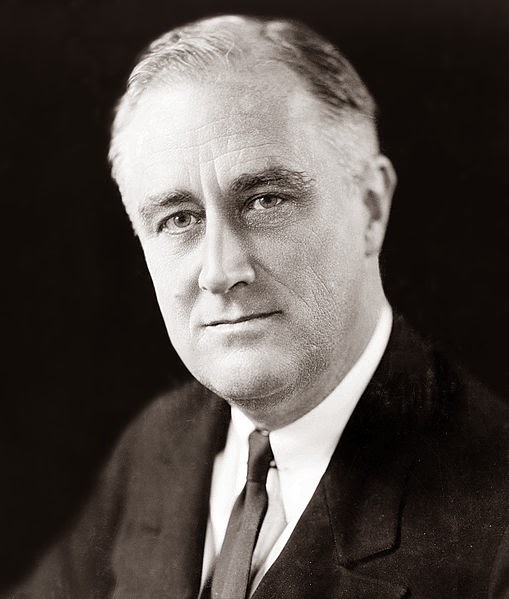
A radical is a man with both feet firmly planted — in the air. A conservative is a man with two perfectly good legs who, however, has never learned to walk forward. A reactionary is a somnambulist walking backwards. A liberal is a man who uses his legs and his hands at the behest — at the command — of his head.-Franklin Roosevelt

Saturday, April 19, 2014

Death


I do not remember my Grandfather, my mother’s father, as much as I would like. Of my two younger sisters, I’m the only child old enough to retain any trace of him. He died when I was nearly seven. I have faint memories of him being well, but I mostly know him when he was in a terminally ill state. At times, I have wished that I was born years earlier and could have developed a real rapport with him. This was the case with my cousins, who are now in their forties.

Grandfather doted upon me and my mother. She was his youngest child by far. Sixteen years separate my oldest uncle and my mother. My mother does not remember her brother living at home. Grandfather was forty-five when my mother was born. Mom was influenced by the fact that her parents were much older than those of most of the kids her age. My father had been raised in similar circumstances, and I imagine that shared fact often drew them together.

The cancer had taken its toll. It was terminal and progressed swiftly. My parents believed that his gaunt, haggard appearance would only upset myself and my two sisters. We were never allowed to see him at his sickbed. Towards the end, my parents inexplicably changed their minds one day. I’d been eager to see him after months apart and leapt at the opportunity.

I saw a weak, pale figure propped up on pillows. He had just enough strength left in his body to address me. Grandfather often quizzed me informally on topics of history. He knew I had an interest in it and enjoyed teaching me new facts and ideas.

Did Harry Truman go to college?

His voice was little more than a resigned, sad whisper by then. My first instinct was to say no, but then I changed my mind. He looked disappointed at my response.

No, he did not.

I felt as though I’d failed him somehow. I was quickly ushered from the room, a place I would never again return. It was clear that my parents had arranged only a momentary visit and that I would not tarry there long. He passed away a couple months later.

Now to the matter of the question asked of me. I was called bright and gifted beyond my years. Older people seemed to always want to ask me trivia. I acted the part of the boy genius, providing the correct answer. About the same time, an elderly man offered me ten dollars if I could recite the alphabet backwards in his presence. My mind does not work in such a fashion, but ten dollars was a lot of money in those days. I felt a bit like a trained animal in a sideshow, but appreciated the opportunity to flex my intellectual muscles.

With my Grandfather, there were different motives for this game of teacher and pupil. To him, I was not a curiosity, not a novelty. This line of questioning about Presidents and colleges was due to my Grandfather’s own upbringing. Though more than capable enough intellectually for college, the Great Depression left his family without the money to afford it.

The whole of his life, he felt inferior to those who’d had the opportunity to go. He was an autodidact with an amazing recall and had taught himself as much as any professor could, but still the deficiency nagged away at him. Education was important to him. He read the newspaper front to cover every day and sometimes two or three.

It is a stock cliche of a sort to introduce the specter of death at a young age. It happens frequency and from that perspective it has resonance. The pomp and circumstance of dearly departed does make a powerful impression upon a child. I recall the slow procession of black cars pulling alongside the roadway of the cemetery. I remember taking shade under the tree he’d planted years before with his own hands. The family plot was a reverent destination we would visit for years afterwards.

I think the dead deserve our respect. Not only do they remind us that someday we ourselves will die, but we ought to take time from our busy lives to remember the memory of those who influenced us. Every time I visited the graveside I was always struck by a sense of loss. I felt that he’d been taken from me prematurely, but I trust that God had a greater purpose for him. If I get to Heaven, I hope I get a chance to speak at length to him.

My mother was, quite understandably, utterly devastated. At thirty-one, she was younger than I am today when she lost her father. I remember she entered into a period of deep grieving that lasted for over a year. My Grandfather’s name could not be mentioned in her company, or she would begin sobbing. I can’t imagine what it would be like to lose a parent, though I know I will experience this same feeling eventually. That eventuality beckons sooner than I feel comfortable contemplating.

The death didn’t haunt me the way it could have, if I’d been a little older. There were a few scary moments here and there, but I was deliberately insulated from most of them. I remember the paramedics arriving, taking him from his bedroom to the hospital. My Grandparents had moved to a retirement community in Birmingham from the family home so that Grandfather could be closer to his doctors.

There was a tense energy in the air that I picked up on, but I said nothing. I didn’t know what was going on and, in any case, everyone was too busy and preoccupied to explain it to me. It must have been close to the end by then. In my mind, the events are scattered, but I was very young. I suppose it must appear this way to any young child.

The class assignments for a new school year were posted on the outside doors to the front entrance of my elementary school. Having passed Kindergarten, First Grade now beckoned. Had Mom been less preoccupied, she would have intervened in my behalf. I was assigned to a teacher who genuinely hated children. Why she’d decided to take up the profession is beyond me. I imagine she could have been extremely burned out. Her reputation preceded her and no child looked forward to nine full months with her.

Mom made one last desperate, in-person appeal to the principal, but received a lecture instead of any sympathy. The next school year, he’d be sent to transportation, which in some public schools is the equivalent of being sent to Coventry. In the school year to follow, I would contract a severe case of chicken pox that kept me out of school for nearly a month. My teacher didn’t call even once.

Saturday Video


Thursday, April 17, 2014

My Poetic Contribution

On behalf of National Poetry Month, I submit the following. I am a born prose writer and poetry is a discipline I have never mastered, but hard work made my work passable, at least.

The Death of the Party

At evening’s end
exaggerations
caricature

motivated by restlessness

like an itch unscratched
leading directly to the door

these remain when all else
has long passed away

In those last waning moments
Conversation competition commences

cleverest victory can
circumvent the social hierarchy

Yet, age and experience
trumps youth’s insecurity

Humor—
the wild card

The catalyst
for our brand
of social mobility

Older party-goers
establish the rules

Remember similar
defeats

Inadvertent misinterpretation
Often reflects intention

Wednesday, April 16, 2014

False Prophets

A work of fiction.

It goes a little something like this. If you know the right psychiatrist, he or she can contact the admitting psychiatrist on call who will eventually find you a bed. Otherwise, you're on your own. Without someone to grease the wheels, you're a low priority, neither the victim of a car accident nor a heart attack. Psychiatric wards are not my favorite places to be, especially because I’ve experienced somewhere around twelve lengthy stays over time.

After waiting for eight hours in the ER, I was finally triaged and placed in a room to wait a little more. The hospital was the best in town. I'd made a conscious decision to choose it. Even in a fully socialized system of health care, some hospitals provide better care than others. This is based primarily on available financial resources. One can make the system fairer, but capitalism reigns.

All the beds were taken, so I was transferred to another hospital. In accordance with the law, I had to be placed somewhere, whether it was in the next country over or even the next state. Where I was headed now was based entirely upon chance. I wasn't thrilled with the prospect, but had to admit my hands were tied. I needed care and I couldn't sit by myself in that room forever.

Time means nothing to those who work in hospitals. At three o'clock in the morning, a slot opened up at the worst hospital in the city, one that I'd recently read was in danger of completely coming apart at the seams. I wanted to leave almost immediately upon being admitted, from the moment the wheels of the gurney upon which I had been placed hit the tattered carpeting of the main hallway. I needed help and couldn’t turn down any offer of assistance.

Upon entrance, the patients reacted to me in unexpected ways. Some treated me like The Messiah. The label was not deserved, nor sought. My mistakes and limitations were no different than theirs. Mine came attached with the splendor of a college education, a loftier vocabulary, and a few more exotic road trips. Even had I tried, I wouldn't have been able to convince the most mentally ill of my mortal status.

I noticed, rather quickly, that they asked to borrow my clothing. They coveted things that had touched my body, lusted after them like talismans, as though they somehow had power and charm. There was a touch of the supernatural about it, as though they believed that wearing my clothes would make my own supposed superior traits transfer onto them. I imagined they worshiped them, placed them before altars, and whispered incantations before bed.

I went through the motions as I had many times before. During occupational therapy, I yet again unenthusiastically water-colored a cheap piece of balsa wood in the shape of a fish. While doing so, I made unsatisfying small talk with fellow patients. Social class and educational opportunity kept me from the company I sought, forcing me to skim across the surface instead with dull and unsubstantial small talk. I love deep conversation, which leaves me feeling satisfied, but I had to make do with the audience provided me.

I never quite understood the point of what we were doing. I take that back, somewhat. On one level I did. It kept us from stewing in our own misery, distracted for the moment by something designed to keep us busy. I didn't understand the phrase occupational therapy. This activity wasn't exactly labor-intensive, nor did it promote any sort of helpful exercise that I could reckon. What it did do was occupy patients' time while the staff took smoke breaks and drank copious amounts of diet soft drinks.

Every day, punctually at 1 pm, we filed into a room with lots of tables and chairs. One was supposed to select three colors that he or she preferred, all found in large plastic see-through cylinders. One hoped that they weren't painted shut from someone else's earlier carelessness. We were next supposed to select an object to paint. I went through the motions, but not with much relish or zest for the task at hand.

Each of us patients had a measure of unsupervised freedom perhaps undeserved, one that could be dangerous. The staff was too consumed with making sure that a particular patient, who everyone called Mister Norris, wasn't sexually harassing the other patients or mutilating himself. He would sidle up to female patients and express a desire to kiss them. The only thing the staff could think to do to discipline him was to restrict his smoke breaks.

No, you ain't smoking today, Mister Norris, said the nurse, her face a portrait of annoyance, hands on hips. I heard you been causin' trouble.

I had the misfortune of rooming with Mister Norris. I would find bloody rags and paper towels in the trash can. I would wipe the urine off of the toilet seat. I would never walk around in the bathroom without rubber soled shoes. Having lived with men before, some of this was expected, but I still found that a lack of basic cleanliness was totally disgusting.

They called all of us, even the hopeless cases, Mister, Miss, or Misses. From that treatment, one could almost believe that we really weren't stark raving insane, that we were instead guests at some exclusive resort with horrible food and dishwater coffee. I appreciated the professionalism, but it didn’t seem to fit here, not under these circumstances.

The true entertainment was watching Mister Norris moonwalk across the room with a dishcloth on top of his head, much to the amusement of other patients. The day room was where we spent most of our waking hours. A round-faced, sarcastic patient had maybe one-half a front tooth left, due to years of meth addiction. I tried to ignore the visuals. At some point, she accidentally brushed up against me, whereupon the oily foundation she had caked onto her cheeks rubbed off on me.

Is this even? I didn't have the heart to tell her that she was asking the wrong questions. Whether or not her makeup was evenly distributed wasn't the problem. I doubt she was well enough to do it herself. Until she recovered, her hands were too unsteady, her perception too impaired.

Look, I never told you I was a nice guy. I generally enjoy being left alone, but thinking hideously cruel things about fellow patients was my means of compensating.

I had various rude nicknames for certain patients I disliked. Snow White was the moniker of one such woman, an exceptionally pale-skinned lady in her mid-thirties who had slashed her wrists. She showed us all the stitches that had closed the once open wound. It reminded me of horror films--the way that eyelids are sometimes sewn shut. She pulled out her Bible in an effort to show us how the events of the present day were connected in some large, overlapping way to Scripture.

A day later, she terrified the more trusting, and more devout members of the ward by feigning a seizure in the dayroom. Faking her convulsions she continually repeated the same verse in Proverbs. This had drawn the fury of the rest of the patients, and leaving her now a pariah. Other patients angrily confronted her for faking illness and momentarily turning the ward upside down. I suppose she wanted the attention.

Ain't I a good actress? 

Later that same day, she practically dry-humped me, leaning over my body under the pretense of re-attaching a loose telephone cord. She wondered out loud if she could only divorce her husband. I wasn’t sure what she was implying, but didn’t want to find out. I wasn't interested, if she was suggesting I might consider being her lover.

I had no peace of mind. Mister Norris talked non-stop. Initially, he'd only kept me anxious, but now it was much worse. The staff had seen everything by now. A male nurse gave me a reassuring smile and told me oh, he's just old and confused. Mister Norris droned on and on, returning to the same two or three topics. He owned a house over by the helicopter pad, he claimed. He’d point out the window towards the location, with great emphasis, assuming you were also capable of seeing it yourself.

I arrived at the hospital in the middle of some fairly massive exploration of my gender identity. I was too weak to hide evidence of it. My socks off, Mister Norris looked at my painted toenails. I wish I had some polish on my nails. Would you do it for me? You know if they saw a man like me with polish on his nails they'd call him a sissy. I wasn’t sure how to honor his request and had not, in any case, brought toenail polish with me.

My assigned nurse very kindly offered to locate some nail polish remover for me. One of the other patients had loudly accused him of being gay and in denial. Based on my perception alone, I suspected this was probably true, though I did not hold the same intolerance. I took offense but tried to gently correct her. Because she looked up to me and respected my opinion, she never raised the subject again.

Tuesday, April 15, 2014

What's The Buzz?

I manage to blow out my vocal chords halfway through, but the rest of the vocals were too good not to include. These are always live takes, and often prone to a few mistakes here and there.


(Apostles)

What's the buzz?
Tell me what's a-happening

(Jesus)

Why should you want to know?
Don't you mind about the future
Don't you try to think ahead
Save tomorrow for tomorrow

Think about today instead
I could give you facts and figures
Even give you plans and forecasts
Even tell you where I'm going

(Apostles)

When do we
Ride to Jerusalem?

(Jesus)

Why should you want to know?
Why are you obsessed with fighting?
Times and fates you can't defy

If you knew the path we're riding
You'd understand it less than I

(Apostles)

What's the buzz?
Tell me what's happening

Why should you want to know?

While you prattle through your supper
Where and when and who and how
She alone has tried to give me
What I need right here and now

(Apostles)

What's the buzz?
Tell me what's happening

Monday, April 14, 2014

Today's Untouchables: Sex Offenders


Sex offenders are the foremost pariahs of our current day. In opinion polls, even intravenous drug users place higher. A recent series of high profile cases involving child sexual abuse have revealed the maddening frequency of the problem. My hometown newspaper now exists in electronic format, and as I read the local news, it seems that every other week brings a report of a new crime against minors. This is only the tip of the iceberg. Most are the product of incest, unreported, hushed up within families. The offenses that occur in a public setting, among those who aren't blood relatives, most often make it to most peoples' attention.

One of the few places sex offenders are welcomed and made to feel included are in houses of worship. It shouldn’t be said that the red carpet is necessarily rolled out for them. Yesterday, during Meeting for Worship, an issue that has lain smoldering for over a year once again took center stage. A frequently tone-deaf member of the Meeting implied strongly in her vocal ministry that the sex offender who has been Worshiping with us has no right to participate. He has provided no problems whatsoever for anyone since he began attending, three or so years ago. In her mind, exhaustive policies made to ensure child safety were a waste of time, since there was no way to contain the potential threat.

The sex offender she called out by her vocal ministry took understandable offense to the treatment, leaving Worship in dramatic fashion, midway through. His son departed with him, leaving an ugly energy behind in the Meetinghouse. Healing ministry followed, though what had been a joyful gathering until then was still soured by its conclusion. The man rightfully noted, as he parted, that he had been treated the same way as the tax collectors, prostitutes, and lepers of Jesus’ day.

Striking a balance between button pushing and responsible journalism is increasingly difficult. Gotcha journalism exaggerates the threat he poses to children. Prior to writing this post, I read three separate accounts of this man's recent life. Each account was quick to rush to judgment towards what was billed as an inexcusable parole violation for a deplorable human being. I read them now as an exercise in yellow journalism. He spoke in front of a group of people where children were present, but had gotten permission from his parole supervisors. In short shift, the chargers were dropped, but it was further proof that he will live the rest of his life with a target on his back.

As I read each article posted online, his full name is never presented until halfway down the page. He is introduced mostly as “a sex offender” or “a convicted child molester”, depending on how inflammatory one wishes to be. Following closely behind is another retelling of the crime for which he was convicted and spent eighteen years in jail. He will wear a scarlet letter until his dying day and he knows it. If he returns to prison, he knows he will be specifically targeted and face the constant threat of being murdered by a fellow inmate.

The details of his offense are always enclosed with the salacious details. I’ll retell it one more time, to see what kind of impact it makes on you. The man sodomized a nine-year-old boy, nearly two decades ago. Since then, he has admitted he was wrong and has gone through intensive therapy in prison. In our company, he has willingly assented to be chaperoned and is shadowed everywhere he goes, save the bathroom. He has agreed to never be alone with children or even a single child.

With all the hassle, he has asked to be a part of us all the same. I fault the local media for preying on the fears of parents at the expense of a story. I don’t know all the details of his crime and would feel uncomfortable asking for them unless they were volunteered, which is unlikely. His very presence among us has been very controversial. Some have left us. The rest of us have wrestled with our own anxiety and fears, but also our desire for inclusivity.

I hope that he returns to our Meeting. It is difficult to strike a balance with issues so emotionally charged. No one ever feels halfway about child sexual abuse. Some of us are very uncomfortable with the notion of a sex offender worshiping with us. Some of us believe that a radical, difficult concept of tolerance and love are the very foundations of our Quaker faith. We choose our words carefully to not seem to favor one view or another, else we risk disturbing the fissure that has yet to fully heal.

Other groups are not nearly as magnanimous as we are. I know that in certain feminist conferences or gatherings, male allies with a confirmed history of violence towards women would be banned from attending. If this history included sexual assault, that would be further reason to keep them from taking part. This would be true even if the allegations, proven or unproven, were many years old. If he had done time in jail because of them, excluding him would be more tempting and perhaps even more certain.

Get-togethers with different standards do not adhere to the same definition of forgiveness and tolerance. I’m not being judgmental. Everyone has a right to set the ground rules and the boundaries for themselves. Yet, it might be worthwhile to examine what emotions these arrangements and negotiated compromises bring out in us.

I hasten to bring this up one more time, but I was a victim of childhood sexual abuse when I was the age of the man’s victim. The man who abused me is now deceased and has been deceased for many years. I don’t have the opportunity to confront my abuser, or to worry that he might show up at my conference of choice. This is a good thing in some ways. And yet, even with my history, I believe that the sex offender who worships and participates with humility and cooperation has a place among us.

This statement isn’t made to divide the Meeting between those who favor his attendance and those who don’t. It is rather to say that each of us has past events we’re not proud of confronting. One of the most effective arguments against capital punishment follows: Imagine if you were judged on the basis of your worst day on Earth.

I pivot to another identity and cause very important to me, that of Feminism. Sometimes I, too, want to throw down the gauntlet and draw lines in the sand. That impulse contradicts what my faith teaches. I eagerly welcome self-identified groups who clamor for protection under the moniker of what is termed safe space. People have been persecuted, injured, or psychologically damaged in some way, and giving them recognition and protection has become a patented part of the liberal diaspora. But know this. No space is ever safe enough, and I say that both to 20 year old college students and 33 year old couples who have just had their first child.

In a very abrasive kind of way, this is what the speaker at Worship meant to convey. Even two responsible parents couldn’t prevent my own abuse. Early Quakers believed in the perfectibility of the soul, wherein enough hard work and listening to the Holy Spirit might eventually lead to a perfect balance with God’s will. That's not too far away from the idealism of liberal activism.

I know too much of human nature and human frailties to ever believe in the perfectibility of the soul myself, and it’s an idea among fellow Quakers that is rarely believed today. Knowing the foibles of humanity, should we come down harshly or be more accepting? I admit I’m often not sure which is the correct approach.

Sunday, April 13, 2014

Quote of the Week


Reward for information leading to the apprehension of Jesus Christ

Wanted for Sedition, Criminal Anarchy, Vagrancy, and Conspiring to Overthrow the Established Government.

Dresses poorly, said to be a carpenter by trade, ill-nourished, has visionary ideas, associates with common working people, the unemployed, women, and bums. Illegal immigrant, believed to be a Jew. 

Alias: Prince of Peace. Son of Man, Light of the World. Professional Agitator. Identifying marks on hands and feet as the result of injuries inflicted by an angry mob led by respectable citizens and legal authorities.

Saturday, April 12, 2014

Saturday Video

I don't normally post country songs, but the lyrics were too good to pass up.


There's no time to kill
between the cradle and the grave.
Father Time still takes a toll
on every minute that you save.

Legal tender's never gonna change
the number on your days.
The highest cost of livin' is dying,
that's one everybody pays.
So have it spent before you get the bill,
there's no time to kill.

If we'd known ten years ago
today would be ten years from now
Would we spend tomorrow's yesterdays
and make it last somehow?

Or lead the cheers in someone else's game
and never learn to play
And see the rules of thumb are
all the same that measure every day.
The grass is green on both sides of the hill,
there's no time to kill.

No time to kill, even I've said it
and probably always will
But I can look ahead
and see that time ain't standin' still.

No time to kill but time to change
the kind of hurry I've been in
And quit this work and worry
looking back at where I've been.
If you don't look ahead nobody will,
there's no time to kill.

If we had an hour glass
to watch each one go by
Or a bell to mark each one to pass,
we'd see just how they fly.

Would we escalate the value
to be worth its weight in gold?

Or would we never know the fortunes
that we had until we grow old?
And do we just keep killin' time
until there's no time to kill?

No time to kill,
even I've said it and probably always will
But I can look ahead
and see that time ain't standin' still.

No time to kill but time
to change the kind of hurry I've been in
And quit this work and worry
lookin' back at where I've been.
If you don't look ahead nobody will, there's no time to kill.

No time to kill, even I've said it
and probably always will
But I can look ahead
and see that time ain't standin' still.

No time to kill but time
to change the kind of hurry I've been in
And quit this work
and worry lookin' back at where I've been.

If you don't look ahead nobody will,
there's no time to kill.

No time to kill
No time to kill

Friday, April 11, 2014

Cigarette Smoking as an Indicator of Poverty


I was an underage cigarette smoker. One had to be 19 to purchase cigarettes legally in the state of Alabama, but I found ways to circumvent the law. I was 15. If I couldn’t find them by less exhaustive means, there were always cigarette vending machines to target as inconspicuously as possible. The city council and the mayor’s office were aware of the activity of kids like me, and within two or three years they would ban vending machines for good. By then, I was able to legally purchase them myself.

The habit was picked up from my first job in a supermarket. A shy teenager, I’d never seen any reason to partake, though I'd been told numerous times that smoking would kill me. Applying for the job as grocery sacker and all-purpose laborer had been my father’s idea. In the blue collar, rural county where he grew up, a job at a grocery store was a coveted prize. Pitching the idea to me, Dad talked about how he’d badgered the general manager of a local store for a year before being given the job. The lesson taught was that of persistence, a sentiment admirable enough, but the context was totally wrong.

He didn’t realize that in a suburban setting, there were always low-paying jobs available. I was hired on the spot and promised minimum wage, which was then $4.75 an hour. The only thing I learned of value fell under the category of vice, not the value of hard work and self-sufficiency preached to me. I was taught how to steal behind the backs of my bosses, which was easy, though I never did. Part of my job responsibilities involved taking cartons of cigarettes and placing each pack one-by-one in racks. This was an excellent way to accidentally retain a pack or two for oneself.

I never stole, as I said, but other workers gave me a pack or two on occasion to share the wealth between us. A safer way was to bribe the butcher, who would buy a pack for you, provided you added an extra dollar or two to the total. These were, as has been noted by a clever writer, back in the days of Kurt Cobain and $2.50 per pack cigarettes. Alabama kept its sin taxes low out of deference to the tobacco lobby. I smoked for the next ten years, but quit several years ago and have never resumed the habit.

I write this lengthy introduction to speak to some new discouraging statistics. In some Alabama counties, cigarette smoking remains persistently high. I'm sure this is true throughout the entire country. Unsurprisingly, the poorest counties have the highest rates of tobacco usage. Statistically speaking, men smoke more than women, but when I was a smoker myself, the rates based on gender seemed to be equal. Male smokers have declined slightly over time, but curiously, more women have begun to use tobacco products.

For years, it was considered unladylike for women to smoke cigarettes. At the turn of the last century, an acceptable form of tobacco usage for women was to dip snuff. My great-grandmother was one of these. The flappers of the Twenties flaunted social conventions by smoking publicly. The increase among women may be another sign that gender equality is growing ever closer. I don’t champion this distinction for health reasons, obviously, but it is worth taking into account.

People in poverty often self-medicate. They may not be informed about healthier options. When I was a smoker, I found that nicotine provided a calming effect for my bipolar disorder and anxiety. When hospitalized for either depression or mania, nearly 100% of my fellow patients, myself included, lived for our hourly smoke breaks. Though these days I tend to judiciously avoid the smell of smoke when waiting at the bus stop, I’ll never come down harshly on anyone who keeps the habit.
 
In my father’s county of origin, smoking rates remain persistently high. According to recently released data from the University of Washington’s Institute for Health Metrics and Evaluation, Chambers County, Alabama, reflects the results of persistently stagnant wages and not much in the way of opportunity. In 2012, rates of total smoking, opposed to daily smoking, are at slightly over 28%. Sixteen years before, in 1996, these same rates were less than a percentage point higher. Stats like these reveal much, but poverty is the metric by which I choose to view these persistently unhealthy indicators.

In the cities and the more affluent areas, we continue to slowly move towards an eventual ban on tobacco products. We’ve banned smoking inside clubs, restricted where tobacco products can be sold, and expressed our societal disapproval. One might think that these efforts were enough, but even informed consumers can ignore how unhealthy cigarette smoking really is. I did, though my motives were mainly because of the ancient combination of peer pressure and teenage rebellion. I could take a paternalistic stance about this, but that would ignore the complexities.

I didn’t have much in common with those who put frozen food in its appropriate place or scanned groceries. Everyone I knew smoked. No one ever told me to stop or reminded me that I was still many years underage. They were more insistent that I learn to snuff out my cigarette butt in the ashtray the proper way, so that it wouldn’t continue to burn, flooding the breakroom with blueish smoke. Our gaze must focus beyond our righteous indignation before we can even begin to understand the problem.

Thursday, April 10, 2014

Anyone Can Play Guitar


Like millions of American teenagers, I entertained the dream of learning how to play the guitar. For most, this exercise in wishful thinking falls under the category of unfulfilled New Year’s Resolution. Guitars of varying quality and expense are purchased, often by benevolent parents. A few half-hearted lessons are undertaken, but nothing much comes of them. By the end, guitar and case are shoved into the back of a dusty closet and entirely forgotten.

For me, the outcome was quite different. I’d shown a natural talent and musical ear from a very young age. My mother, who loved music, quickly identified my ability to reproduce the melodies of classical works on the piano. I remember playing the first couple minutes or so of Mozart’s “Turkish March”, all with my right hand. He'd composed it as a child, when he was about my age. My mother took it upon herself to teach me the instrument, as she had some proficiency herself and had taken lessons herself earlier in life.

Piano, regardless of interest, was not a seamless fit. I found reading music to be a chore. Playing piano requires a manual dexterity that only frequent practice provides. It also insists upon an integration between the differing parts of the left and right hand. I could only manage one half of the equation. Left hand positions, even if they were only chords, had to be learned painstakingly, in rote form. Unlike the basic melodies produced with ease by my right hand, my musical ear deserted me.  

In time, my mother found an elderly woman who taught piano out of her basement. Her house was a five minute walk from my own. Even with her expertise, I found the training confining. By then, I was building a strong and abiding love for rock and an appreciation of what would within a few years be called alternative. The formal style I was learning seemed trapped in a time capsule, years out of date.

I never lost my love for music, but I believed that my role was fated to forever be that of a spectator, not a performer. A dramatic change I could have never foreseen arrived the summer in between my freshman and sophomore year of high school. Football had consumed most of my free time earlier. The void now present in its place had to be filled by something. I resolved that this time I would take on a discipline I enjoyed, one I could do in isolation.

Nature abhors a vacuum, so this time I tried my hand at a much sexier instrument. Five years before, I’d taken lessons one summer from a co-worker of my mother’s. Mom was a teacher in an elementary school, and so was he. He arrived at my house punctually once a week. Much as had been true with the piano lessons, I didn’t make much progress there, either. I assumed that guitar was completely beyond my abilities.

The second time, as it turns out, was the charm. Previously unable to change chords quickly and crisply, I discovered to my amazement that I now could. The small victories added up one by one. After learning a few rudimentary chords, my basic understanding of the instrument grew and grew. I knew enough to let my strong singing voice take center stage, an instrument in and of itself.

Now in high school, I heard through the grapevine about a particular English teacher. He was an impressive guitarist in his own right, even moonlighting as a paid performer in his spare time. The band of which he was a part played regular gigs around town. There was a kind of mystique around him I was curious to observe for myself. He won the respect of many other students, which was rare.

Years later, I learned he had mentored several generations of aspiring guitarists, one of which later achieved a degree of instant fame on a popular television show. His name was Taylor Hicks and he ended up winning American Idol during its fifth season. Like me, he had been an athlete in high school, but was more comfortable as a musician.

I spoke to this teacher after school one day. I can't remember exactly what was said by way of introduction, but he indicated that he'd be willing to play together.

We can jam, but I don’t teach lessons. I want you to know that up front.

By this I suppose he meant he had no patience for the nitpicking and repetition that characterizes most musical lessons. If I was willing to play along with him, and maybe ask for clarification every now and then, that was okay. He was always willing to stay after school an hour or so. With time, I learned a vast variety of classic rock covers, the sort any Friday and Saturday night band at a bar or restaurant would be asked to reproduce passably. I was setting myself up to play covers for a few hundred dollars a night, as he did.

With his help, I even began to learn a few lead guitar lines, though soloing was a talent I did not possess. The pentatonic scale was my best friend when I dared take a solo. However, I did become a very capable rhythm guitarist, which a band always needs. The teacher sparked my curiosity. I found that I could, with enough work, figure out the chords to many of the songs I loved. The Internet once again provided me a great wealth of information. An army of guitarists like me posted the chords and changes to songs they’d uncovered through their own musical discernment for free.    

The fuse ignited, I kept pushing my understanding further and further. A series of happy accidents led to increased comprehension and competence. Learning barre chords was a welcome and totally unexpected breakthrough, one I managed when practicing by myself one afternoon. Many guitarists rely on that particular skill to expand their musical repertoire. Without it, changes in key and chord progressions would be more limited, as would the seemingly simple flourishes that make a song memorable.    

I built up the requisite callouses on the surface of my fretting hand. I learned about strings and picks, and which ones I preferred. I could even passably talk shop with another serious guitarist. Though I found it distressingly challenging to learn, I eventually figured one of most tedious parts of being a guitarist. There is a proper way to change strings, one I did not understand at first. Most things came together subconsciously, as a matter of course. Something magical and exciting was present, an enthusiasm and energy that had never existed within the stuffiness of the pianoforte.

From him, I learned the Led Zeppelin and The Who songbook. Intrigued, I learned much from observation. When I struck out on my own or played with other musicians, these were songs I could comfortably slip into during jam sessions. If I wanted to vary my setlist, I could add them to my repertoire. It didn't make me much money, but I was thankful for the creative outlet.

Now that I'm in my early Thirties, I know the window of opportunity no longer exists, but I question whether anyone can make a living in music these days. Most people I played with have switched to hip hop or jazz, because that's where the money is these days. I believed that talent alone would be enough, but the stakes are too high and the slots are too limited. My chances were always infinitesimal, but I do have some interesting stories to share.  

Wednesday, April 09, 2014

Stop Your Sobbing

I first encountered this song when it was performed by Chrissie Hynde and the Pretenders, but the original is by The Kinks.


It is time for you to stop all of your sobbing
Yes it's time for you to stop all of your sobbing
There's one thing that you gotta do
To make me still want you

Gotta stop sobbing now
Yeah, stop it, stop it
Gotta stop sobbing now

It is time for you to laugh instead of crying
Yes it's time for you to laugh so keep on trying
There's one thing that you gotta do
To make me still want you

Gotta stop sobbing now
Yeah, stop it, stop it
Gotta stop sobbing now

Each little tear that falls from your eye
Makes, makes-a me want
To take you in my arms
and tell you to stop all your sobbing

Yes it's time for you to stop all of your sobbing
There's one thing that you gotta do
To make me still want you

Gotta stop sobbing now
Yeah, stop it, stop it
Gotta stop sobbing now
Stop it, stop it
Gotta stop sobbing now
Stop it, stop it, stop

Tuesday, April 08, 2014

Mysticism and Activism


I rarely repost the writings of others, but this one speaks powerfully to me this morning. My activist readers, especially the feminist ones, might find much here that speaks to them.
___________

My take on this is that contemporary activism is a part of the largely political and activist focus that contemporary American religion is gripped by at this time. In other words, I see Quaker activism as the same as evangelical activism, or the activism of many Catholics, for various causes, for various legislative platforms, and for various candidates. For example, evangelicals and Catholics will urge participation in various anti-abortion demonstrations, and support of legislation and court action to further this agenda.

In the same way Quaker activists urge participation in demonstrations for their causes and concerns, and support of legislation and court action to further their particular agenda. I don’t see Quaker activism as being distinctive; I think of it as simply a part of what is happening in American religion in general at this time. Both sides see activism as the ultimate goal of their religious expression; they just disagree about the particulars of the activist focus.

The greatest difficulty I have with the prior post is that your view is that mysticism is an adjunct to effective activism rather than an end in itself. For example, you wrote;

“To experience the Spirit is to experience a call to action and to act with the faith that the Light will be revealed—through deep listening—after each step is taken.”

You see, that is not how I experience the Spirit. I don’t experience the Spirit as a ‘call to action’. And this is the divide between the mystic and the activist. The activist views contemplation, gathered silence, dwelling in the light, as tools for a more effective activism. In this way these prayerful engagements are hijacked by the activist and are transformed into means rather than ends; they become tools for the activist in the same way that making a poster, or putting up a web-page are tools for effective activism.

What the activist does not comprehend about the mystic is that, for the mystic, interior prayer, gathered silence, is the leading, is the purpose, and is sufficient unto itself. The mystic does not view these engagements as tools, or add-ons, for a political purpose.

From the activist perspective, this is inadequate. As Howard Brinton wrote in his ‘Introduction’ to the book ‘A Guide to True Peace’, “This solution [of interior prayer] will seem too simple to intellectuals and too inadequate to activists, the two groups that dominate our age.” This is because the activist is always outward oriented and wants to see results ‘in the real world’. In contrast, the mystic finds the realm of interior silence to be as real, or more real, than what is found by focusing outward. In the inward turning the mystic finds a true home.

For the activist this is to ignore the suffering and injustices in the world. But for the mystic there is the experience, which grows over time, that the silence and stillness found by turning inward is a blessing to the whole world, a blessing which does not give rise to strife and contention. Because this blessing is not palpable or measurable in material terms, the activist tends to dismiss this.

Monday, April 07, 2014

The Story of Jesus Matters More


Over the weekend, I watched a well-made documentary. It discussed how the language and content of the New Testament changed considerably from the time of Jesus to hundreds of years later. During the program, multiple biblical scholars were interviewed, and many of them disputed the authorship of particular books.

The focus was specifically directed on the New Testament, the section that I hold in greatest reverence. According to leading authorities, of the fourteen letters and epistles attributed to Paul, only half of them were actually written by him. A compelling case was made by analyzing the writing style and choice of words contained within each book.

Those who hold Christianity in suspicion use facts like these to make their case. To them, organized religion is a scam, too manipulated by councils and emperors to be taken seriously. It is true that particular books and passages never made it into the full canon, many at the insistence of church leaders. Some of them can be safely eliminated as inauthentic and mere curiosities, but a few could very well hold great truth.

In the First Century A.D., which Christianity lionizes as a golden age, this new religion was a very small Jewish sect which had yet to take firm hold. The voyages of the Apostles and Paul to visit other churches are portrayed as dramatic events, but they are very unimpressive affairs. They produced beautiful written passages, but they struggled for oxygen with those who wanted to preserve a more Jewish religious heritage or were conflicted as to whether Gentiles could become Christians. Christianity was never a monolithic entity where everyone believed the same thing, as many think.

It took the Roman emperor Constantine the Great to embrace and expand a faith originally based in the Middle East. Christianity, now the state religion of Rome, was spread far and wide. Scholars have argued that Constantine’s conversion was undertaken for self-serving ends, rather than any particularly strong religious convictions. What cannot be denied is how quickly this new religion took hold and spread throughout the entire world.

The religion of Rome, especially those of soldiers, was homosexual in nature. Christians emphasized heterosexual unions and interpreted certain biblical passages as homophobic. Three passages in the New Testament have long been interpreted as homophobic, but in each of them, the translation and true meaning is not especially clear. In any case, regardless of implication and intent, these passages were interpreted as critical of homosexuality. Constantine wanted to swell the population of the Roman Empire, a move that would ensure that its borders were properly protected. Any faith that favored procreation would be satisfactory for his purposes.

I don’t think it really matters as to who wrote what, nor do I care about the precise chronology of what book or Gospel came first. These are interesting intellectual exercises, often embraced by people who would find Christianity threatening unless it was reduced to a scholarly pursuit. The words that remain with us are significant. The wisdom, sayings, and acts of Jesus remain, though I’m sure that they aren’t 100% accurate. For a time, the Gospels, which tell the life and ministry of Jesus, were spread here and there by oral storytellers, not by a written text. I imagine a few details changed here and there with every retelling.

What we have left is a singularly impressive story. I find it difficult to believe anyone could conjure the tale up purely out of thin air. Jesus was a radical prophet who made enemies by pointing out the hypocrisy of the elite priestly class. Eventually, this led to his death. History records many such people since then, but what made Jesus different is that he was human and Divine. God loved us enough, as flawed and imperfect as we are, to walk the earth in the form of his creation.    

In time, our own words will be garbled. Even with increased technological advances, the past will begin to slip away from our grasp. If we are significant enough to have our words carefully preserved, we may have the benefit of one or two generations of influence where our legacy and works are preserved with relative accuracy. But when primary sources are lost forever, copies of copies are the only documents remaining for us to shape our opinion. The same is true with the Bible and the New Testament.

In an area long before recording devices, it’s not surprising that the complete truth has gotten lost somewhat. We may desire immortality, but like a viral video, what strikes a chord with the audience is up to chance and luck. We are not in total control of our life story, nor how subsequent generations will perceive of us.

The book of Ecclesiastes in the Old Testament, written long before Jesus’ life and ministry, shows that humanity has known about its limitations for a long time.

What do people gain from all their labors
    at which they toil under the sun?
Generations come and generations go,
    but the earth remains forever.
 What has been will be again,
    what has been done will be done again;
    there is nothing new under the sun.
 Is there anything of which one can say,
    “Look! This is something new”?
It was here already, long ago;
    it was here before our time.
 No one remembers the former generations,
    and even those yet to come
will not be remembered
    by those who follow them.

What troubles us has troubled many who have come before us. Seeking perfection in belief will only produce anguish and frustration. We can try to strive for immortality, but our time in the sun is finite.

When I was on my Quaker Meeting’s Ministry and Worship committee, it was our responsibility to plan Memorial Services, which are the term we use for funerals. Many times, few of us could remember who the person was. I hope that when I die, the people in charge of planning my Memorial Service will not have forgotten me completely.

Sunday, April 06, 2014

Quote of the Week


"I have the face of a vampire, but the heart of a feminist."-Theda Bara

Saturday, April 05, 2014

Saturday Video


She couldn't stand me anymore
so she just took the kids and went.
You see, I've got a drinkin' problem,
all the money that we had I spent.

Now I must die by my own hand
'cause I'm not man enough to live alone.
Hey, hey, she's better off without me
and I'm better off dead now that she's gone.

Ah, she gave the most, took the least,
she even had the priest come to our home.
And I cried and prayed and promised
that I'd leave the stuff alone.

Now I must leave what I can't face,
I hope she finds the kids a happy home.
Hey, hey she's better off without me
and I'm better off dead now that she's gone.

She used to call her friend and cry,
then the man cut off the telephone.
She'd sit and cry while I went out
and pawned the things we owned.

Now I must die by my own hand
'cause I'm not man enough to live alone.
Hey, hey she's better off without
me and I'm better off dead.

Thursday, April 03, 2014

Binaries and Dichotomies


From many single and looking gay men I’ve heard the same phrase. I could go for women, but women are gross. I don’t take it as any kind of disparaging remark. There's humor embedded in this statement, but there are many conflicting emotions evident in such a seemingly flippant statement. It’s more a recognition that we live in a society where heterosexuality is dominant. It is so dominant that even those entirely without interest in the opposite sex may briefly consider it. Gay men are no stranger to female company, but they recognize that familiarity is not the same thing as desire.

I’m different. Women are a viable option to me, as are men. Who I choose depends entirely upon the personality and compatibility of whomever crosses my path. Among gay men I’ve been labeled instantly based on a variety of first impressions and opinions. A few have said that bisexuality is the preferred state, the perfect balance. I wish that sentiment was more commonplace, but people tend to project their feelings and anxieties very easily should the subject of bisexuality be raised. My sexual orientation is greeted alternately with fear, mistrust, acceptance, envy, and many other expressions too numerous to be included here.

If bisexuality is confusing to me, it must be utterly perplexing to others without firsthand experience. I can be just as guilty as anyone else. The other day I learned some very happy news. A friend of mine has gotten engaged to a man. She self-identified as queer the first time we met. I always assumed she was a lesbian, which seemed to be confirmed by her pursuit of another woman. It’s obvious I have to work on myself more to guard against automatic assumptions.

I was shocked, frankly, to learn the gender of her soon-to-be husband. Our minds easily form binaries and dichotomies. Among many, one sees a mostly surface acceptance of bisexuality that only goes so far. Because of this, it is likely that each of us will be from time to time be taken aback and surprised on occasion.

I wasn’t going to ask her point blank precisely how she identified, but upon our first meeting she talked almost exclusively about the women she found appealing. If I’d expanded my mind a little more, I’d have not rushed to judgment. There have been times in my own life when I talked constantly about my attraction to men. Certain people have labeled me gay based only very slight evidence. At times I correct them, and at times I don't. Being thought of as fully homosexual puts down many a guard and I can share information freely about one particular part of myself.

Bisexuality is a stealth identity in many ways. To prevent myself from being perceived the wrong way, I usually out myself preemptively to my audience. Most of the times I have held my tongue, I am viewed as straight. It’s easier that way, but I’m shortchanging myself in the process. I’ll concede nevertheless that I’m at times less upfront than I probably should be. If I am not always 100% truthful, it has been to avoid scaring off potential female and male suitors. I’ve learned to be very strategic with my choice in language.

A lesbian friend of mine once ended up in bed with a close male friend, her best friend, in fact. The experience made her question much about herself. Though it was an event likely to never be repeated, she found that she'd actually enjoyed the experience. Her preference towards women had not changed and she doubted she'd ever be with a man again, but she’d recognized that sexuality doesn’t fit easily into two mutually exclusive categories.

In my writing, I make an effort to use gender neutral pronouns. He or she, him or her. This effort is designed to show equality between men and women, but the way it comes across on the page can be awkward and stilted when recited aloud. When writing about my bisexuality, I find I must use the same artificial distinction. Men or women. It takes extra mental exertion to concede that there is a third way between two apparent extremes.

Many of my favorite artists and writers found men and women both appealing. In their life stories, I've seen some of myself, or at least enough commonality to not feel alone. Unlike many men, I never had to condition myself to seek woman as mentors, nor those who inspired me who happened to be female. For many straight men, taking the accomplishments of women into account takes considerable, constant effort. It was very different for me. When I first entered feminist discourse, it fit like a glove. I had a head start of sorts.

I recognize once again that I am unusual. Many men have not been taught to value women’s voices and their contributions to society. I’ve always felt a natural kinship with women, the sort that many queer men do if they're honest with themselves. I rarely have to remind myself to value the worthwhile work of women. Don't get me wrong. I’m not patting myself on the back. Sometimes even I forget to give credit where it is due, but I’m nonetheless heads and shoulders above many other men. When every man can reach this benchmark, we'll see considerable progress.

Wednesday, April 02, 2014

How to Serve as God's Representative


You must not be proud of one of God’s teachers more than another. What are you so puffed up about? What do you have that God hasn’t given you? And if all you have is from God, why act as though you are so great, and as though you have accomplished something on your own?- 1 Corinthians 4:6-7
____________

I was raised in a traditional religious setting that many Friends would call programmed. Starting from a young age, words and rituals like confirmation, baptism, and communion were known to me. As a young child, I grew very attached to the minister. She appreciated my intellectual precocity and acted in many ways as a second mother to me. Years later, when in the middle of upheaval in another church many miles away, I recognized how she had managed to remain the minister for several consecutive years. She hadn’t rocked the boat and had not challenged the congregation.  

I’ve seen other female ministers adopt this same stance, for the same reason. Among a persistent minority, women have no place in the ministry. Before I turn this piece into an ain’t it awful discussion, it should be noted that male ministers dodge the very same difficult topics. Though unprogrammed Friends have no called ministry, the temptation among each of us is often to skirt the identical, problematic theological points. These take place within committees rather than the sermon. Many liberal Quakers prefer to see the glass always half full, forgetting that good intentions are only part of a much larger, essential dialogue.

Church politics always shows itself during a leadership transition, regardless of the form it takes. In this case, returning to my past, I mean the selection of a new minister, or perhaps an assistant minister. I’ve seen the very worst of people in situations like these. The outgoing minister often has built up a cult of personality around him or her. Members of the congregation are loyal to him or her more than the church as a whole. When the minister leaves, they do, too.

Those who remain serve as judges for the beauty pageant to follow. A committee is formed. It agrees to select a new minister after doing research and then interviewing several worthwhile candidates. The committee makes its decision with enough objectivity to justify its time and enough subjectivity that they can get away with. Most churchgoers eventually grow attached to their new leader in the pulpit, but some nurse old grievances.  

The verse of Scripture I referenced above pertains to the always-problematic Corinthian church. Paul had to write directive after directive to make sure everyone was on the same page and that factionalism had no place there. The Corinthians had split into various cliques, each following its own superstar preacher. Each clique believed that it was the only one who held the truth. As a result, they felt spiritually prideful. No preacher has more authority than another, but we can be very competitive at times, whether we realize it or not.

In the early days of Christianity, the faith practiced was more similar to Quaker unprogrammed worship then what would develop centuries later. The ritual, dogma, and doctrine that many people of faith observe today are much more recent creations. It might even be feasible in unprogrammed Worship to have two or three spiritually powerful ministers who enrich Meeting for Worship for everyone. Some Meetings may be blessed with more than one weighty friend whose vocal ministry is of a consistently high quality.

It is easy for us to become attached to a spiritual leader. When someone helps us or inspires us, it’s only natural to feel loyalty. But back to the above passage, Paul warns against having too much pride in our favorite leaders, if this pride causes divisions in the church. They don't have to be living or even be physically present in Worship. These leaders can be the typical liberal demigods: Martin Luther King, Jr., the Dalai Llama, and Thích Nhất Hạnh, to name only a few. These few have reached rarefied air. My grandparents felt the same attachment to Robert E. Lee, who has since been dubbed “The Marble Man” because his legacy has now overshadowed the details of his life.  

Any true spiritual leader is God’s representative. He or she has nothing to offer that God’s hasn’t already given him or her. Those who spend more time debating church leadership and church decisions don’t have God, the Holy Spirit, or Jesus as their top priority. Our deepest loyalties are to God, not to other humans. Learning to be attuned to Spirit would put aside many questions and enrich our lives tremendously.  

This particular point is worth emphasizing. Our spiritual gifts come from God alone, not ourselves. Should I give a vocal ministry in Meeting for Worship, an unseen force guides my works. Words and phrases I would have never chosen in any other setting arrive. What I speak is partially me and partially the Holy Spirit. Much to God's credit, I have never lacked for words when I find it my turn. May each of us listen closely to the Spirit, who should we reach out, will keep us from outrunning our guide.  

This Will Be Our Year


The warmth of your love's
Like the warmth from the sun
And this will be our year
Took a long time to come

Don't let go of my hand
Now the darkness has gone
This will be our year
Took a long time to come

And I won't forget
The way you helped me up when I was down
And I won't forget
The way you said "darling, I love you"
You gave me faith to go on

Now we're there
And we've only just begun
This will be our year
Took a long time to come

The warmth of your smile
Smile for me, little one
And this will be our year
Took a long time to come...

You don't have to worry
All your worried days are gone
And this will be our year
Took a long time to come

And I won't forget
The way you helped me up when I was down
And I won't forget
The way you said "darling, I love you"
You gave me faith to go on

Now we're there
And we've only just begun
This will be our year
Took a long time to come...

And this will be our year
Took a long time to come

Monday, March 31, 2014

A Silent Anniversary

An excerpt of a work of fiction.
_____________

I wonder because/don't you know who I was?- C. Murphy

A silent anniversary has passed. It has been ten years since an ill-fated trip to the Northeast. Three days into a doomed five day trip, I found my legs could carry me no farther. I hailed a cab and took it to a hotel. Upon arrival I was nervously escorted into the lobby by the cab driver that took me there. Even one of the notoriously short-tempered Boston cabbies found my current medical condition alarming.

The withdrawal made my whole body feel hollow and disembodied. I couldn’t feel a single one of my joints and muscles as I took one strange step after another. I might as well have been walking on the moon. Once situated in my room, having requested a smoking room, I lit a cigarette, which in those days was probably a Marlboro Menthol.

It was a bad habit I’d picked up from a relationship recently concluded. They were what she smoked, and then they became what I smoked. I really shouldn’t have made this trip. I was sick enough that I don’t remember a thing about the departing and arriving flight. I only recall from start to finish the obsessively lengthy airport security upon arrival. After that I only recollect bits and pieces, a heap of broken images.

I walked fifteen miles in the course of one strange day, approaching strangers in the street to ask for directions. When I plotted out my path with a $7 store-bought map later that evening, I realized I’d been more or less walking in circles. One kind soul, a young woman, saw me on my feet unsteadily and spoke to me with pity. At her request, I sat down and rested for several minutes, leaning heavily against a black cast iron fence. Incapable of seeing myself as others saw me, I saw no other option but to keep on stumbling around until I found my destination.

What I do remember fills me full of shame and regret. Since then, I have delighted in the passage of time. I begged God for a miracle, the willingness to turn three years into five years, five years into seven. Now I have reached ten and know that fifteen is just around the corner. Only a small group of people I will likely never see again for the reminder of my life hold any memory of what transpired. At most, they number around one hundred, or maybe close to seventy-five. Now that I have become something of a name and a known quantity, their stories of me could be very lucrative indeed for those easily swayed by a generous payout.

I told my handlers the full story, as I remember it, during the vetting process. At the conclusion of our intensive, detailed meeting they didn't seem especially concerned. I was told that they’d heard far worse and didn't seem overly concerned. Early adulthood hell-raising can usually be excused because criticism usually has a way of boomeranging, damaging the hypocritical should one retaliate and dig deeply enough into someone else's past. The past terrifies me, but I talk about it constantly as a purgative, a bloodletting, as though constant retelling could serve as an exorcism of sorts. I live in fear, terrified of past behavior becoming public knowledge.

I have used my past behavior as the inspiration for many a sermon. The congregation loves a good story of redemption. Americans feel the same way. We can be unforgiving at first, but we love second acts and comebacks. As I've learned, even those who aren't religious find personal anecdotes like these compelling and moving. There will always be some whose doubt takes the form of hostility. These are the ones I pray for the most.

Like any alcoholic in recovery, I separate my life into two piles. One contains periods of relative health and the other, periods of undeniable, acute crisis. I’ve reached the potential I always knew dwelled within myself, though for a long while I wasn’t sure how to best channel the leadership skills that lay dormant for a long time. My father used to tell me, even in my boyhood, that I had great things ahead of me. It took long enough to for me to arrive and I worry that one day the game will be over, and the rug will be pulled out from under me forever.

The larger a name I became, the more two distinct camps grew and swelled in number. Those who wanted to protect my image jealously guarded my reputation and those who knew my indiscretions sought to break through the protective bubble that had been fashioned for me. I followed good advice and gave the naysayers very little dirt with which to work. I usually busted myself, frustrating the news media, and spoke constantly of my limitations and previously undisciplined behavior.   

I relate to St. Paul, who prior to a particularly well-known roadside conversion in modern day Syria had been hard at work signing the death warrants of Christians. My sins may not have been as extreme as his, in some ways, but for some I know my name will forever be known in unflattering terms. I pray that they see me back then as troubled, not a man with malicious intent. I once considered changing my name, or adopting a pseudonym, but reconsidered. I learned that running away prevented me from sharing a powerful narrative, speaking to others who were ashamed of their earlier conduct. My name was part of that radical honesty. 

People sometimes weren’t sure whether I had any control over my actions, or whether I was choosing to selectively enforce control over them. When you hit rock bottom, as I did, illness and drugs take over and grab the wheel. In a few of those circumstances, I can say emphatically that I was entirely out of touch with reality. I lived my life in a constantly impaired state, a generally convivial and friendly person, but at times prone to lash out at others when I believed I was being mocked or belittled.

To some, I’d been a devious manipulator. This is the case with all addicts. If I clamor that forgiveness be granted to others, it is partially my salvation own I request. Addiction made me a pathetic figure. It made me appear alternately threatening, distorted, and eccentric. Since then, I have destroyed any visual evidence of my past. The task was not difficult as it could have been because during the worst times I deliberately stayed out of the range of most cameras or video recorder. That which I missed will resurface eventually, sold to gossip magazines or television networks.    

During my trip, I ended up in Worcester, Massachusetts. Upon arrival, bags in hand, a man offered to sell me drugs. I declined. He was strangely supportive of my decision. That’s so good, man. Don’t do it. A young woman with blue hair was waiting for me at the train station, sitting behind the wheel, parked nearby the entrance. For an evening, I got to know a group of working class slackers who lived on a diet of diner food and very cheap pot. They laughed at my accent and I laughed at theirs.

I crashed on the couch that night, hoping to be left alone by her pet ferret, who had earlier scattered the contents of my backpack across the entire floor space. Convinced by her earlier behavior that she was interested in me, I rose unexpectedly in the early morning. I wasn't sure where I was at first. Upon opening my eyes, I felt beneath me the unfamiliar. I had dozed off on the cushions of a couch that functioned as my bed. She was sleeping across the room from me, and I was struck once again by how beautiful she was.

Swaddled in a huge blanket, I walked a few paces to her bed. I began to run my fingers through her hair, delicately smoothing her cheek with the fingers of the back of my right hand. She woke up instantly, surprised, but not upset. Taken aback by what I’d done, she indicated that she appreciated the gesture, but wasn’t interested in me that way. Crestfallen and embarrassed, I immediately returned to my impromptu sleeping quarters. I had guessed wrongly, which meant a brand new round of self-loathing and hurt. 

She rose around 9 that morning to take me back to the train station, back to Boston. We briefly discussed what had happened the previous night. She wasn’t upset, but interpreted it as proof of her overwhelming physical beauty. Everyone’s attracted to me, she said. This wasn't exactly the case. She was no runway model, but she had her charms. In some ways, her looks were very rough around the edges. On that slightly narcissistic note, we parted ways there and never met again.

My congregation believes in second chances. The Pharisees, the keepers of the law, who were active in Jesus's day would call most people who attend my church their social inferiors or even downright scum. As it is written, it isn’t the healthy that need a doctor. The membership includes convicted felons, sex workers, sex offenders, and the chemically addicted. Having hit rock bottom, they cried out for God's assistance. I tend my flock with care. This is one of the only places where damaged people can belong without being forcibly expelled.

They come in twos and threes, shuffling in with their heads down. They've heard about me and this church. Our no questions asked policy is enforced. Those with no families to return to seek to form those of their own. It pleases me that I can provide peace of mind to those who have lived in a perpetual state of crisis. Once I was there myself, and with every point I make, I regularly see heads nodding in agreement during the sermon.

Sunday, March 30, 2014

Light Posting This Week

I have doctor's appointments every day this week, so I won't have the time to post very much. Next week things should return to normal.

On an unrelated note, the results of several writing contests I've entered will soon be announced. I will be happy if I place, but will be a little discouraged if I'm passed over this go round. I have other options open to me for publication, though literary journals do not pay for submissions. After years of neglect, I've finally gotten back to writing short fiction again, and find I enjoy it considerably if I find a subject that inspires me.

Quote of the Week


"I don’t want to overdo discussing my experience of motherhood. It's too private and profound to parade around. I will say that carrying a child, giving birth to a child, and raising that child up has made me feel more engaged and connected to others. I have a greater understanding of people (living, past, and present)."-Natalie Merchant

Saturday, March 29, 2014

Saturday Video


So long sitting here,
Didn't hear the warning.
Waiting for the tape to run.

We've been moving around in different situations,
Knowing that the time would come.
Just to see you torn apart,
Witness to your empty heart.

I need it.
I need it.
I need it.

Through the wire screen, the eyes of those standing outside looked in
At her as into the cage of some rare creature in a zoo.
In the hand of one of the assistants she saw the same instrument
Which they had that morning inserted deep into her body.

She shuddered
Instinctively.
No life at all in the house of dolls.

No love lost.
No love lost.

You've been seeing things,
In darkness, not in learning,
Hoping that the truth will pass.

No life underground, wasting never changing,
Wishing that this day won't last.
To never see you show your age,
To watch until the beauty fades,

I need it.
I need it.
I need it.

Two-way mirror in the hall,
They like to watch everything you do,
Transmitters hidden in the walls,

So they know everything you say is true,
Turn it on,
Don't turn it on,
Turn it on.

Friday, March 28, 2014

Marrakesh Express


Looking at the world
Through the sunset in your eyes
Trying to make the train
Through clear Moroccan skies

Ducks and pigs and chickens call
Animal carpet wall to wall
American ladies five foot tall in blue.

Sweeping cobwebs from the edges of my mind
Had to get away to see what we could find

Hope the days that lie ahead
Bring us back to where they've led
Listen not to what's been said to you

Would you know we're riding
on the Marrakesh Express?

Would you know we're riding
on the Marrakesh Express?
All on board the train

I've been saving all my money
just to take you there
I smell the garden in your hair

Take the train from Casablanca going south
Blowing smoke rings from the corners
of my my,my,my,my mouth

Colored cottons hang in air
Charming cobras in the square
Striped Djellebas we can wear at home

Don't you know we're riding
on the Marrakesh Express?
They're taking me to Marrakesh

Wednesday, March 26, 2014

A Quaker Ex-Athlete Renounces Violence


Over dinner a few weeks ago, a group of Quakers in their 20’s and 30’s discussed the game Wink. It is difficult to describe if you haven’t played it, but in some ways the game is similar to the childhood pastime Red Rover. I have more experience with the latter than the former.

In my childhood, we played Red Rover on the school playground each Friday. It was a concession granted us for good behavior, by teachers excited at the prospect of two days off of work. When one of the adults panicked over fears of broken arms, we were never allowed to play it again.

A woman who attended a Quaker college remembered that Wink was flatly denied to students. Our pacifist roots rendered the game far too violent. I’m relatively new to pacifism, so I may be more tolerant than those raised in the faith since birth. The conversation got me thinking about what violence is and what it’s like to live in a violent society. Becoming a Friend caused me reevaluate earlier stances which were once never reasons for concern.  

Long ago and far away, I was an athlete. When asked what it was like to play an intensive team sport like football, I respond that it was like being in the military. Basic training is the best metaphor I can use to describe what it’s like to sweat and toil for hours under the unforgiving sun. I lived in fear of being dressed down at high volume by a coach should I make the most modest mistake. It is well that I enjoyed the games as much as I did, because I absolutely hated practice.

A game is almost like an out of body experience. It proceeds too quickly for circumspection and analysis. Only observers have the time to make complete sense of what has just happened.  To this day, I only remember a few details here and there, mostly significant outcomes like touchdowns. A play proceeds and is over in mere seconds. One picks oneself up off the turf and immediately resumes position across the divide. I imagine the same thing is true for soldiers in combat.

With adrenalin coursing through my system, I might as well have been a machine. I was usually oblivious to pain until much later, sometimes a couple of hours after the play clock had expired. I saw my teammates receive severe injuries on the playing field. These included broken arms and torn ligaments. Some were serious, some not. 

Injury is an omnipresent threat players know instinctively, even though they’re too consumed with their assignments to worry whether or not they’ll be the next to go down. I became so accustomed to pain that it took me a week and a half to recognize one of the bones in my hand was broken, snapped right in two. The coaching staff pressured me to have a hard cast put on, so that I could continue to play. The orthopedic doctor disagreed and told me I needed to fully heal first.

Today, I have the ability, within reason, to define what nonviolence means to me. In those days, I didn’t have much agency to determine my fate. I did what I was told and never questioned the system. My talent level was high enough to win me the respect of my teammates and most of the coaches. I always saw it as the right to be left alone and in peace. I imagine the same is true for talented soldiers, who consistently win medals for valor and bravery in the face of the enemy.

I pushed my body to an extreme level on a daily basis. Back then I was in the best shape of my life, but I’ll never forget the sensation of gasping for breath at the end of wind sprints. I know now I’m not the right personality type to roam the gridiron. Though I could have played college ball somewhere, I was too highly strung and anxious to sign my life over to someone else for months at a time. Being designated as a good player only made me retreat within myself more.

My teammates despised practice as much as I did, but I wondered constantly about their own motivations to put up with it. As I said, I kept to myself. Most of my friends were reserves that rarely, if ever, got a chance to play. I rarely spoke to starters like myself, because their interests revolved around hunting, Evangelical Christianity, and cheerleaders. I was a fish out of water from the start.

Though I was treated as royalty by teachers and other students, that kind of deference and adulation never sat well with me. I was no conquering war hero or happy warrior. Instead, I quietly did my assignment, showered, and left for home. I didn’t care about going mudding in a pickup truck on Saturday afternoons, or shooting an eight-point buck. Those interests were fine for some, but they weren’t mine.       

One could make the argument that football is a militaristic game and I won’t discourage those who do. Removing the occasion for all war is a difficult standard to uphold and the games mean too much to me to push away forever. Our society is reasonably tolerant of violence, though much of it flies under the radar. The culture into which I grew up is sports-mad and gives me an opportunity to harmlessly small talk with people from back home. They’re often not unlike my teammates. What common ground would we have otherwise?

Violence and tradition easily become linked. We live in a society slowly unshackling itself from brutality, though some may see the current day as too passive. If we could isolate larger issues from their component parts, the task of fostering peace would be much easier. Violence, much like sexuality, is never only about just violence or just sex.

Studying war can be unconscious, rather than overt. My teammates participated in sports for lots of reasons, but I doubt they ever really understood the greater implications of who they were and what they were doing. Each of us can do our part to facilitate peace on a greater scale, but we must recognize that simple kindness and right thinking is not enough. We may not receive any confirmation that our efforts have succeeded until much time has passed. Patience with ourselves and others removes the occasion for all war.