Sunday, May 04, 2014

Quote of the Week


“I never truckled. I never took off the hat to Fashion and held it out for pennies. I told them the truth. They liked it or they didn't like it. What had that to do with me? I told them the truth.”- Frank Norris

Saturday, May 03, 2014

Saturday Video


Comb your hair and paint and powder
You act proud and I'll act prouder
You sing loud and I'll sing louder
Tonight we're settin' the woods on fire

You're my gal and I'm your feller
Dress up in your frock of yeller
I'll look swell but you'll look sweller
Settin' the woods on fire

We'll take in all the honky tonks,
tonight we're havin' fun
We'll show the folks a brand new dance
that never has been done

I don't care who thinks we're silly
You'll be daffy and I'll be dilly
We'll order up two bowls of chili
Settin' the woods on fire

I'll gas up my hot rod stoker
We'll get hotter than a poker
You'll be broke but I'll be broker
Tonight we're settin' the woods on fire

We'll sit close to one another
Up one street and down the other
We'll have us a time oh brother,
Settin' the woods on fire.

We'll put aside a little time to fix a flat or two
My tires and tubes are doin' fine
but the air is showing' through

You clap hands and I'll start bowin'
We'll do all the laws allowin'
Tomorrow I'll be right back plowin'
Settin’ the woods on fire

Friday, May 02, 2014

Beautiful Trouble. Activism Flaws and Advice

This passage comes from the recently released May issue of The Sun. A few weeks back I discussed activist culture and protest culture. The article discusses many of those same concerns. It is edited by Andrew Boyd with help from Dave Oswald Mitchell. Naturally, each of these subject headings is described in greater detail should you wish the read the full article.
__________

How to Plan and Execute Successful Protest Actions

1. NO ONE WANTS TO WATCH A DRUM CIRCLE

Self-explanatory.

2. MAKE YOUR ACTIONS BOTH CONCRETE AND COMMUNICATIVE

People often get discouraged because they take part in a communicative action and expect a concrete outcome.

3. BALANCE ART AND MESSAGE

Art invites us to think rather than telling us what to think. This is one of its great strengths

4. PACE YOURSELF

Too often the people doing the most to take care of the world do the least to take care of themselves. and a dedicated activist prudently burns out and disappears from public view. Whether we like it or not if we are exhausted, frustrated, unhappy, or overwhelmed most of the time, we make a life of activism look extremely unattractive. Virtually every activist has struggled with the question to get beyond preaching to the crowd.

5. DON'T DRESS LIKE A PROTESTER

People don't care about protesters: Oh, there goes those silly protesters again. What are they protesting this time? Look, the police are hitting them over the head. Well, they must have done something to deserve it.

6. DEBT REVOLT

Don't use antiquated language that favors workers over bosses. Instead of workers of the world, we now have debtors of the world.

7. DEBT STRIKE

The idea is simple: en masse, we stop paying our bills to the banks until they agree to come to the table.

8. CHOOSE YOUR TARGET WISELY

Not every target is vulnerable in the same way. What works once may not work a second time. We need to figure out where out targets are weakest, and where we are strongest.

9. KILL THEM WITH KINDNESS

Some people who are attracted to protests have issues with authority. Losing their temper in the face of opposition is rarely a successful approach.

Drunken Karoke and Other Epic Mistakes

These days, I try to be gentle with myself and my past bad decisions. Readers may, if they wish, choose to look at what I've done through their own perspectives. How much can be dropped at the feet of an out-of-control illness without the temptation to use it as a crutch? All the same, mania makes one’s judgment very poor. And I have a thousand anecdotes to prove it. Next to follow is an unfortunate study in questionable decision making.

All in all, I’ve been extremely lucky, I have to say. On two or three separate instances, I nearly screwed up badly enough to cause myself significant physical harm. In this case, I made the mistake of stepping directly into the middle of a volatile situation. If there is any silver lining here to speak of, it is that the situation showed me the nature of an abusive relationship. Observing the psychology and pathology of a woman being physically and psychologically abused taught me several powerful life lessons.

Leaving well enough alone should have been my preferred tactic. For my own sake, I’ll say that that I truly had no idea what I was getting myself into. I was lonely and seeking company. As had been the case in several instances before, I defied any shred of good judgment. I deliberately entered into a relationship with an alcoholic in the middle of active addiction.

What were my reasons? I did it because I could. For many men, that is motivation enough. She wanted me and I walked through that doorway. History is no doubt packed full of men who got involved with women because, as Quakers say, way opened for them--the opportunity presented itself. It was my belief that I could eventually win her over to my side, away from the controlling grip of a sociopath ex-boyfriend.

For a little while, my persuasiveness paid dividends. But when we were finally a couple, there was much for which I hadn’t wagered. I wasn’t expecting her to be quite so dependent on me. She could not be left alone, at any time, for any reason. Even if I only intended to be gone for a minute or two, she would insist to come along. Her neediness took many forms.

To an extent, I’ve always wanted to be needed. In healthy proportions, there’s nothing wrong with consistently relying on a partner. With her, I wasn’t sure how to separate her own neuroses and personality quirks from the lasting effects of the verbal and sometimes abuse of her previous partner. Where did personality begin and pathology end? What behaviors should I reinforce and which should I discourage? Though she never spoke about much of what she’d experienced, I knew that it had changed her dramatically.

She’d grown up with an equally irresponsible mother and hard-partying father who were friends more than parents. For years, upon trips home, her first errand was always the same. She religiously paid her mother’s outstanding bar tab at the exact same drinking establishment the woman frequented almost every night. It was how she showed love for her mother, though it was certainly an unusual, unorthodox way to display affection.

I discovered that her mother, in addition to drinking, was a regular user of crystal meth. She offered it to her oldest daughter, but not to me, because she knew I disapproved. Wired, my girlfriend stayed up all night, motor-mouthed and charged with energy. She cleaned the entire house by the time the sun rose the next morning.

After she woke, the next day, I lectured her about the dangers of the drug. Like always, I wasn’t entirely sure if she’d even heard me. Everything I said seemed to go in one ear and out the other. I often took a parental role with her, quite inadvertently. Structure and stability was what she needed and had never before received. If I hold anyone at fault for the way she turned out, it's her parents.

Though I can no longer drink alcohol because of the bipolar meds, there was a time where I drank regularly. Her favorite thing to do was to head to a karaoke bar, imbibe heavily the whole night, and sing off-key when it was her turn to go on stage. I drank to keep up with her, then stupidly covered her hefty tab along with my own.

We would stumble out, shortly before closing, far too intoxicated to drive home. Even knowing the risks we were about to take, one of us always got behind the wheel and pulled away from the parking lot.

Once, one memorable night, she made the mistake of turning the wrong way down a one-way street. We were pulled over almost immediately by a vigilant cop. Though very drunk, she managed to fake him out by claiming she was from out of town and unfamiliar with the city. When it was to her advantage, she flawlessly played the part of a clueless, airheaded woman.

How tall were the drinks you drank? He demonstrated the size of container with thumb and forefinger.

She lied.

Oh, not that tall. I didn’t have that much to drink, I promise, sir.

Male officers bought her act, hook, line, and sinker. I have always wondered whether or not a female police officer would have been that easily duped. Being the stereotypical stupid woman when needed was a strategy that had always worked for her.

In all fairness, in each of these situations, her blood alcohol content was well over the legal limit. She should have been given a Breathalyzer test, then arrested immediately for Driving While Intoxicated. We really had no business being on the road, though when I drove, I was at least usually coherent enough to keep the car between the yellow lines. The last time I drove with her, as she sat next to me in the front passenger seat, I had to rely on pure instinct to guide me home. My conscious mind, along with most of my reasoning ability, was too overpowered by the alcohol.

I was barely focused enough to not steer off the road completely. We took back roads late at night, believing that they called less attention to our impaired state. The decision at least minimized the number of cars we might have crashed into by accident. It was the same road I’d often taken when driving under the influence of marijuana, about the same time in my life.

After school, back when I was seventeen, I’d gotten high for the first time. Every day after school let out, I drove immediately to the same girl's house, departing the instant the final bell rang to bring a formal end to classes. Its qualities were never more prominent than they were that day. Time itself seemed to be broken down into four different, alternating dimensions. Each had its own tempo and sense of thematic pacing. I was mostly afraid I wouldn't be able to get back to my parent's house.

That was the past. A few months before, she’d attracted a male admirer at the bar. He was a total creep, but she was too polite to tell him to get lost. I know he saw the two of us holding hands and exchanging kisses. Most men would have backed off immediately. He wasn’t interested in pursuing a relationship with her, but he did want to push me out of the way to get what he wanted.

Most men would have gotten the subtle hints she dropped in profusion and kept their distance. The evening over, both of us stinking drunk, it was now time to retire to a warm, comfortable bed. He asked for a ride home and I was simply too wasted to register my complaints. We dropped him off, at his request, along a dark side street. With his departure, she exited the driver’s side door, which was her signal that she wanted me to drive. All the while, he had been occupying the back seat directly behind me.

Little did we know that he was waiting for his chance. Stepping out of the door into the night, he suddenly ran up to to her, arms extended outward. He groped her breasts as she screamed in protest, pushing his body away from her forcibly and immediately with a desperate shove. Before the shock had time to wear off, he’d taken off, immediately fleeing down the road. The rest of the ride home we did not speak to each other, still processing what had just happened.

I knew I should have said something much earlier. I didn’t give voice to my strong reservations and my intuition. Even with my periodic misconceptions, I have always been able to rely on my gut instinct. She rarely set appropriate boundaries around herself, particularly with men. Aware of that, I didn’t want to be hurtful with my remarks. Her life was her life. The other side of it, however, was that I knew she didn’t always make especially wise decisions on an important issue--her basic safety.

She’d been raped at age sixteen under similar circumstances. An older man she’d trusted convinced her to come home alone with him. She’d believed that his intentions were harmless. Though she was hardly at fault, she nevertheless blamed herself for not being more cautious. Vocal about being a rape survivor, I still observed unhealthy patterns of behavior and decision making, along with the possibility for significant re-victimization. Her previous ex-boyfriend was evidence enough.

I’ve never been much for Valentine’s Day, but it held an importance for her. She wrote me an affectionate letter one morning and left it on my bedside table. I read it the next day while sipping coffee. We’d had plans to go out that evening, but I curiously did not receive any further correspondence from her.

I became concerned and called. She was at a big box office supply store, but the strained and nervous tone of her voice clued me in that something was very wrong.

She’d gone back to him. Months of calmly explaining why he was no good for her had fallen by the wayside. Had I been wasting time? Was it worth trying to win her back, now that she had compromised my trust? Aware of what she’d told me about him, I knew that I was dealing with a power play. He used emotional blackmail to get her to return to his side.

His jealousy showed no bounds. Earlier, while they were still seeing each other, he’d evidently convinced her to take some potentially incriminating pictures. These were of a pornographic nature. From what little I knew of how the two had interacted when together, I doubt that this photo shoot had been her idea. I suspect the impromptu session was a demand he probably forced her to do. At minimum, it was something that she'd gone along with very reluctantly.

He was emotionally manipulative and coercive, frequently screaming at her and reducing her to tears to get what he wanted. She always jumped to his tune, even when life with him meant that she lived in a state of perpetual agitation and fear. As is true with many co-dependent relationships, she seemed to derive a kind of strange masochistic pleasure in being controlled, under his thumb. I hadn’t wagered for the peculiar appeal of a sadist.

His anger and perversity had been on display a few weeks prior. He’d actually gone to the trouble of designing an elaborate website, using her first and last name in its website address. There he posted the nude pictures taken earlier and prominently displayed her cell number on the front page. She received numerous offensive text messages, phone calls, and e-mail messages until the website was finally taken down, under threat of legal action. It took a long time to shut it down completely.

Through his own obsessive jealousy, he found his way to what I thought was an obscure journaling website where I daily recorded my private thoughts online. In an entry, I’d expressed exasperation at her foolish behavior, anticipating that only a handful of other people would read it. He used my words as his ace in the hole, intending to cast aspersions upon my character and my devotion to her.

She never returned to me, though by then I had no more energy in reserve. Being with her had been difficult. I’d done it for lots of reasons. I felt sympathy for her. But there was an ultra competitive part of me who desired the ego boost of successfully winning a girlfriend away from another man. For a while, I’d succeeded, but at a great cost to myself.

The last time I talked to her, she swore she’d stopped drinking. Being shown, in dramatic fashion, how she appeared to everyone else, in part by reading my journal entry, had momentarily scared her away from the bottle. Now back home, she told me intended to change her ways. I was immediately suspicious, but wished her well in spite of my mixed feelings. By then, the appeal for me was gone and has never returned. We’ve never spoken since.

Thursday, May 01, 2014

Steel and Glass


There you stand
with your L.A. tan
And your New York walk
And your New York talk

Your mother left you
When you were small
But you're gonna wish
You wasn't born at all

Steel and glass
Steel and glass

Steel and glass
Steel and glass

Your phone don't ring
No one answers your call
How does it feel
To be off the wall?

Well your mouthpiece squawks
As he spread your lies
But you can't pull strings
If your hands are tied

Well your teeth are clean
And your mind is capped
You leave your smell
Like an alley cat

Steel and glass
Steel and glass
Steel and glass
Steel and glass

Wednesday, April 30, 2014

The Color-Blind Mirage


Now that the Donald Serling story has been hashtagged and re-hashtagged, we can, if we so choose, open up other dialogues. It has been noted prior that racism spread by words and deeds is what we are more easily willing to confront. We can and should contemplate other aspects of racism, using this shocking incident as a launching pad. Bigotry and prejudicial speech is a dime a dozen, but discriminatory attitudes do not stop there.

When I was a young boy, I was taken regularly to college football games at Legion Field in Birmingham, Alabama. Once home to working class white steel mill workers, the area of town surrounding the stadium had grown rough and run down over time. Only those who paid a large sum of money were allowed to park directly next to the stadium. Most of the time, the fortunate few of us with tickets had to park in the front and back yards of nearby residents. They were glad to have us, as I’m sure most of them made a few hundred dollars on parking fees each game, and each contest was held four or five times a year.

I was a skittish, fearful child and had grown up in the predominately white suburbs, miles away. To be surrounded by black faces scared me. I remember my father making a point to kneel down, lowering himself down to my level. Just remember that they’re as scared as you as you are of them. In time, my phobia lessened, but I concede that I had already internalized a lot of stereotypical attitudes picked up from other kids in less tolerant families.

The football roster at the University of Alabama, in addition to many other elite schools in the country, is peopled by an overwhelming majority of African-Americans. Many of these players come from tiny towns in the South. Several have known dire poverty and with it a lack of much in the way of opportunity. These young men have recognized that their way out of one-horse towns and frustrating existences is to excel at athletics. As gladiators, they entertain whites who live for the games, but I am convinced that some white fans value them only when they step out onto the field.

We live in a time where overt racism is much less commonplace, but we remain willfully ignorant of the lives of those whose skin color is different than our own. I can’t honestly say I understand what it’s like to grow up in a rural setting and to be poor. When no solid information is put forward, misinformation steps into the breach. This is why it’s easy to believe that black people are intrinsically violent or statistically likely to commit crimes. Those attitudes are what lead to racial profiling and other over-reaching tactics predicated in ignorance.

Meanwhile, black people continue to struggle with the obstacles facing them, and many continue to dream of striking it rich. In the 20th Century, blacks were able to pull themselves up the social ladder in two primary ways: sports and the entertainment industry. At first, blacks became boxers, a brutal sport that promised instant wealth and fast fame to the champion. Around the same time, black musicians provided entertainment for everyone, white and black alike.

I’d like to survey African-American athletes in a variety of sports, off the record, to ask them whether race matters in their own playing career. From appearances and attitudes alone, the Alabama football players who suit up on Saturdays in the fall are a color-blind unit. As long as they keep scoring points and making tackles, it’s easier for that illusion to take place.

But our engagement with them as people like ourselves is sometimes conspicuously absent. When their playing time is over, assuming they don’t have a college degree to fall back on, they are no longer protected. No one steers them clear of trouble and no one gives them the benefit of the doubt. Fifty year old men cease to care about their sprained ankles or history of DUIs.

Former athletes have crash-landed and languished in dead-end jobs. Before, they could do no wrong. Now, they can do no right. Some succeed in spite of the odds. Ex-football players have, for example, used the high profile of their names to start successful businesses. But one thing is clear. They will never be held in the same high regard now that their eligibility has expired and their playing days are over. They may be thought of fondly for a generation or two, but popular opinion won’t put food on the table. Nostalgia pays no one's bills.

Ex-Basketball Player
By John Updike
Pearl Avenue runs past the high-school lot,
Bends with the trolley tracks, and stops, cut off
Before it has a chance to go two blocks,
At Colonel McComsky Plaza. Berth’s Garage
Is on the corner facing west, and there,
Most days, you'll find Flick Webb, who helps Berth out.

Flick stands tall among the idiot pumps—
Five on a side, the old bubble-head style,
Their rubber elbows hanging loose and low.
One’s nostrils are two S’s, and his eyes
An E and O. And one is squat, without
A head at all—more of a football type.

Once Flick played for the high-school team, the Wizards.
He was good: in fact, the best. In ’46
He bucketed three hundred ninety points,
A county record still. The ball loved Flick.
I saw him rack up thirty-eight or forty
In one home game. His hands were like wild birds.

He never learned a trade, he just sells gas,
Checks oil, and changes flats. Once in a while,
As a gag, he dribbles an inner tube,
But most of us remember anyway.
His hands are fine and nervous on the lug wrench.
It makes no difference to the lug wrench, though.

Off work, he hangs around Mae’s Luncheonette.
Grease-gray and kind of coiled, he plays pinball,
Smokes those thin cigars, nurses lemon phosphates.
Flick seldom says a word to Mae, just nods
Beyond her face toward bright applauding tiers
Of Necco Wafers, Nibs, and Juju Beads.
Culturally, whites and blacks come from two very different universes. Lost in our desire to delight in the success of the Civil Rights Movement is the vast difference between us that remains. One doesn’t have to look very far. Language alone is an example of a barrier that separates us. Slang locks out those who are not in the know while providing an insular sense of comradeship for those who are. There’s nothing wrong with cultural markers like these, per se, but they demonstrate how separate the races continue to be.

Donald Serling shows us how the owner of a team almost exclusively African-American can somehow be a major racist. This would seem to be counter-intuitive, and as Spike Lee has put it, the conduct reminds one of a slave master on the plantation. Unless whites can honestly say they have fully integrated in their own lives, we have not made the progress we should have

I don’t mean that we still hold deplorably racist views like Serling, but rather that we should accept black people as they really are, on their own terms. Provided they keep to the roles cut out for them, no one acts threatened and people like Serling go unpunished for years. These attitudes are very unfortunate, because they deprive us of an opportunity for a real lesson in acceptance and diversity.

Tuesday, April 29, 2014

Not All Men Are...


Because so few men have actively been involved in issues of women’s rights, each intrepid soul led to participate can feel isolated. Returning to the first-wave of feminism, Aaron Burr, despite the duel he fought with Alexander Hamilton and his sordid reputation, lobbied hard to give women the right to vote. Burr was one of the first men to publicly adopt the cause of women’s suffrage.
Burr believed women to be intellectually equal to men, and hung a portrait of the writer and intellectual Mary Wollstonecraft over his mantel. The Burrs' daughter, Theodosia, was taught dance, music, several languages, and learned to shoot from horseback. Until her death at sea in 1813, she remained devoted to her father. Not only did Burr advocate education for women, upon his election to the New York State Legislature, he submitted a bill to allow women to vote.
Impressive an accomplishment as that was, it took place two hundred years ago. Since then, the paths to enlightenment have never been sufficiently cleared and few know how to be an effective male ally. A guidebook for men would be helpful, but few blueprints exist. By contrast, women often come to feminism through a pipeline of college women’s studies programs. As I survey the landscape, sometimes I feel as rare as the dodo bird. The exception to the rule, in my own life, was a male classmate back in undergrad. He took women’s studies classes as electives, specifically to get better grades than women did. He succeeded.

Speaking for myself, I took a human sexuality class my final semester in undergrad and found I could label parts of the female genitalia more accurately than my female classmates. I wasn’t sure whether my female classmates were somewhat mortified at the mere thought of their lady bits, or had never felt any reason to know what they were and where they were located. Unlike the man I have earlier described, my intentions were never to show up the women in my class. A recent article talks about the “not all men” defense. Years into my own self-study, I can see the argument for what it is.

For some men, stating that not all men are guilty or complicit means that they will always defend and cover for men who are guilty of some offense. For others, it’s a very natural argument meant to separate the guilty (themselves) from the innocent (other men). The first step in forming a consciousness is recognizing who one is and who one is not. Earlier in my life I resorted to the same language, defensively. Writer Jess Zimmerman discussed this topic in Time.
“Not all men” also differs from “what about the men?” and other classic derails because it acknowledges that rape, sexism, and misogyny are real issues — just not, you know, real issues that the speaker is involved with in any way. The “not all men” man, at least in some cases, agrees with you and is perfectly willing to talk about how terrible those other guys are, just as soon as we get done establishing that he himself would never be such a cad. It’s infuriating and unhelpful, but in a way it represents a weird kind of progress.
Other variations on a theme are “Not all white people are racist,” or “Not all men are sexist,” or “Not all straight people are homophobic.” I can understand why a person would want to clear their name before proceeding further, because such accusations are highly combustible. While I have learned to place myself into the shoes of a gender not my own, most often I don’t see this as infuriating or unhelpful. It’s the first step towards self-actualization. As much as feminists might wish to see sweeping progress, we don’t set the pace of internal education and realization. Zimmerman concedes my point in a roundabout way at the end of the article. Many male allies slowly reach stage after stage, moving down the list.
  1. Sexism happens, but the effect of “reverse sexism” on men is as bad or worse
  2. Sexism happens, but the important part is that I personally am not sexist
  3. Sexism happens, and I benefit from that whether or not I personally am sexist
  4. Sexism happens, I benefit from it, I am unavoidably sexist sometimes because I was socialized that way, and if I want to be anti-sexist I have to be actively working against that socialization

The toughest notion to swallow is that of complicity in sexism. Sexism is a cultural problem and men live in fear of that accusation, much as they do rape or sexual assault. It takes a particularly strong, humble man to concede that he has benefited from an unfair standard. Feminism has been chiseling away at notions like these for years and years, out of constructive, persistent criticism. It has been my observation that the resistance faced is not because men aren’t listening, but rather they have lots of inner work to do before they are ready.

Quaker process involves deliberate delay when considering issues. Though I sometimes find it exasperating, I have to concede that waiting for a concern to season does provide additional insight. Any business brought before the Meeting is held over for a month, in the hopes that introspection will improve the flaws and
produce the fairest resolution. Internet interactions are in real time, and we do not self-censor as we should.

A story is told about Abraham Lincoln. If he ever wrote a letter in anger, he set it aside and did not immediately send it. Returning to it the next day, most of the time, he declined to send it to the intended party and filed it away, unopened.

 If we are to use the internet to convey our message, it might be better if we restrain our impulses. Regardless of who is technically right, the effect reflects poorly on everyone. I was not socialized a woman, and though I still have much to learn, I know I’ll never completely get it. I know the progress I have made and those that leaders have made, but I do wonder what message the peanut-crunching masses have absorbed.

Monday, April 28, 2014

The Parable of the Talents and Risk-Averse Attitudes


One of my most favorite biblical passages is the Parable of the Talents. A talent is a particular denomination of money, though, as you will see, I have chosen to use a more literal translation. This story confounded me when I was a child, but its meaning grows more comprehensible and pertinent with each year that passes.

Ordinarily, I would not include the entire passage, but there is no way to convey what Jesus meant otherwise. This parable displays the harsh, radical side of Jesus, in great contrast to the loving, healing one.

I’ve chosen to reference Matthew’s version rather than Luke’s, because I think of it as more comprehensible. One verse prior, Jesus has warned his followers that the end of the world will be impossible to predict. Even so, we should prepare for it every day. To emphasize his point, he tells a parable.

"Again, the Kingdom of Heaven can be illustrated by the story of a man going on a long trip. He called together his servants and entrusted his money to them while he was gone. He gave five bags of silver to one, two bags of silver to another, and one bag of silver to the last--dividing it in proportion to their abilities. He then left on his trip.
The servant who received the five bags of silver began to invest the money and earned five more. The servant with two bags of silver also went to work and earned two more. But the servant who received the one bag of silver dug a hole in the ground and hid the master's money. 
After a long time their master returned from his trip and called them to give an account of how they had used his money. The servant to whom he had entrusted the five bags of silver came forward with five more and said, 'Master, you gave me five bags of silver to invest, and I have earned five more.' "The master was full of praise. 'Well done, my good and faithful servant. You have been faithful in handling this small amount, so now I will give you many more responsibilities. Let's celebrate together!'
The servant who had received the two bags of silver came forward and said, 'Master, you gave me two bags of silver to invest, and I have earned two more.' "The master said, 'Well done, my good and faithful servant. You have been faithful in handling this small amount, so now I will give you many more responsibilities. Let's celebrate together!'
Then the servant with the one bag of silver came and said, 'Master, I knew you were a harsh man, harvesting crops you didn't plant and gathering crops you didn't cultivate. I was afraid I would lose your money, so I hid it in the earth. Look, here is your money back.' But his master answered him, ‘You wicked and slothful servant! You knew that I reap where I have not sown and gather where I scattered no seed?
Then you ought to have invested my money with the bankers, and at my coming I should have received what was my own with interest. To those who use well what they are given, even more will be given, and they will have an abundance. But from those who do nothing, even what little they have will be taken away.

We are given spiritual gifts from God and commanded to use them. Regardless of how we view and interpret equality, some of us are more spiritually gifted than others. If we’re not especially spiritually powerful as some, this doesn’t mean that we’re off the hook. God places more manageable tasks in our hands. Listening to the Holy Spirit is not impossible or somehow over our heads. God is willing to meet us halfway, in our own current spiritual progress, though his expectations for success are no less insistent and demanding.

Most small businesses are predicated on the courage and bravery of those willing to take a risk. As I walk through the neighborhood of where I live, I observe the success and failure of restaurants. A few make it, but many do not. The odds are stacked against them. When one fails, within months, that space is redesigned for another set of entrepreneurs. The capitalist system allows us to roll the dice, but it does not guarantee success. Our spiritual lives function the same way. Pulling our money out of banks and stashing it under the mattress is no solution.

Following God with obedience, however, produces rewards our earthly existence never could. Metaphorically, he provides us with money that he intends us to invest responsibly, even though we must take a gamble in the process. It would be easy to bury our heads and our money in the sand. Activists are driven to avoid this pitfall, though they have other shortcomings. We should confront our attitudes first, and then take into account the behavior of others.

Those in houses of worship who are fast asleep and happy with the status quo are my target audience. When yet another church or Meeting fails elsewhere, much is lost, but it is imperative to keep trying and learning from our mistakes. Risk-averse strategies kick the can down the road. Here’s one example. Many houses of worship or worthy organizations collect precious little from individual donations, subsisting on sources of revenue that are finite. My parents faithfully tithed, placing a check in the collection plate every week.

Writing as a Quaker, there are two different schools of thought currently fighting for control of the discussion. One of them is convinced that the Religious Society of Friends is dying a slow death. The other is equally convinced that we are in the middle of a great rebirth. Making a compelling case for each one relies on conjecture more than solid facts. But if we are to survive in a post-Christian world, we must take Jesus’ words as a challenge. Jesus is still speaking.

Sunday, April 27, 2014

Quote of the Week


To put a coda on National Poetry Month, here is one of my favorite passages of all time. Literary scholars think that Whitman disguised his homosexual desire by writing in the form of a woman. As an aside, I probably should have never read this passage aloud to my mother.

From Leaves of Grass

Twenty-eight young men bathe by the shore,
Twenty-eight young men and all so friendly;
Twenty-eight years of womanly life and all so lonesome.

She owns the fine house by the rise of the bank,
She hides handsome and richly drest aft the blinds of the window.

Which of the young men does she like the best?
Ah the homeliest of them is beautiful to her.

Where are you off to, lady? for I see you,
You splash in the water there, yet stay stock still in your room.

Dancing and laughing along the beach came the twenty-ninth bather,
The rest did not see her, but she saw them and loved them.

The beards of the young men glisten'd with wet, it ran from their
long hair,

Little streams pass'd all over their bodies.
An unseen hand also pass'd over their bodies,
It descended tremblingly from their temples and ribs.
The young men float on their backs, their white bellies bulge to
the sun, they do not ask who seizes fast to them,

They do not know who puffs and declines with pendant and bend-
ing arch,

They do not think whom they souse with spray.

Saturday, April 26, 2014

Saturday Video


People keep on learnin'
Soldiers keep on warrin'
World keep on turnin'
Cause it won't be too long

Powers keep on lyin'
While your people keep on dyin'

World keep on turnin'
Cause it won't be too long

I'm so darn glad he let me try it again
Cause my last time on earth
I lived a whole world of sin
I'm so glad that I know more
than I knew then

Gonna keep on tryin'
Till I reach the highest ground

Teachers keep on teachin'
Preachers keep on preachin'
World keep on turnin'
Cause it won't be too long
Oh no

Lovers keep on lovin'
Believers keep on believin'
Sleepers just stop sleepin'
Cause it won't be too long

Oh no
I'm so glad that he let me try it again
Cause my last time on earth

I lived a whole world of sin
I'm so glad that I know
more than I knew then

Gonna keep on tryin'
Till I reach my highest ground...Whew!
Till I reach my highest ground
No one's gonna bring me down
Oh no

Till I reach my highest ground
Don't you let nobody bring you down (they'll sho 'nuff try)
God is gonna show you higher ground
He's the only friend you have around

Friday, April 25, 2014

Summer '68


A song about a one-night stand.

Would you like to say something before you leave?
Perhaps you'd care to state exactly how you feel
We say goodbye before we've said hello
I hardly even like you
I shouldn't care at all

We met just six hours ago
The music was too loud
From your bed I came today and lost a bloody year
And I would like to know
How do you feel?
How do you feel?

Not a single word was said
The night still hid our fears
Occasionally you showed a smile
But what was the need

I felt the cold far too soon
In a room of 95
My friends are lying in the sun
I wish that I was there

Tomorrow brings another town
Another girl like you
Have you time before you leave to greet another man?

Just you let me know
How do you feel?
How do you feel?

Goodbye to you
Charlotte Pringle's due
I've had enough for one day

And I would like to know
How do you feel?
How do you feel?

Not a single word was said
The night still hid our fears
Occasionally you showed a smile
But what was the need

I felt the cold far too soon
In a room of 95
My friends are lying in the sun
I wish that I was there

Tomorrow brings another town
Another girl like you
Have you time before you leave to greet another man?
Just you let me know
How do you feel?
How do you feel?

Goodbye to you
Charlotte Pringle's due
I've had enough for one day

Thursday, April 24, 2014

Take the Compliment, Doctor


I have been diagnosed with several chronic illnesses. Over the past four years, I have lived in doctor’s offices and hospitals. Rather than bemoan my bad luck, I’ve tried to use the experience for my own behalf and my own enlightenment. In particular, I’ve sought to observe the behavior and attitudes of medical professionals in a therapeutic setting. This is something of a sociological experiment for me, and a way to turn lemons into lemonade.  

Half of my doctors are male, but the other half are female. Quite by accident, I’ve had the opportunity to observe the gender confidence gap for myself.

Feminist writer and Feministing founder Jessica Valenti has written a recent piece on the subject.
Despite an ongoing, glaring lack of equality for women in culture and in policy, Katty Kay and Claire Shipman's new book, The Confidence Code, argues that what's truly holding women back is their own self-doubt. In fact, Kay and Shipman dismiss the importance of institutional barriers upfront, writing in the introduction that, while there's truth behind concerns about sexism, the "more profound" issue is women's "lack of self-belief".

It's true that there's a gendered disparity in confidence – American men overestimate their abilities and skills while women underestimate them. In fact, we've known this for some time: "imposter syndrome" – a phenomenon in which high-achieving women believe "they are really not bright and have fooled anyone who thinks otherwise" – was first written about in 1978.

My urologist is a shining star in the field. She’s been interviewed for the Discovery Channel as an on-camera expert. She projects complete confidence, a command of her discipline, and total professionalism. But even high achievers like her have weaknesses and vulnerabilities. In March of last year, she flawlessly performed a surgical procedure meant to address my troublesome bladder. A month later, we followed up to see how I had healed.

“I want to thank you for doing such a great job,” I said. Instead of the expected “Thank you”, her facial expression changed to a pained look. I wasn’t expecting it, so I reinforced what I had already said.

“Take the compliment, doctor.”

That gesture did not produce the desired effect. She did not smile with satisfaction, instead deflecting the question and quickly changed the subject. I know now how difficult it is for many women to accept praise, even heartfelt, sincere praise like my own. This was an unexpectedly visible sign, and since then I have wondered what latent insecurities exist within other female doctors. Even so, anecdotal evidence has its limitations. If I wasn’t sure what signs to look for, I might feel that no problem existed.

I’ve learned slowly how to peer underneath the surface for clues. The example I have noted, that of an unexpectedly strong showing of insecurity, has been a minority view. A female neurologist I consulted recently had an excellent bedside manner, one that was reassuring and sympathetic. I saw no problem there. I only viewed a young doctor not far out of med school working hard, seeking to be present and available to her patients.

My cardiologist is a crusty, energetic soul who doesn’t mince words. She has the stamina of a woman twice her age, tumbling out of patient rooms, bouncing around like a pinball. Once a nurse, she got tired of bureaucracy and went back to school in order to call her own shots. I’m not dismissing the problem because it might appear to be a minority view. Each of us have our own tender points and I may never be privy to anyone’s internal dialogue. As a man, I recognize I don’t always know what to observe, and these are the times I know to listen rather than react.

Valenti continues.

While encouraging women to have more self-esteem is not a bad idea generally, there's no evidence that being more assertive will change the way women are perceived in the workplace. Confident women at work are still labeled "bossy" and "bitchy", to their own detriment – unless they can "turn it off". And despite all the gains women have made, most Americans – men and women – would still prefer a male boss. While Kay and Shipman give a nod to ambitious women who are judged more harshly than their male peers, they seem to have no solution – other than putting the onus on women to change.

I may be unusual. Due to my own baggage, I prefer women to treat me. I have made appointments with female doctors with great purpose. At the same time, the male providers assigned to my care have never given me direct evidence of the flip side of this problem. I wonder how many Americans prefer a male doctor over a female one, and even more importantly, how many women believe that their own gender is somehow intrinsically inferior.

Without clear cut evidence, we have to connect the dots to make our argument. Confounding a new crop of feminists is the widely held perception that women’s emancipation has arrived and that no additional work needs to be done. Like with racism and homophobia, evidence of discrimination has gone undercover, but it remains. The best thing we can do is diagnosis the problem with surgical precision, in ways that are compelling but also difficult to refute. Otherwise, the issues will be consigned to the shadows, and little progress will be made.

The problem has a name, at long last, but simple knowledge of it is unhelpful. I return to the concept of privilege. Those with the odds in their favor have no compelling societal or cultural reason to examine their status. A few believe enough in equality to acknowledge that they benefit at the expense of others. To mobilize the masses, it takes a huge, glaringly obvious injustice. Until that day, we speak to ourselves and our small circle of confidantes more than we speak to others, but not for lack of trying. 

Wednesday, April 23, 2014

The Art of Bluffing

Suppose you should be walking down Broadway after dinner, with ten minutes allotted to the consummation of your cigar while you are choosing between a diverting tragedy and something serious in the way of vaudeville. Suddenly a hand is laid upon your arm. You turn to look into the thrilling eyes of a beautiful woman, wonderful in diamonds and Russian sables.

She thrusts hurriedly into your hand an extremely hot buttered roll, flashes out a tiny pair of scissors, snips off the second button of your overcoat, meaningfully ejaculates the one word, "parallelogram!" and swiftly flies down a cross street, looking back fearfully over her shoulder.

O.Henry, “The Green Door”
___________

Working with the public is a mixed bag. If I were in charge, I’d make it mandatory for everyone to work retail or food service for a minimum of one year, if only to take a step back and recognize the common humanity of everyone. Each person deserves respect but some prioritize, acting as though there is less humanity within some, and more in others. For myself, I will say that I have never been treated as cruelly or as kindly. The store where I worked was always packed, which created impatience in customers and exasperation with the workers.

The coffee stop was attached to a large shopping mall, which drew an impressive cross section of very different people. Our regular clientele were workers in adjacent stores and those who worked in the office tower nearby. Like soldiers besieged by wave after wave of enemy troops, we banded together for protection. The same obnoxious teenagers invaded their shores, too.  

Occasionally, I was propositioned by strange people. One Saturday evening, a man a few years older than me came in with a woman in tow. It was close to closing time and I’d already taken out the tenaciously sticky plastic wrap with which we used to wrap pastries. He didn’t know me from Adam, but invited me to his place two nights later anyway. Without my asking, he wrote down his number in ballpoint pen on a corner of the cardboard. I wondered how many other stores and establishments with whom he’d spontaneously advertised this get together.

I have an impulsive streak and crusading spirit at times. What had been thrust before me was pure adventure. Even though I already detected a multitude of red flags great and small, I was very intrigued. At worst, as I told myself, this will be a gathering of eccentrics. He had mumbled something women in a hot tub, which interested me far less. I think in his mind he must have felt that I might automatically be interested in a parade of bikini-clad women first and foremost.

I wasn’t even going to go, but after a typically stressful day at work, I decided to give it a try. I could always leave if it didn’t interest me. First, I needed to call Jeff. He had thoughtfully left his first name alongside his phone number.

“Is this Jeff?”  I said this pensively.

“This is the guy wearing his underwear. You’re late. The girls are just getting out of the hot tub.”

I had a thirty minute drive ahead of me. Notoriously bad with directions, I managed by luck to arrive without getting lost once. I’d been promised free pot for my troubles. Jeff had made that part crystal clear.  I was ushered in to a fairly unremarkable living room, in a fairly unremarkable house, where I took a seat and waited. There were no other women present aside from the one I’d seen at the store. I wasn’t sure if the scenario he had painted for me had been little more than a figment of his imagination.

In time, I realized I had walked into a domestic disturbance. His girlfriend looked very different with a change of scenery. She was blonde and superficially pretty, but rough around the edges. She must have been something of a trophy for him, even though the bonds that united them were visibly strained.

It was a low-grade grievance, one waged with words, not fists or elbows. She wanted out and said as much, repeatedly. Most couples would prefer to do their fighting without company present, but not them. She emerged from the kitchen and sat down next to me on the sofa, as though events like these were a routine occurrence. Tears or confessions were nowhere to be found.

What was present was a kind of vindictiveness, along with a desire to wound him severely. She had a small amount of pot in a small, circular Tupperware container. He staked sole claim to it. This was the focal point of their disagreement. When he stalked off to another part of the house, in a huff, she tried to share it with me. He arrived unexpectedly early, catching us in the act, recognizing immediately what she was about to do.

“You’re going to need to leave,” he said to me, nastily.

I departed, disappointed, but glad I had avoided fisticuffs.

Memory is a series of recollections being constantly stored and cast aside for another day. I frequently think in vignettes, snapshots in time like these. They make for good stories, with the right audience. God must have been looking out for me, because situations like these could have ended up in a violent, physical fight. Before I had the right medication in my system, I possessed the kind of insane courage that could only come from mania. Lacking fear of censure or reproach, I must have seemed confident and tough.

If this had been a poker game, one could say I’d been bluffing the whole time. Bluffing is an effective tactic if you don’t reveal your insecurities or tip your hand. I learned that playing crazy was my best defense. Only the roughest bad guy goes after the unpredictable, the loose cannons like I was. As tough as men try to be, insecurities and vulnerabilities exist in spite of their efforts to conceal them. The most successful exploit their knowledge and insight, then use it to their own advantage.

Tuesday, April 22, 2014

Hangin' Round


Harry was a rich young man who would become a priest
He dug up his dear father who was recently deceased
He did it with tarot cards and a mystically attuned mind
And shortly there and after he did find

Jeanny was a spoiled young brat, she thought she knew it all
She smoked mentholated cigarettes and she had sex in the hall
But she was not my kind or even of my sign
The kind of animal that I would be about

Oh oh oh, you keep hangin' 'round me
And I'm not so glad you found me
You're still doing things that I gave up years ago

Oh oh oh, you keep hangin' 'round me
And I'm not so glad you found me
You're still doing things that I gave up years ago
Hangin' 'round, hangin' 'round

Cathy was a bit surreal, she painted all her toes
And on her face she wore dentures clamped tightly to her nose
And when she finally spoke her twang her glasses broke
And no one else could smoke while she was in the room

Hark the herald angels sang and reached out for a phone
And plucking it with ivory hand dialed long distance home
But it was all too much sprinkling angel dust to A.T. and T.
Who didn't wish you well

Oh oh oh, you keep hangin' 'round me
And I'm not so glad you found me
You're still doing things that I gave up years ago

Oh oh oh, you keep hangin' 'round me
And I'm not so glad you found me
You're still doing things that I gave up years ago
Hangin' 'round, hangin' 'round

Monday, April 21, 2014

When Purity Destroys Movements


I entered feminism as an autodidact does, by fits and starts. When I was in college, I saw no need to take women’s studies classes. I didn’t harbor any ire towards women, but it seemed like a discipline that wouldn't interest me much, no different in that regard from Anthropology or Biology. It wasn’t until one of my sisters departed for the West Coast that I discovered the books she’d left behind. Those were my primary training and self-taught as I was, I had a bit of a chip on my shoulder for never having had any formal education. This is how I somewhat cautiously began my tentative engagement with the feminist blosophere.

It wasn’t easy. Though I usually didn’t mind being called out, some of the comments were unfair and entirely below the belt. It was fortunate for me that I absorbed the internal discourse and the terminology quickly, otherwise I’m not sure if I would have stayed around for long. In saying this, I want to note that I’ve had many experiences in that community which are uplifting and enlightening, not mortifying and painful. I have learned much in the past several years and continue to try to challenge myself and others.

The problem with all arguments based on purity is that they are not given equal weight. The priority of an issue held by a particular person conforms to their own passionate opinion. Passionate opinions are the backbone of every activist movement, but among some, they can become ravenously destructive. Feminists are understandably touchy with the notion of themselves as quick to judge and quick to anger. Nevertheless, there are instances when the stereotype seems justified.

Earlier this year, writer Michelle Goldberg wrote a column in The Nation about the wars and fissures within the movement. #Femfuture, to cite only one example, was a proposed program meant to boost the profile of online feminism.

The women involved with #Femfuture knew that many would contest at least some of their conclusions. They weren’t prepared, though, for the wave of coruscating anger and contempt that greeted their work. Online, the Barnard group—nine of whom were women of color—was savaged as a cabal of white opportunists. People were upset that the meeting had excluded those who don’t live in New York.

There was fury expressed on behalf of everyone—indigenous women, feminist mothers, veterans—whose concerns were not explicitly addressed. Some were outraged that tweets were quoted without the explicit permission of the tweeters. Others were incensed that a report about online feminism left out women who aren’t online.

[Activist Courtney] Martin was floored. She’s long believed that it’s incumbent on feminists to be open to critique—but the response was so vitriolic, so full of bad faith and stubborn misinformation, that it felt like some sort of Maoist hazing.

Feminism is not beholden to a strict orthodoxy with rules set in stone. If it was, there might be less confusion and potentially fewer vitriolic responses. Liberal thought is supposed to be predicated upon in the individual’s right to free expression. The intention is not to rate one grandstanding cause as superior to another, though at times this happens unconsciously. Without a specific set of standards in which everyone believes, the forcefulness and persuasiveness of argument, especially if it implies discrimination, can be more effective in conveying and directing thought than absolute truth itself.

Certain feminists place a greater priority upon favored aspects of feminist thought, usually the ones that resonate most prominently with them. This is where healthy dialogue should start, but often is when counter-productive discussions begin. Unproductive intellectual exercises like these have ended up going horribly, horribly wrong. No one seems willing to take the high road, seeming to enjoy knife-fighting in the comment section or from Tweet to Tweet.

Appearances can be deceiving. These discussions are usually framed by white liberals, who have particularly complex relationships with people of color and other minority groups. Writing in 1966, the noted historian C. Vann Woodward penned an influential essay entitled “What Happened to the Civil Rights Movement.” In it, he discussed consistently troublesome concerns that have never been fully resolved.

An incidental dividend that the philanthropist sometimes demanded of the freedom march or the jail-in was an ennobling catharsis. So promiscuous was the resulting role confusion that it was hard to say at times whether the actor was playing redeemer or redeemed, or whether the underlying purpose of a particular march or freedom school was black salvation or white.

The picture was further complicated by the exalted roles the white romantics assigned their black partners. In effect, they turned the tables of racial dogma and opted for Negro supremacy. But it was a dubious brand of supremacy, and the flattery, as Robert Penn Warren has pointed out, was shot through with the condescension implicit in the eighteenth-century adoration of the Noble Savage.

They embraced the Negro with an impulsiveness that and fervor that must have proved uncomfortable to the Negro at the time. Another turning of the tables seems to have endowed the whites with the gift for imitation traditionally attributed to the blacks, and made the latter the object of the most abject cultural imitation of modern times.

Regardless of the multitude of forces threatening to rip it apart, feminism, online or otherwise, must get its collective act together. Its culture can be toxic to everyone, especially visitors and online pilgrims that might be its long-term members. The more it turns on itself, the more every person engaged in the great post-modern debate loses. Woodward's words reveal the source of discomfort, but not the solution.

Insisting on being the single person with the most correct answer has been the undoing of many movements and pointless internet jousts. This unfortunate side effect is always on display. Wisdom, maturity, and common sense, not intelligence alone is what is needed most. We must think with our hearts, not just our heads.

Goldberg concludes her column with some caustic commentary.
[Some] are disengaging from online feminism. Holmes, who left Jezebel in 2010 and is now a columnist for The New York Times Book Review, says she would never start a women’s website today. “Hell, no,” she says. The women’s blogosphere “feels like a much more insular, protective, brittle environment than it did before. It’s really depressing,” she adds. “It makes me think I got out at the right time.”
Sunday, April 20, 2014

Quote of the Week


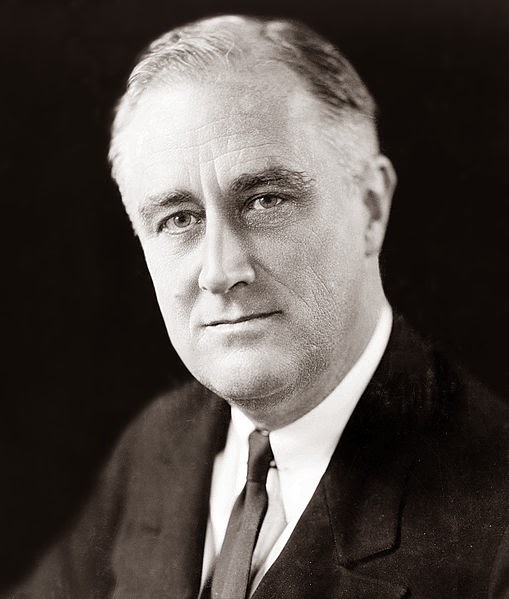
A radical is a man with both feet firmly planted — in the air. A conservative is a man with two perfectly good legs who, however, has never learned to walk forward. A reactionary is a somnambulist walking backwards. A liberal is a man who uses his legs and his hands at the behest — at the command — of his head.-Franklin Roosevelt

Saturday, April 19, 2014

Death


I do not remember my Grandfather, my mother’s father, as much as I would like. Of my two younger sisters, I’m the only child old enough to retain any trace of him. He died when I was nearly seven. I have faint memories of him being well, but I mostly know him when he was in a terminally ill state. At times, I have wished that I was born years earlier and could have developed a real rapport with him. This was the case with my cousins, who are now in their forties.

Grandfather doted upon me and my mother. She was his youngest child by far. Sixteen years separate my oldest uncle and my mother. My mother does not remember her brother living at home. Grandfather was forty-five when my mother was born. Mom was influenced by the fact that her parents were much older than those of most of the kids her age. My father had been raised in similar circumstances, and I imagine that shared fact often drew them together.

The cancer had taken its toll. It was terminal and progressed swiftly. My parents believed that his gaunt, haggard appearance would only upset myself and my two sisters. We were never allowed to see him at his sickbed. Towards the end, my parents inexplicably changed their minds one day. I’d been eager to see him after months apart and leapt at the opportunity.

I saw a weak, pale figure propped up on pillows. He had just enough strength left in his body to address me. Grandfather often quizzed me informally on topics of history. He knew I had an interest in it and enjoyed teaching me new facts and ideas.

Did Harry Truman go to college?

His voice was little more than a resigned, sad whisper by then. My first instinct was to say no, but then I changed my mind. He looked disappointed at my response.

No, he did not.

I felt as though I’d failed him somehow. I was quickly ushered from the room, a place I would never again return. It was clear that my parents had arranged only a momentary visit and that I would not tarry there long. He passed away a couple months later.

Now to the matter of the question asked of me. I was called bright and gifted beyond my years. Older people seemed to always want to ask me trivia. I acted the part of the boy genius, providing the correct answer. About the same time, an elderly man offered me ten dollars if I could recite the alphabet backwards in his presence. My mind does not work in such a fashion, but ten dollars was a lot of money in those days. I felt a bit like a trained animal in a sideshow, but appreciated the opportunity to flex my intellectual muscles.

With my Grandfather, there were different motives for this game of teacher and pupil. To him, I was not a curiosity, not a novelty. This line of questioning about Presidents and colleges was due to my Grandfather’s own upbringing. Though more than capable enough intellectually for college, the Great Depression left his family without the money to afford it.

The whole of his life, he felt inferior to those who’d had the opportunity to go. He was an autodidact with an amazing recall and had taught himself as much as any professor could, but still the deficiency nagged away at him. Education was important to him. He read the newspaper front to cover every day and sometimes two or three.

It is a stock cliche of a sort to introduce the specter of death at a young age. It happens frequency and from that perspective it has resonance. The pomp and circumstance of dearly departed does make a powerful impression upon a child. I recall the slow procession of black cars pulling alongside the roadway of the cemetery. I remember taking shade under the tree he’d planted years before with his own hands. The family plot was a reverent destination we would visit for years afterwards.

I think the dead deserve our respect. Not only do they remind us that someday we ourselves will die, but we ought to take time from our busy lives to remember the memory of those who influenced us. Every time I visited the graveside I was always struck by a sense of loss. I felt that he’d been taken from me prematurely, but I trust that God had a greater purpose for him. If I get to Heaven, I hope I get a chance to speak at length to him.

My mother was, quite understandably, utterly devastated. At thirty-one, she was younger than I am today when she lost her father. I remember she entered into a period of deep grieving that lasted for over a year. My Grandfather’s name could not be mentioned in her company, or she would begin sobbing. I can’t imagine what it would be like to lose a parent, though I know I will experience this same feeling eventually. That eventuality beckons sooner than I feel comfortable contemplating.

The death didn’t haunt me the way it could have, if I’d been a little older. There were a few scary moments here and there, but I was deliberately insulated from most of them. I remember the paramedics arriving, taking him from his bedroom to the hospital. My Grandparents had moved to a retirement community in Birmingham from the family home so that Grandfather could be closer to his doctors.

There was a tense energy in the air that I picked up on, but I said nothing. I didn’t know what was going on and, in any case, everyone was too busy and preoccupied to explain it to me. It must have been close to the end by then. In my mind, the events are scattered, but I was very young. I suppose it must appear this way to any young child.

The class assignments for a new school year were posted on the outside doors to the front entrance of my elementary school. Having passed Kindergarten, First Grade now beckoned. Had Mom been less preoccupied, she would have intervened in my behalf. I was assigned to a teacher who genuinely hated children. Why she’d decided to take up the profession is beyond me. I imagine she could have been extremely burned out. Her reputation preceded her and no child looked forward to nine full months with her.

Mom made one last desperate, in-person appeal to the principal, but received a lecture instead of any sympathy. The next school year, he’d be sent to transportation, which in some public schools is the equivalent of being sent to Coventry. In the school year to follow, I would contract a severe case of chicken pox that kept me out of school for nearly a month. My teacher didn’t call even once.

Saturday Video


Thursday, April 17, 2014

My Poetic Contribution

On behalf of National Poetry Month, I submit the following. I am a born prose writer and poetry is a discipline I have never mastered, but hard work made my work passable, at least.

The Death of the Party

At evening’s end
exaggerations
caricature

motivated by restlessness

like an itch unscratched
leading directly to the door

these remain when all else
has long passed away

In those last waning moments
Conversation competition commences

cleverest victory can
circumvent the social hierarchy

Yet, age and experience
trumps youth’s insecurity

Humor—
the wild card

The catalyst
for our brand
of social mobility

Older party-goers
establish the rules

Remember similar
defeats

Inadvertent misinterpretation
Often reflects intention

Wednesday, April 16, 2014

False Prophets

A work of fiction.

It goes a little something like this. If you know the right psychiatrist, he or she can contact the admitting psychiatrist on call who will eventually find you a bed. Otherwise, you're on your own. Without someone to grease the wheels, you're a low priority, neither the victim of a car accident nor a heart attack. Psychiatric wards are not my favorite places to be, especially because I’ve experienced somewhere around twelve lengthy stays over time.

After waiting for eight hours in the ER, I was finally triaged and placed in a room to wait a little more. The hospital was the best in town. I'd made a conscious decision to choose it. Even in a fully socialized system of health care, some hospitals provide better care than others. This is based primarily on available financial resources. One can make the system fairer, but capitalism reigns.

All the beds were taken, so I was transferred to another hospital. In accordance with the law, I had to be placed somewhere, whether it was in the next country over or even the next state. Where I was headed now was based entirely upon chance. I wasn't thrilled with the prospect, but had to admit my hands were tied. I needed care and I couldn't sit by myself in that room forever.

Time means nothing to those who work in hospitals. At three o'clock in the morning, a slot opened up at the worst hospital in the city, one that I'd recently read was in danger of completely coming apart at the seams. I wanted to leave almost immediately upon being admitted, from the moment the wheels of the gurney upon which I had been placed hit the tattered carpeting of the main hallway. I needed help and couldn’t turn down any offer of assistance.

Upon entrance, the patients reacted to me in unexpected ways. Some treated me like The Messiah. The label was not deserved, nor sought. My mistakes and limitations were no different than theirs. Mine came attached with the splendor of a college education, a loftier vocabulary, and a few more exotic road trips. Even had I tried, I wouldn't have been able to convince the most mentally ill of my mortal status.

I noticed, rather quickly, that they asked to borrow my clothing. They coveted things that had touched my body, lusted after them like talismans, as though they somehow had power and charm. There was a touch of the supernatural about it, as though they believed that wearing my clothes would make my own supposed superior traits transfer onto them. I imagined they worshiped them, placed them before altars, and whispered incantations before bed.

I went through the motions as I had many times before. During occupational therapy, I yet again unenthusiastically water-colored a cheap piece of balsa wood in the shape of a fish. While doing so, I made unsatisfying small talk with fellow patients. Social class and educational opportunity kept me from the company I sought, forcing me to skim across the surface instead with dull and unsubstantial small talk. I love deep conversation, which leaves me feeling satisfied, but I had to make do with the audience provided me.

I never quite understood the point of what we were doing. I take that back, somewhat. On one level I did. It kept us from stewing in our own misery, distracted for the moment by something designed to keep us busy. I didn't understand the phrase occupational therapy. This activity wasn't exactly labor-intensive, nor did it promote any sort of helpful exercise that I could reckon. What it did do was occupy patients' time while the staff took smoke breaks and drank copious amounts of diet soft drinks.

Every day, punctually at 1 pm, we filed into a room with lots of tables and chairs. One was supposed to select three colors that he or she preferred, all found in large plastic see-through cylinders. One hoped that they weren't painted shut from someone else's earlier carelessness. We were next supposed to select an object to paint. I went through the motions, but not with much relish or zest for the task at hand.

Each of us patients had a measure of unsupervised freedom perhaps undeserved, one that could be dangerous. The staff was too consumed with making sure that a particular patient, who everyone called Mister Norris, wasn't sexually harassing the other patients or mutilating himself. He would sidle up to female patients and express a desire to kiss them. The only thing the staff could think to do to discipline him was to restrict his smoke breaks.

No, you ain't smoking today, Mister Norris, said the nurse, her face a portrait of annoyance, hands on hips. I heard you been causin' trouble.

I had the misfortune of rooming with Mister Norris. I would find bloody rags and paper towels in the trash can. I would wipe the urine off of the toilet seat. I would never walk around in the bathroom without rubber soled shoes. Having lived with men before, some of this was expected, but I still found that a lack of basic cleanliness was totally disgusting.

They called all of us, even the hopeless cases, Mister, Miss, or Misses. From that treatment, one could almost believe that we really weren't stark raving insane, that we were instead guests at some exclusive resort with horrible food and dishwater coffee. I appreciated the professionalism, but it didn’t seem to fit here, not under these circumstances.

The true entertainment was watching Mister Norris moonwalk across the room with a dishcloth on top of his head, much to the amusement of other patients. The day room was where we spent most of our waking hours. A round-faced, sarcastic patient had maybe one-half a front tooth left, due to years of meth addiction. I tried to ignore the visuals. At some point, she accidentally brushed up against me, whereupon the oily foundation she had caked onto her cheeks rubbed off on me.

Is this even? I didn't have the heart to tell her that she was asking the wrong questions. Whether or not her makeup was evenly distributed wasn't the problem. I doubt she was well enough to do it herself. Until she recovered, her hands were too unsteady, her perception too impaired.

Look, I never told you I was a nice guy. I generally enjoy being left alone, but thinking hideously cruel things about fellow patients was my means of compensating.

I had various rude nicknames for certain patients I disliked. Snow White was the moniker of one such woman, an exceptionally pale-skinned lady in her mid-thirties who had slashed her wrists. She showed us all the stitches that had closed the once open wound. It reminded me of horror films--the way that eyelids are sometimes sewn shut. She pulled out her Bible in an effort to show us how the events of the present day were connected in some large, overlapping way to Scripture.

A day later, she terrified the more trusting, and more devout members of the ward by feigning a seizure in the dayroom. Faking her convulsions she continually repeated the same verse in Proverbs. This had drawn the fury of the rest of the patients, and leaving her now a pariah. Other patients angrily confronted her for faking illness and momentarily turning the ward upside down. I suppose she wanted the attention.

Ain't I a good actress? 

Later that same day, she practically dry-humped me, leaning over my body under the pretense of re-attaching a loose telephone cord. She wondered out loud if she could only divorce her husband. I wasn’t sure what she was implying, but didn’t want to find out. I wasn't interested, if she was suggesting I might consider being her lover.

I had no peace of mind. Mister Norris talked non-stop. Initially, he'd only kept me anxious, but now it was much worse. The staff had seen everything by now. A male nurse gave me a reassuring smile and told me oh, he's just old and confused. Mister Norris droned on and on, returning to the same two or three topics. He owned a house over by the helicopter pad, he claimed. He’d point out the window towards the location, with great emphasis, assuming you were also capable of seeing it yourself.

I arrived at the hospital in the middle of some fairly massive exploration of my gender identity. I was too weak to hide evidence of it. My socks off, Mister Norris looked at my painted toenails. I wish I had some polish on my nails. Would you do it for me? You know if they saw a man like me with polish on his nails they'd call him a sissy. I wasn’t sure how to honor his request and had not, in any case, brought toenail polish with me.

My assigned nurse very kindly offered to locate some nail polish remover for me. One of the other patients had loudly accused him of being gay and in denial. Based on my perception alone, I suspected this was probably true, though I did not hold the same intolerance. I took offense but tried to gently correct her. Because she looked up to me and respected my opinion, she never raised the subject again.